By Worldonomics Times | Global Economy
Date: October 27, 2026
Introduction
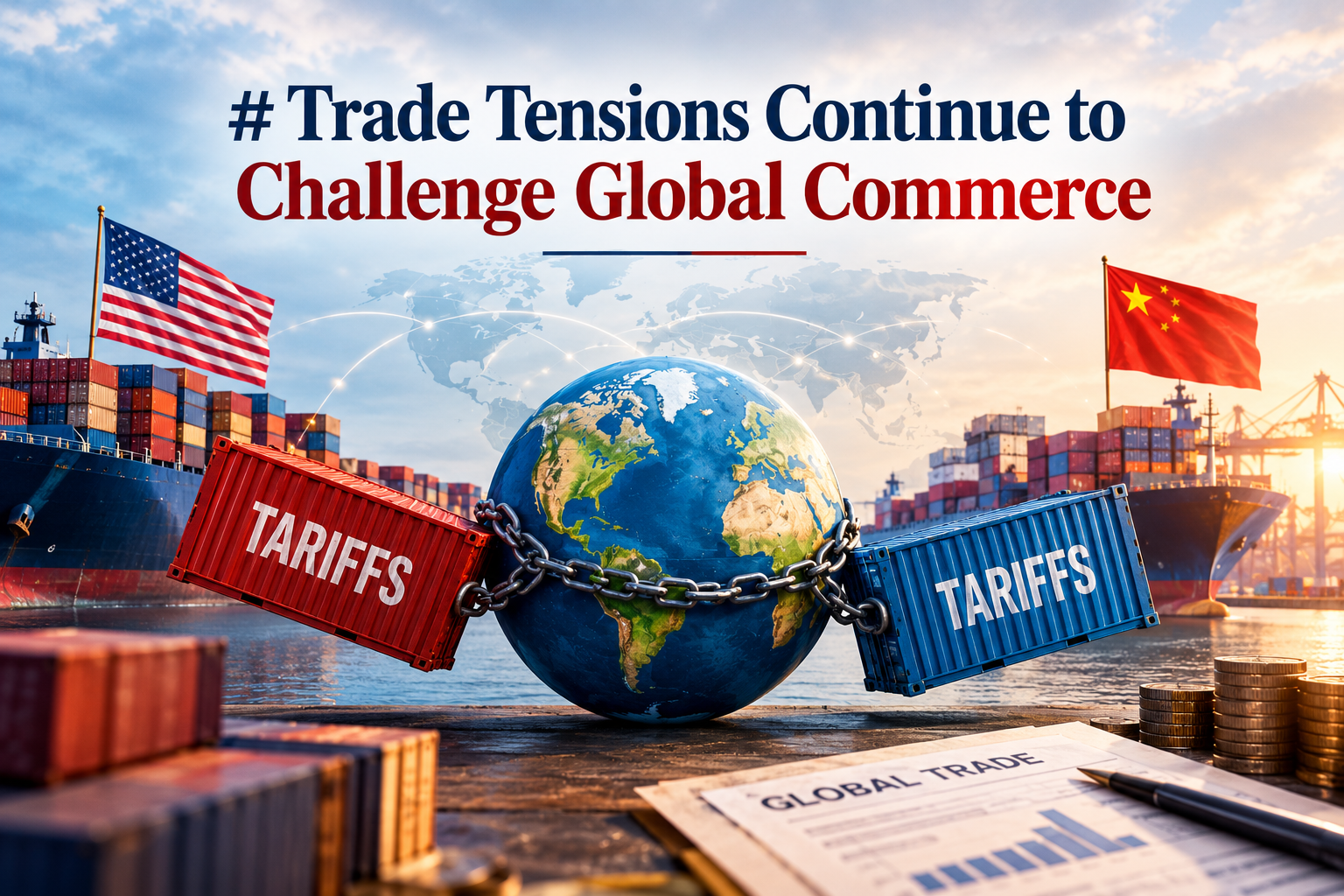
Global trade continues to face significant challenges as trade restrictions, geopolitical tensions and shifting economic policies reshape international commerce. Governments are increasingly prioritising domestic industries and national security, introducing tariffs, export controls and investment restrictions that affect businesses operating across borders.
Although international trade has demonstrated resilience, uncertainty surrounding trade policies is forcing exporters, manufacturers and multinational companies to reconsider their supply chains and investment strategies. According to the World Trade Organization (WTO), global merchandise trade volume is expected to grow by 3.9% in 2026, supported partly by strong demand for artificial intelligence-related products. However, geopolitical conflicts and disruptions to transportation routes continue to threaten this momentum.
The evolving situation highlights the growing importance of predictable trade rules, diversified supply chains and international cooperation in maintaining global economic stability.
Rising Trade Restrictions Increase Business Uncertainty
Trade restrictions have become an important instrument of economic policy. Governments use tariffs, subsidies, export controls and other measures to protect domestic industries, strengthen strategic sectors and reduce dependence on foreign suppliers.
While these policies may benefit selected domestic producers, they can also increase costs for companies that rely on imported raw materials, components and finished goods. Higher tariffs can make products more expensive, reduce profit margins and weaken the competitiveness of exporters in international markets.
The World Trade Organization’s 2026 World Trade Report highlights how geopolitical tensions, government intervention and changing economic priorities are placing increasing pressure on the established international trading system. The organisation has called for reforms that preserve predictable, transparent and rules-based trade.
For businesses, uncertainty itself can be costly. Companies may delay expansion plans, postpone major investments or redirect shipments while waiting for greater clarity about tariffs and regulations.
Supply Chains Face Growing Disruptions
Modern manufacturing depends on interconnected supply chains that span multiple countries. A single product may involve raw materials from one region, components manufactured in another and final assembly in a third.
Trade restrictions and geopolitical conflicts can disrupt these networks by increasing shipping costs, limiting access to critical materials or making established trading routes less reliable. Businesses may consequently face longer delivery times, higher inventory expenses and difficulties meeting customer demand.
Recent disruptions to energy markets and shipping routes in the Middle East have demonstrated how regional conflicts can affect international commerce. Companies are increasingly exploring alternative suppliers, additional transport routes and regional manufacturing arrangements to reduce their exposure to unexpected disruptions.
Although these adjustments can improve resilience, they may also require significant investment. Replacing established suppliers, relocating production and establishing new logistics networks can increase operating costs, particularly for smaller businesses.
Exporters and Small Businesses Under Pressure
Export-oriented businesses are among those most directly affected by changing trade conditions. Companies must navigate tariffs, customs procedures, product standards and regulatory requirements that differ between markets.
Smaller exporters often face greater difficulties because they have fewer financial resources and less negotiating power than large multinational corporations. Additional certification expenses, documentation requirements and border delays can make entering foreign markets increasingly expensive.
UN Trade and Development (UNCTAD) has highlighted the growing importance of non-tariff measures, including technical standards, administrative procedures and product requirements. These measures can impose substantial costs on businesses, particularly those in developing economies that lack the resources needed to meet complex requirements.
For developing countries, the consequences can extend beyond individual companies. Reduced export competitiveness may affect employment, foreign-exchange earnings and investment in domestic industries.
Improving access to trade information, simplifying customs procedures and strengthening regulatory cooperation could help smaller businesses participate more effectively in international markets.
Global Trade Growth Remains Uneven
Despite these challenges, global commerce has not come to a standstill. Businesses continue to adapt, new trading partnerships are emerging, and demand for technology-related products is supporting trade in several sectors.
The WTO’s October 2026 outlook forecasts merchandise trade growth of 3.9% in 2026 and 4.1% in 2027. However, the organisation expects regional performance to vary, reflecting differences in industrial activity, technology demand and exposure to geopolitical disruptions.
UNCTAD’s October 2026 assessment similarly points to a changing global trade landscape in which countries are placing greater emphasis on economic security, strategic industries and regional integration. These developments are creating opportunities for some economies while making access to advanced technologies and higher-value supply chains more difficult for others.
The long-term impact will depend on whether countries can adapt to changing conditions without creating additional barriers that undermine international economic cooperation.
The Role of Governments and International Institutions
Governments and international institutions have an important role in limiting the economic costs of trade tensions. Clear communication about trade policies can help businesses plan investments and manage risks more effectively.
International cooperation is also essential to resolve disputes, improve customs efficiency and establish consistent rules for cross-border commerce. Regional trade agreements can provide additional opportunities for businesses to diversify their markets and reduce dependence on a limited number of trading partners.
At the same time, companies should strengthen their risk-management strategies by diversifying suppliers, monitoring regulatory developments and investing in digital tools that improve supply-chain visibility.
Policymakers must balance legitimate national security and industrial development objectives with the broader benefits of open, predictable international trade.
The Worldonomics Times View
Trade tensions are becoming a defining challenge for the global economy. While governments seek to protect domestic industries and strategic interests, excessive restrictions can increase costs, disrupt supply chains and weaken confidence among businesses and investors.
The priority should be to create a trading environment that supports economic security without undermining international cooperation. Transparent policies, effective dispute-resolution mechanisms and stronger regional partnerships can help reduce uncertainty and preserve opportunities for businesses of all sizes.
For exporters and manufacturers, flexibility and diversification will remain essential to navigating an increasingly complex international marketplace. For developing economies, improving infrastructure, strengthening industrial capabilities and helping small businesses meet international standards will be critical to expanding export opportunities.
The Worldonomics Times believes that sustainable global commerce depends on cooperation rather than prolonged confrontation. By strengthening trade relationships and maintaining predictable rules, countries can better protect economic growth, support employment and ensure that the benefits of international trade are shared more widely.