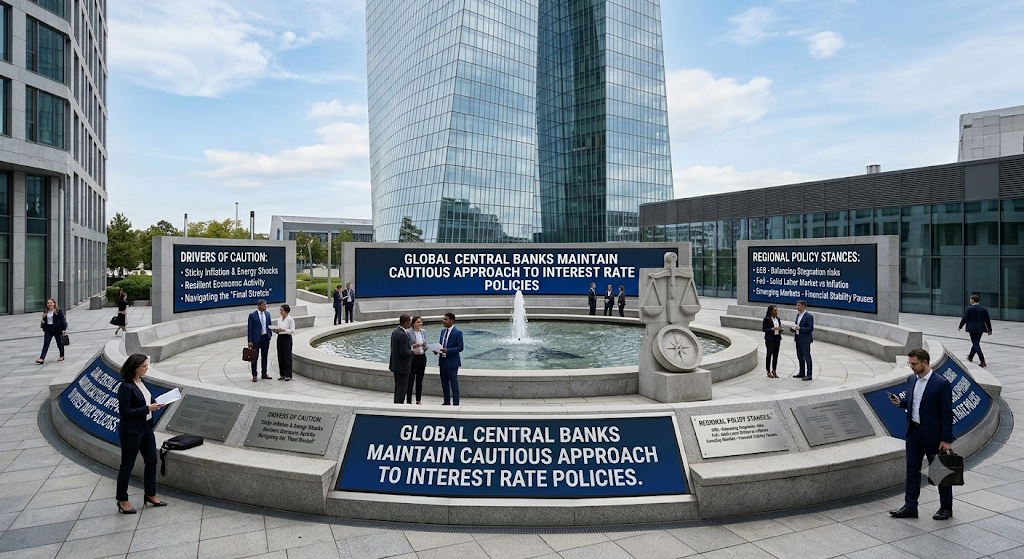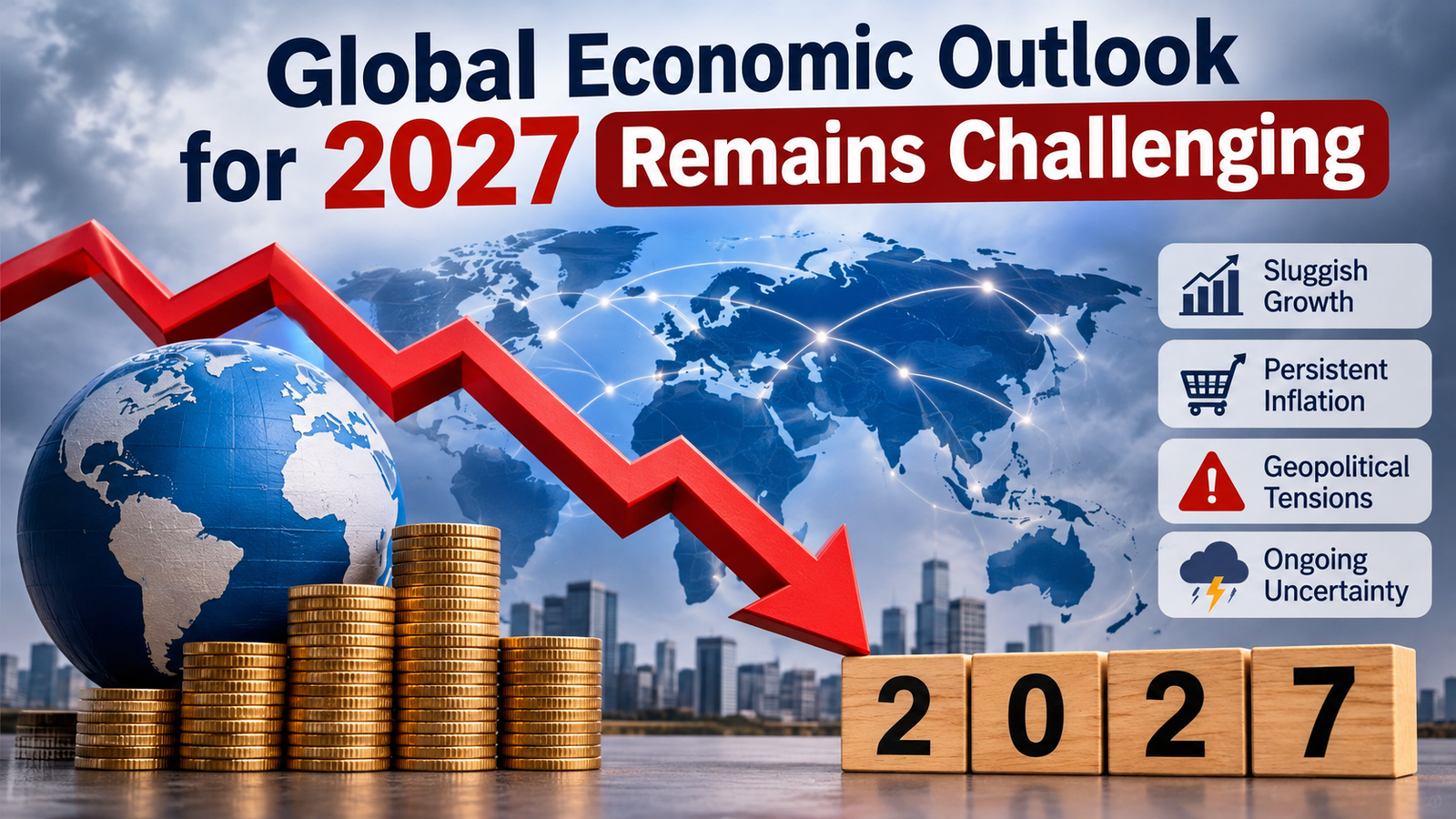
Persistent inflation, rising energy prices and geopolitical uncertainty are complicating monetary policy decisions worldwide, forcing central banks to balance price stability with economic growth, employment and financial stability.
Central banks across the world are facing an increasingly difficult economic challenge as inflationary pressures continue to influence monetary policy decisions. While controlling rising prices remains a major priority, policymakers must also ensure that higher interest rates do not significantly weaken economic growth, business investment and employment.
In November 2026, the global monetary policy environment remains uncertain. Geopolitical tensions, higher energy prices, supply chain disruptions and fluctuating commodity markets have created fresh inflationary pressures. As a result, major central banks are reassessing their interest rate strategies to determine whether borrowing costs should remain elevated or increase further.
The challenge is particularly significant because monetary policy decisions in major economies influence international financial markets, currency movements, investment flows and borrowing costs across developing countries.
Inflation Remains the Biggest Concern
Inflation continues to be one of the most important factors shaping central bank decisions.
Higher food prices, energy costs, transportation expenses and production costs are affecting households and businesses. The continuing conflict in the Middle East has added further uncertainty to international energy markets, increasing the risk that temporary supply disruptions could translate into broader inflationary pressures.
According to the International Monetary Fund’s October 2026 World Economic Outlook, global headline inflation is projected at 4.7% in 2026 before moderating to 4.1% in 2027.
Central banks are particularly concerned about persistent inflation. If businesses continue increasing prices and workers demand higher wages to compensate for rising living costs, inflation can become embedded in the economy.
Policymakers must therefore carefully assess whether rising prices are temporary or likely to continue over the medium term.
Interest Rates: A Critical Monetary Policy Instrument
Interest rates are among the most important tools available to central banks for managing inflation and economic activity.
When inflation rises above acceptable levels, central banks may increase interest rates to make borrowing more expensive. Higher loan costs generally discourage excessive consumer spending and business borrowing, helping moderate demand and reduce inflationary pressure.
However, higher interest rates also create economic challenges.
Businesses may postpone expansion plans because of increased financing costs. Households may reduce spending on homes, vehicles and other major purchases. Higher mortgage and loan repayments can also reduce disposable income.
Conversely, reducing interest rates can encourage borrowing, investment and consumption, supporting economic activity. However, lowering rates too quickly may create additional inflationary pressure.
The central challenge is finding an appropriate balance between controlling inflation and supporting sustainable economic growth.
Major Central Banks Adopt Different Approaches
Monetary policy decisions are becoming increasingly different across major economies because inflation, employment and growth conditions vary from country to country.
United States Federal Reserve: The Federal Reserve continues to face the challenge of balancing price stability with employment and economic growth. Its policy decisions have significant international consequences because changes in US interest rates influence global borrowing costs, the dollar and international capital flows.
European Central Bank: The ECB raised its three key interest rates by 25 basis points in September 2026, citing inflationary pressures associated with the Middle East conflict. Its September projections placed euro-area inflation at 3% and economic growth at 0.9% for 2026.
Bank of England: The Bank of England increased its benchmark Bank Rate by 0.25 percentage points to 4% on November 5, 2026. The decision reflected concerns about rising energy prices and the possibility that higher costs could become more persistent across the British economy.
These decisions demonstrate that central banks are increasingly prioritising economic conditions within their respective countries rather than following a uniform global monetary policy.
Impact on Businesses and Financial Markets
Changes in interest rates have a direct influence on business confidence and financial market performance.
When borrowing costs increase, companies may delay investments in infrastructure, technology, machinery and expansion. Small and medium-sized enterprises can face particular difficulties because they often depend heavily on bank financing.
Higher interest rates can also affect stock market valuations. Investors may shift towards fixed-income securities when government bonds offer more attractive returns, reducing demand for riskier assets.
Currency markets are also influenced by monetary policy. Higher interest rates in major economies can attract foreign capital, while lower rates may encourage investors to seek better returns elsewhere.
For emerging markets, these international movements can create additional pressure on exchange rates, foreign investment and external debt servicing.
Challenges for Emerging Economies Like India
Developing economies face a particularly complicated monetary policy environment.
Central banks must control domestic inflation while supporting investment, employment and economic development. They must also consider international interest rates, currency stability and imported inflation.
India faces these challenges through fluctuations in international crude oil prices, food inflation and global capital movements.
The Reserve Bank of India must maintain price stability while ensuring that monetary conditions remain supportive of sustainable economic growth.
Higher interest rates can increase borrowing costs for businesses and households, while excessively low rates may encourage inflationary pressures.
Strengthening domestic manufacturing, improving agricultural productivity and reducing dependence on imported energy can help India manage external inflationary risks more effectively.
What Lies Ahead for Global Monetary Policy?
The coming months will be important for determining the direction of global interest rates.
Central banks will closely monitor inflation data, employment conditions, economic growth, energy prices and financial market developments before making further policy decisions.
If inflation remains persistent, some economies may maintain restrictive monetary policies or consider additional rate increases. However, weakening economic activity could encourage policymakers to gradually reduce borrowing costs.
Transparent communication and data-driven decision-making will remain essential to maintaining investor confidence and financial stability.
The Worldonomics Times View
At The Worldonomics Times, we believe that central banks are facing one of the most difficult monetary policy balancing acts in the current global economic environment.
Controlling inflation is essential for protecting purchasing power and maintaining financial stability. However, monetary tightening should not become so aggressive that it unnecessarily damages business investment, employment and economic development.
In our view, the biggest challenge is that today’s inflationary pressures are increasingly influenced by external factors such as geopolitical conflicts, energy disruptions and international supply chain problems. Interest rate increases alone cannot resolve these structural challenges.
Central banks must therefore adopt flexible, transparent and evidence-based monetary policies. Governments should complement these efforts through responsible fiscal management, infrastructure development, energy diversification and improvements in domestic production capabilities.
For emerging economies such as India, maintaining a balance between price stability and growth is particularly important. Affordable credit for productive businesses, stronger domestic industries and stable financial institutions can support long-term economic development.
The Worldonomics Times believes that successful monetary policy is not simply about reducing inflation or increasing interest rates. It is about creating economic conditions in which prices remain stable, businesses can invest, employment opportunities expand and households maintain their purchasing power.
Ultimately, the strength of the global economy will depend on how effectively central banks and governments coordinate their policies to manage uncertainty. A balanced approach to inflation control and economic growth will be essential for building a stable, resilient and sustainable global economy.