Introduction
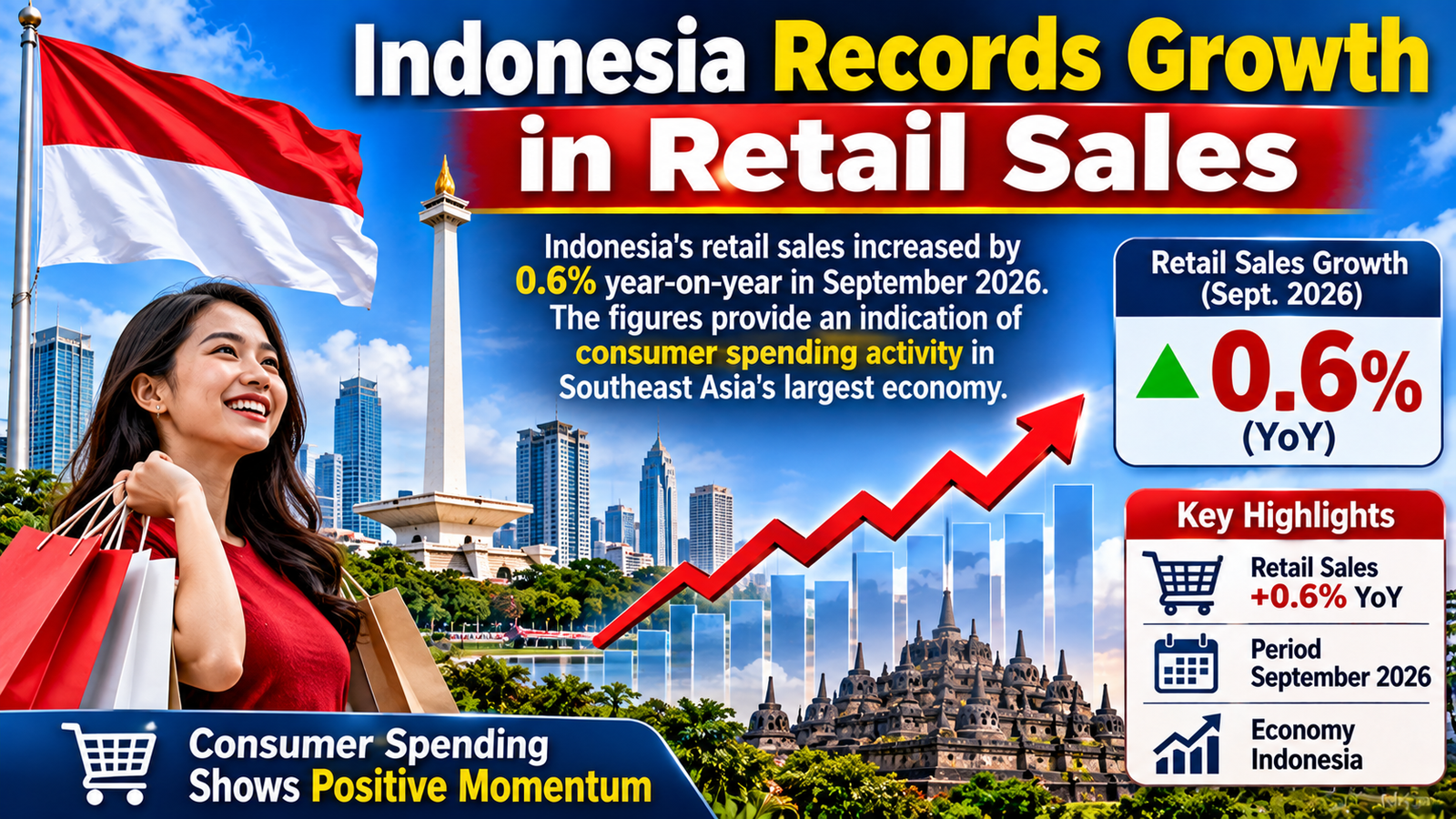
Indonesia’s retail sector recorded modest growth in September 2026, offering an important indication of consumer spending activity in Southeast Asia’s largest economy. According to Bank Indonesia’s Retail Sales Survey, the country’s Real Sales Index (RSI) increased by 0.6% year-on-year in September. However, the pace of expansion slowed from 1.3% recorded in August, suggesting that household demand remains positive but is losing momentum.
The figures, released on November 10, 2026, provide insight into changing consumer behaviour amid persistent price pressures and borrowing costs. While selected retail categories continued to perform well, the overall slowdown highlights the challenges facing Indonesia’s consumption-driven economy.
Retail Sales Growth Slows in September
Bank Indonesia’s latest survey showed that retail sales grew by 0.6% compared with September 2025, down from 1.3% annual growth in August. This represented the weakest annual growth since June 2026.
The monthly figures were less encouraging. Retail sales declined by 3.1% in September compared with August, reversing the previous month’s 0.8% increase. Bank Indonesia attributed the monthly contraction partly to the normalisation of consumer demand following spending associated with Indonesia’s Independence Day celebrations.
The difference between the annual and monthly figures is important. Annual growth indicates that retail activity remained above its level a year earlier, while the monthly decline shows that spending weakened compared with the preceding month. Together, the indicators suggest that consumer activity is expanding, but not at a particularly strong pace.
Different Retail Categories Show Mixed Performance
The September results revealed significant differences across retail segments. Automotive spare parts and accessories were among the stronger performers, recording annual growth of 5.3%. Sales of other goods increased by 3.7%, while food, beverages and tobacco recorded growth of 1.3%, although this was slower than in August.
Other retail categories continued to experience pressure. Estimates reported by Trading Economics showed that fuel sales declined by 8.6% year-on-year, while information and communication equipment fell by 10.8%. Recreational goods and household equipment also recorded annual contractions.
Clothing sales, however, showed signs of recovery, increasing by 2.7% after a substantial decline in August.
These differences indicate that Indonesian consumers are not reducing spending uniformly. Demand for certain essential products and automotive-related goods remains comparatively resilient, while purchases of selected discretionary and household products continue to face difficulties.
Household Spending and Inflationary Pressures
Consumer spending is a major component of Indonesia’s economic activity. A sustained slowdown in retail sales could therefore affect businesses across manufacturing, transportation, wholesale distribution and services.
Persistent price pressures can reduce household purchasing power, particularly when the cost of essential goods absorbs a larger share of monthly income. Consumers may respond by postponing purchases, choosing less expensive alternatives or limiting spending on non-essential products.
Borrowing costs can also influence retail activity. Higher interest expenses may discourage households from financing vehicles, electronics and other large purchases. Businesses can face similar challenges when financing inventories, expansion plans and day-to-day operations.
The retail figures therefore provide a useful signal of how households are responding to the wider economic environment. Although positive annual growth suggests that spending has not contracted overall, the slowdown indicates that maintaining stronger consumer demand remains an important policy challenge.
October Outlook Offers Some Encouragement
Bank Indonesia’s survey also provided a preliminary outlook for October 2026. The central bank expected the Real Sales Index to grow by 1.0% year-on-year, improving from September’s 0.6% increase. Monthly retail sales were also projected to rise by 1.0%, following September’s 3.1% contraction.
The expected improvement was supported partly by stronger sales of motor vehicle fuel, spare parts and accessories, and food, beverages and tobacco.
However, these figures represent survey-based expectations rather than confirmed October results. Their eventual performance will depend on household purchasing power, price developments, business confidence and the broader economic environment.
The survey also indicated that retailers anticipated greater price pressures in the months ahead. Bank Indonesia’s General Price Expectations Index increased for both December 2026 and March 2027 compared with the previous survey readings. This suggests that businesses remain attentive to the possibility of higher selling prices and operating costs.
Implications for Indonesia’s Economic Growth
Indonesia’s large domestic consumer market is an important source of economic resilience. Retail sales provide a valuable indication of household demand, although they represent only one part of the wider economy.
If spending remains weak, retailers may experience slower inventory turnover and reduced revenue growth. This could influence hiring, investment and expansion decisions, particularly among smaller businesses that have limited financial flexibility.
On the other hand, a recovery in consumer activity could support demand across several industries, including food processing, transportation, automotive services, consumer goods and digital commerce.
Policymakers will therefore need to monitor the relationship between inflation, household income, credit conditions and retail activity. Maintaining stable prices while supporting employment and purchasing power will be important for sustaining domestic demand.
Implications for India and the Regional Economy
Indonesia’s retail performance is relevant to regional economic conditions because the country is a major consumer market and an important participant in Southeast Asian trade.
For India, changes in Indonesian consumer demand could influence opportunities for exporters of pharmaceuticals, automobiles and components, textiles, processed foods and consumer products. Slower retail activity may make Indonesian buyers more cautious, while a recovery could create additional demand for imported goods.
More broadly, Indonesia’s performance provides insight into consumer conditions across emerging Asian markets. Domestic consumption remains an important driver of regional growth, particularly when global trade and investment conditions are uncertain.
Indian businesses seeking to expand in Southeast Asia should monitor changes in Indonesian purchasing power, retail demand and import requirements. The country’s large population and developing consumer market continue to offer commercial opportunities, although slower spending growth may require careful market planning.
The Worldonomics Times Views
Indonesia’s September retail figures present a mixed picture of the country’s consumer economy. Annual growth of 0.6% confirms that retail activity remained positive, but the decline from August’s 1.3% expansion and the 3.1% monthly contraction point towards weaker spending momentum.
The performance of individual retail categories also highlights the uneven nature of consumer demand. While automotive parts and selected essential goods continued to record growth, several discretionary and household-related categories remained under pressure.
Policymakers should pay close attention to purchasing power, inflation expectations and household borrowing conditions. Targeted support for vulnerable consumers, stable economic policies and measures that encourage employment and income growth could help strengthen domestic demand.
The October outlook offers some encouragement, but the sustainability of any recovery will depend on whether households can maintain spending without facing excessive financial pressure. For Indonesia, the key challenge is not simply achieving positive retail growth, but building a stronger and more consistent foundation for consumer confidence and long-term economic expansion.