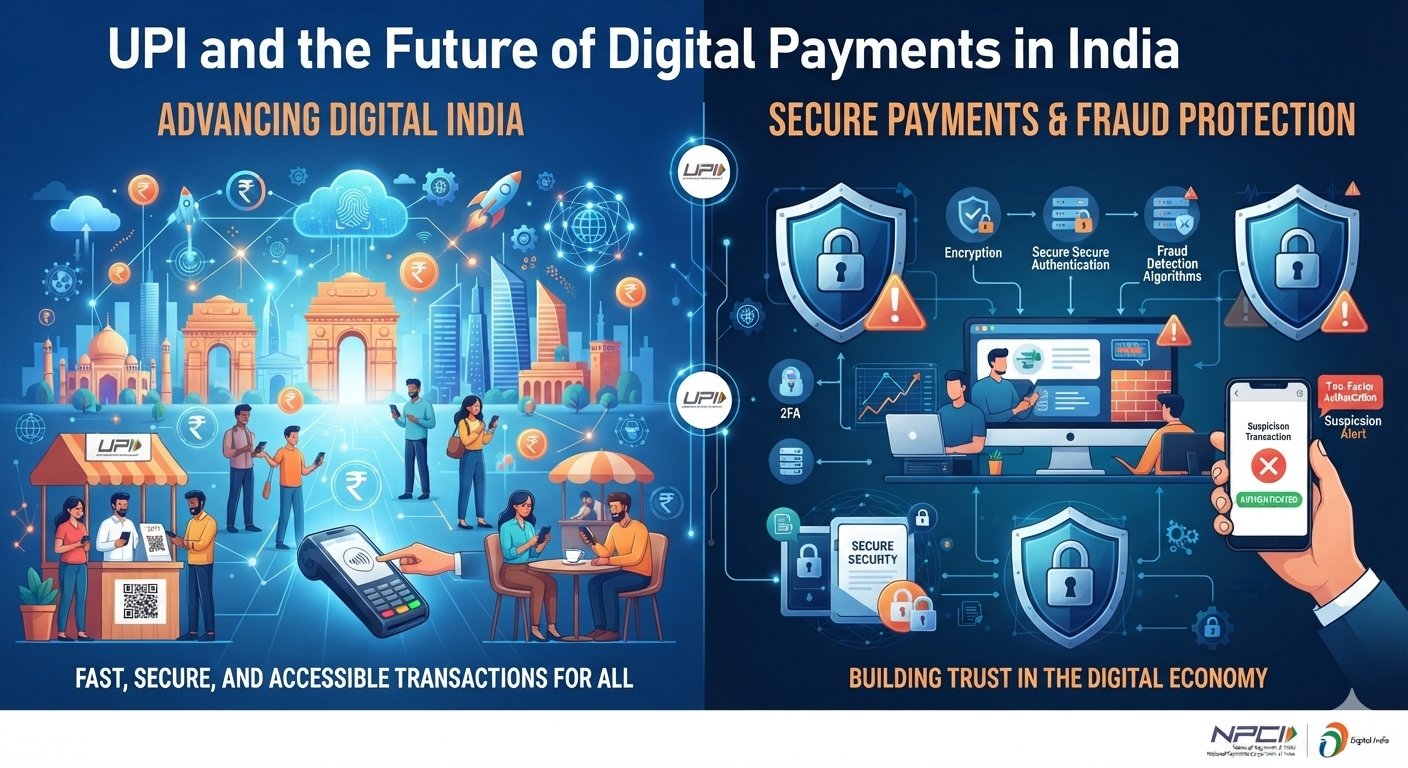
Imagine buying vegetables, paying for a cup of tea or transferring money to a friend — all within seconds, without carrying cash or visiting a bank.
This is no longer the future of banking in India. It is everyday reality.
The Unified Payments Interface (UPI) has transformed India’s financial landscape by making digital payments faster, simpler and more accessible. What began as a payment innovation has gradually become an essential part of India’s economic and digital infrastructure.
But as digital payments grow, an equally important question emerges: Are we becoming digitally convenient faster than we are becoming digitally secure?
India’s Digital Payment Revolution
UPI has changed the way individuals, retailers, small businesses and large organisations conduct transactions.
According to the Reserve Bank of India’s payment system data, UPI transactions increased from approximately 3,873 crore in calendar year 2021 to 22,828 crore in 2025. Transaction value increased from ₹72 lakh crore to ₹300 lakh crore during the same period.
These figures demonstrate how deeply digital payments have become integrated into India’s economy.
UPI is no longer simply an alternative to cash; it is a major pillar of India’s digital payment ecosystem.
How UPI Is Transforming Businesses
1. Greater Convenience for Consumers
Customers can make payments instantly without carrying cash or worrying about change. This has made everyday transactions easier.
2. Opportunities for Small Businesses
Street vendors, shopkeepers and small entrepreneurs can accept digital payments with minimal infrastructure. QR codes have made digital payment acceptance more accessible.
3. Faster Transactions and Better Records
Digital payment records help businesses track collections, maintain transaction histories and improve financial management.
4. Supporting Financial Inclusion
UPI has helped bring digital payment facilities closer to individuals and businesses that previously depended heavily on cash transactions.
The Other Side: Growing Digital Risks
Every technological advancement brings new responsibilities. The growing use of digital payments has also created opportunities for cybercriminals.
Some common risks include:
- Phishing: Fraudsters send fake links or messages to steal banking information.
- Fake Payment Screenshots: Sellers may be shown edited screenshots as proof of payment.
- Collect Request Scams: Fraudsters manipulate users into approving payment requests.
- Impersonation Fraud: Criminals pretend to be bank officials, customer support executives or trusted contacts.
- Social Engineering: Victims are psychologically manipulated into sharing confidential information or authorising transactions.
The biggest concern is that many frauds do not happen because the payment technology itself fails, but because users are tricked into authorising transactions.
Financial Awareness Is the Real Protection
Digital payment security is not only the responsibility of banks and payment platforms. Users must also understand how to protect themselves.
A few essential precautions can make a significant difference:
- Never share your UPI PIN, OTP or banking credentials.
- Remember that receiving money does not require entering your UPI PIN.
- Verify the recipient’s details before making payments.
- Avoid unknown links and suspicious payment requests.
- Never install screen-sharing applications at the request of unknown callers.
- Report suspected financial fraud immediately through your bank and the national cybercrime helpline 1930.
Technology can make transactions faster, but awareness makes them safer.
What Does the Future Hold?
The future of digital payments in India will depend on more than transaction volume.
Greater interoperability, improved cybersecurity, stronger consumer awareness, technological innovation and responsible financial behaviour will shape the next phase of India’s digital economy.
Businesses must invest in secure payment practices, financial institutions must continuously strengthen fraud prevention systems, and regulators must ensure that innovation develops alongside consumer protection.
Conclusion: Convenience Must Come with Responsibility
UPI represents one of India’s most significant financial technology transformations. It has simplified payments, supported businesses and changed consumer behaviour.
However, the true success of a digital payment ecosystem cannot be measured only by the number of transactions processed or the speed at which money moves.
It must also be measured by the trust and security it creates.
The future of digital payments is not just about making money move faster; it is about making every transaction safer, smarter and more reliable.
Because a truly digital India must be not only cashless, but also cyber-aware.