Strong Inflation Data and Expectations of Higher Interest Rates Strengthen the Dollar
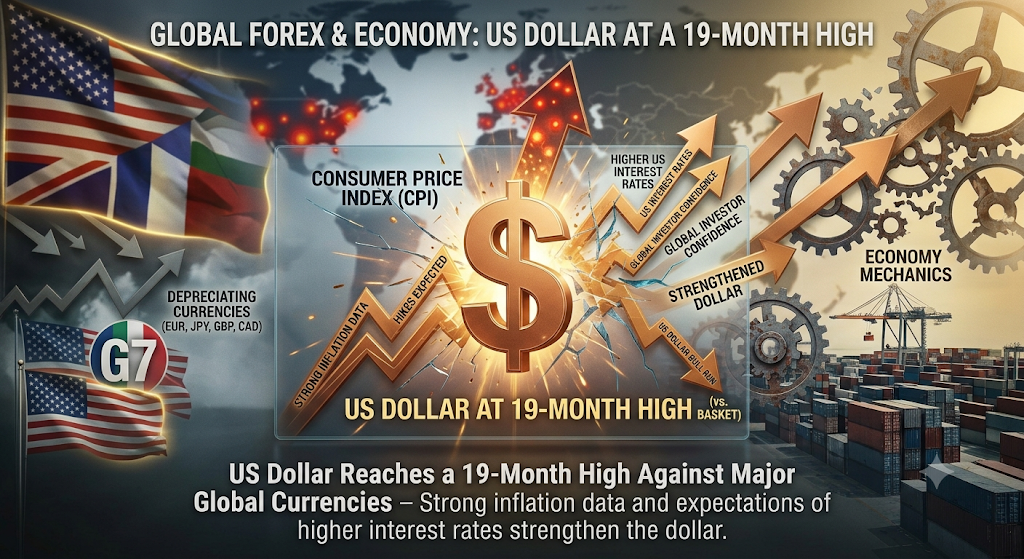
The US dollar has surged to its highest level in 19 months against a basket of major international currencies, reflecting renewed confidence in the American currency amid stronger-than-expected inflation data and growing expectations of further interest rate increases by the Federal Reserve. The development highlights the changing dynamics of global financial markets, where monetary policy expectations, economic performance, and investor sentiment continue to influence currency valuations.
On November 12, 2026, the US Dollar Index (DXY), which measures the value of the dollar against six major currencies, climbed to approximately 103.02, marking its strongest level since April 2025. The rally reflects increasing expectations that the Federal Reserve may maintain a restrictive monetary policy or introduce additional rate hikes to control persistent inflationary pressures.
The dollar’s strength is attracting considerable attention from international investors, central banks, businesses, and policymakers as fluctuations in the world’s leading reserve currency influence global trade, investment, commodity prices, and financial stability.
Inflation Data Strengthens the Dollar
One of the primary factors supporting the dollar’s recent appreciation is the latest US inflation report. Consumer prices increased more than economists had anticipated in October, indicating that inflationary pressures remain persistent across several sectors of the American economy.
The October Consumer Price Index (CPI) increased by 0.4% compared with the previous month, exceeding market expectations of 0.3%. Core inflation, which excludes volatile food and energy prices, also rose by 0.3%, above the expected 0.2%.
These figures have strengthened expectations that the Federal Reserve may need to take additional measures to prevent inflation from remaining above its long-term target.
For currency markets, higher inflation can support a currency when it increases expectations of higher interest rates. Investors seeking better returns may move capital towards dollar-denominated assets, increasing demand for the American currency.
The Federal Reserve’s monetary policy remains central to the dollar’s performance. Higher interest rates generally make US Treasury securities and other dollar-denominated investments more attractive to international investors.
Following the latest inflation figures and hawkish comments from Federal Reserve officials, financial markets have significantly increased their expectations of a December interest rate increase.
Investors are also considering the possibility of a larger-than-usual increase if inflation continues to exceed expectations. However, the Federal ReFederal Reserve Policy and Interest Rate Expectations
serve will need to evaluate additional economic indicators, including employment conditions, consumer spending, wage growth, and inflation expectations, before determining its next policy move.
The prospect of higher US interest rates has created a widening monetary policy gap between the United States and several other major economies, providing further support to the dollar.
Major Global Currencies Face Pressure
The dollar’s appreciation has placed pressure on several leading international currencies, particularly the euro, Japanese yen, and British pound.
The Japanese yen has remained especially vulnerable because of differences between US and Japanese interest rates. The dollar approached the psychologically important 160-yen level, highlighting the pressure facing Japan’s currency.
Meanwhile, the euro has weakened amid concerns about Europe’s economic growth outlook, inflation dynamics, and political uncertainty. Sterling has also experienced pressure as investors reassess the relative attractiveness of British assets compared with US investments.
These developments demonstrate how differences in economic performance and central bank policies can influence currency valuations even among the world’s largest developed economies.
Impact on Global Trade and Emerging Economies
A stronger US dollar has significant implications for international trade and developing economies. Since many essential commodities, including crude oil, gold, and several industrial raw materials, are priced internationally in dollars, dollar appreciation can increase purchasing costs for countries whose domestic currencies are weakening.
Emerging economies that depend heavily on imported energy, food, machinery, and industrial inputs may face additional financial pressure. A stronger dollar can also increase the domestic cost of servicing foreign-currency debt, creating challenges for governments and businesses with substantial dollar-denominated liabilities.
For countries such as India, currency movements require careful monitoring. A stronger dollar can increase the rupee cost of crude oil and other imports, potentially contributing to imported inflation and pressure on the country’s current account balance.
At the same time, Indian exporters receiving payments in dollars may benefit from more favourable currency conversion, although the overall impact depends on their import requirements and foreign-exchange exposure.
Financial Markets and Investor Sentiment
The dollar’s recent rally has also influenced international investment decisions. During periods of economic uncertainty, investors frequently increase their exposure to assets considered relatively safe and liquid. US Treasury securities and the dollar often benefit from these movements.
However, a stronger dollar does not necessarily guarantee sustained gains in financial markets. Higher interest rates can increase borrowing costs, reduce liquidity, and place pressure on equity valuations, particularly in sectors that depend heavily on financing and future earnings growth.
Gold and other internationally traded assets may also experience fluctuations as changing interest rate expectations influence investor preferences.
The Road Ahead: Will the Dollar Maintain Its Momentum?
The future direction of the US dollar will largely depend on incoming economic data and the Federal Reserve’s policy decisions. Continued inflationary pressure, strong employment conditions, and further hawkish signals from policymakers could support additional dollar appreciation.
Conversely, signs of weakening economic activity, moderating inflation, or a less aggressive Federal Reserve stance could reduce the currency’s upward momentum.
Investors will also closely monitor developments in Europe, Japan, and other major economies, as changes in their monetary policies could influence international capital flows and exchange-rate movements.
The Worldonomics Times Views
The US dollar’s rise to a 19-month high reflects the powerful influence of inflation expectations and monetary policy on global currency markets. While higher interest rates may strengthen the dollar in the short term, sustained appreciation could create financial challenges for emerging economies, international businesses, and countries heavily dependent on dollar-denominated imports.
The current situation also highlights the interconnected nature of the global financial system. Decisions taken by the Federal Reserve can influence borrowing costs, investment flows, commodity prices, and economic stability far beyond American borders.
Going forward, policymakers and businesses must remain prepared for continued currency volatility. Emerging economies should strengthen foreign-exchange management, diversify trade relationships, and maintain sound macroeconomic policies to reduce their exposure to external financial shocks.
Ultimately, the dollar’s performance will depend not only on the strength of the US economy but also on the relative economic prospects of other major economies. As global markets navigate changing inflation trends and monetary policy expectations, the US dollar will remain one of the most closely watched indicators of international financial confidence.