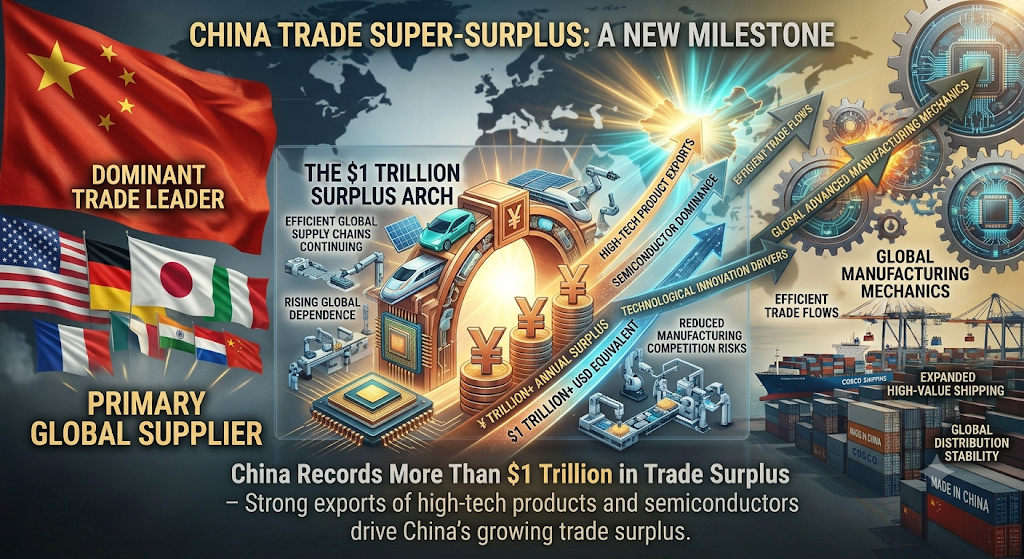
Strong exports of high-tech products and semiconductors drive China’s growing trade surplus.
China has recorded a goods trade surplus of approximately $1.04 trillion during the first ten months of 2026, marking the second consecutive year that the country has crossed the $1 trillion threshold. The milestone highlights the strength of China’s manufacturing and export industries, supported by rising international demand for semiconductors, electric vehicles, electronics and other advanced technology products.
According to data released by China’s General Administration of Customs on November 10, the country reached the milestone a month earlier than it did in 2025. The development reinforces China’s position as a major force in global manufacturing, while also raising questions about international trade imbalances, domestic economic conditions and growing competition with other industrial economies.
Strong Export Performance Drives the Surplus
China’s export performance has remained exceptionally strong despite geopolitical uncertainty and trade restrictions in several major markets. Exports increased by 35.2% year-on-year in October to approximately $412.3 billion, reflecting continued demand for Chinese manufactured products.
Imports also recorded substantial growth, rising 41.6% year-on-year to around $307.1 billion. However, the increase in imports was not enough to offset the value of exports. China’s monthly trade surplus stood at approximately $105.3 billion in October, compared with $133.5 billion in September.
For January to October, the cumulative surplus reached approximately $1.04 trillion. The country is therefore on course to potentially exceed its 2025 full-year record of approximately $1.19 trillion.
The latest figures demonstrate the importance of international demand to China’s economic performance, particularly at a time when domestic consumption and investment continue to face challenges.
Semiconductor and High-Tech Exports Gain Momentum
One of the most significant factors behind China’s growing trade surplus is the expansion of technology-related exports. Global investment in artificial intelligence infrastructure, data centres, advanced computing and digital connectivity has increased demand for semiconductors, electronic components, servers and networking equipment.
Semiconductor exports have been particularly strong. Reuters reported that China’s semiconductor exports increased by 111.1% in value terms during the first ten months of 2026, while high-tech shipments rose by 47.9%. These figures reflect the growing importance of technology products in China’s export mix.
The expansion of artificial intelligence infrastructure has created opportunities for Chinese manufacturers supplying electronic components and related equipment. At the same time, the country’s established industrial ecosystem, large manufacturing capacity and extensive supplier networks have helped exporters respond to international demand.
Automobiles, particularly electric and hybrid vehicles, are another important contributor. Chinese manufacturers have continued expanding their presence in overseas markets by offering competitive pricing and a broad range of vehicle models. Industrial machinery, batteries and renewable energy equipment have also strengthened China’s export base.
Global Demand Supports China’s Manufacturing Sector
China’s export growth reflects more than strong demand from individual industries. It also demonstrates the country’s ability to serve international supply chains across multiple sectors.
Manufacturers benefit from established logistics networks, industrial clusters and access to a broad range of intermediate goods. These advantages allow companies to produce and deliver goods at competitive prices.
Another important development is the diversification of export destinations. As trade restrictions and geopolitical tensions affect certain markets, Chinese businesses are increasingly seeking opportunities in Southeast Asia, Europe and other emerging economies.
This diversification can reduce dependence on individual trading partners. However, it may also increase competition with domestic manufacturers in importing countries, particularly in industries such as automobiles, batteries, electronics and machinery.
Trade Imbalances Raise International Concerns
Although China’s export performance demonstrates industrial strength, its expanding trade surplus is creating concerns among major trading partners.
A large surplus means the value of a country’s exports significantly exceeds the value of its imports. While this can support domestic production and employment, persistent imbalances may intensify disagreements over market access, industrial subsidies, pricing and competition.
The United States and European Union have expressed concerns about the competitive impact of Chinese manufactured goods on their domestic industries. Trade restrictions, tariffs and other protective measures could become more prominent if governments believe their manufacturers are facing unfair competitive pressure.
China’s growing surplus with the European Union is particularly noteworthy. The imbalance is likely to remain an important issue in discussions about industrial policy, automobile exports and the future of bilateral trade relations.
Domestic Economic Challenges Remain
Despite its strong export performance, China continues to face structural challenges within its domestic economy. Weak consumer confidence, pressure in the property sector and cautious household spending have affected the recovery of domestic demand.
The growing reliance on exports raises questions about the sustainability of the current growth model. International demand can provide an important source of economic support, but it is also vulnerable to global slowdowns, changes in technology investment and new trade restrictions.
For long-term economic stability, China will need to strengthen domestic consumption and encourage balanced growth between exports and internal demand. Greater household spending could help reduce dependence on overseas markets while supporting businesses across a wider range of sectors.
The Road Ahead for China’s Trade Outlook
China’s trade performance is likely to remain closely linked to global demand for technology, automobiles and industrial products. Continued investment in artificial intelligence and digital infrastructure could support exports in the coming months.
However, the outlook is not without risks. A slowdown in global technology investment, weaker demand in major markets or escalating trade restrictions could affect export growth. Changes in international supply chains may also influence China’s competitive position.
Investors and policymakers will therefore monitor export data, import trends and trade negotiations to assess whether the current momentum can be maintained.
The Worldonomics Times Views
China’s $1 trillion-plus trade surplus demonstrates the scale and competitiveness of its manufacturing sector, particularly in high-tech industries and semiconductors. The country’s ability to benefit from growing global demand for advanced technology products highlights the importance of industrial investment, innovation and efficient supply chains.
However, a strong export position alone cannot guarantee balanced and sustainable economic growth. China must also address weaknesses in domestic consumption and maintain constructive trade relationships with its international partners.
For the global economy, China’s expanding surplus presents both opportunities and challenges. It supports international supply chains by providing competitively priced manufactured goods, but it also intensifies competition and raises concerns about trade imbalances.
The long-term success of China’s economic strategy will depend on its ability to combine export competitiveness with stronger domestic demand and more balanced international trade. How effectively the country manages this transition will have important implications for global manufacturing, investment and economic relations.