From Government Grants to Capital Markets: A New Chapter in Urban Infrastructure Financing
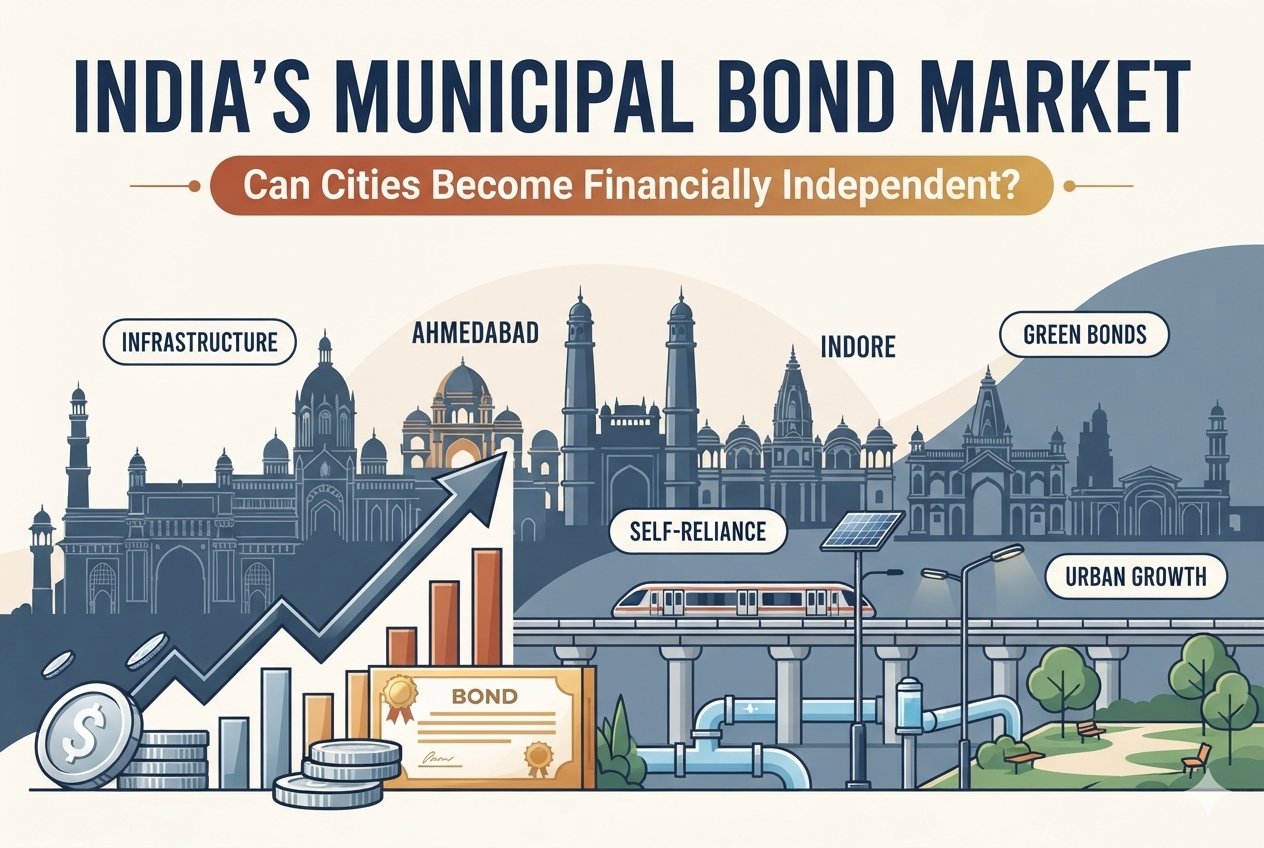
India’s urban development story is entering a new financial chapter. As cities expand and infrastructure requirements increase, municipal corporations are exploring an alternative source of funding: Municipal Bonds.
A recent development highlights this shift. On 10 November 2026, Patna Municipal Corporation’s ₹200 crore municipal bond was listed on the National Stock Exchange (NSE), marking the first municipal bond listing by an urban local body in Bihar.
The corporation raised approximately ₹199.99 crore through the issue, which attracted investor bids exceeding ₹205 crore. The bonds carry a 9.20% annual coupon rate and have a tenure of 10 years.
This is more than a financial transaction. It represents an important step towards strengthening the financial capacity of urban local bodies.
What Are Municipal Bonds?
Municipal bonds are debt instruments issued by urban local bodies, such as municipal corporations, to raise funds from investors for infrastructure and development projects.
Instead of depending entirely on government grants or traditional borrowing, municipalities can access capital markets and raise funds for projects such as:
- Roads, bridges and transportation infrastructure.
- Water supply and sewage treatment.
- Waste management and sanitation.
- Public markets and commercial facilities.
- Urban redevelopment and smart-city initiatives.
The funds raised are generally repaid through designated municipal revenues or project-related income, depending on the structure of the bond.
Why Does This Matter for India?
India’s growing urban population demands substantial investment in public infrastructure. Municipal bonds can help bridge the gap between infrastructure requirements and available public funds.
1. Financial independence: Municipalities can diversify their funding sources and reduce excessive dependence on government grants.
2. Better accountability: Access to capital markets encourages stronger financial reporting, disclosure practices and governance.
3. Investor participation: Institutional investors can participate in financing projects that directly contribute to urban development.
4. Sustainable infrastructure: Municipal bonds can support long-term investments in water management, public transportation, sanitation and other essential services.
The Challenges Ahead
Despite their potential, municipal bonds are not without challenges.
- Limited revenue-generating capacity of several municipal bodies.
- Weak financial reporting and inadequate financial disclosures.
- Creditworthiness concerns and repayment risks.
- Dependence on property tax collections and other municipal revenues.
- Limited investor awareness and participation.
A successful bond issue is only the beginning. The real test lies in the municipality’s ability to utilise the funds efficiently and meet its repayment obligations.
The Way Forward
For India’s municipal bond market to grow, urban local bodies must strengthen their financial management systems, improve revenue collection, maintain transparent accounts and develop credible long-term infrastructure plans.
Regulatory compliance, sound governance and responsible utilisation of borrowed funds will be essential to building investor confidence.
Conclusion: Financing the Cities of Tomorrow
Patna’s ₹200 crore municipal bond issuance sends an encouraging signal for India’s evolving municipal finance ecosystem.
However, the success of municipal bonds should not be measured merely by the amount of money raised. It should be measured by the quality of infrastructure created, the improvement in public services and the financial discipline maintained by the issuing authority.
The future of India’s cities will depend not only on how much infrastructure we build, but also on how intelligently we finance it.
Because financially stronger cities are essential to building a financially stronger India.
— Ankita Nag