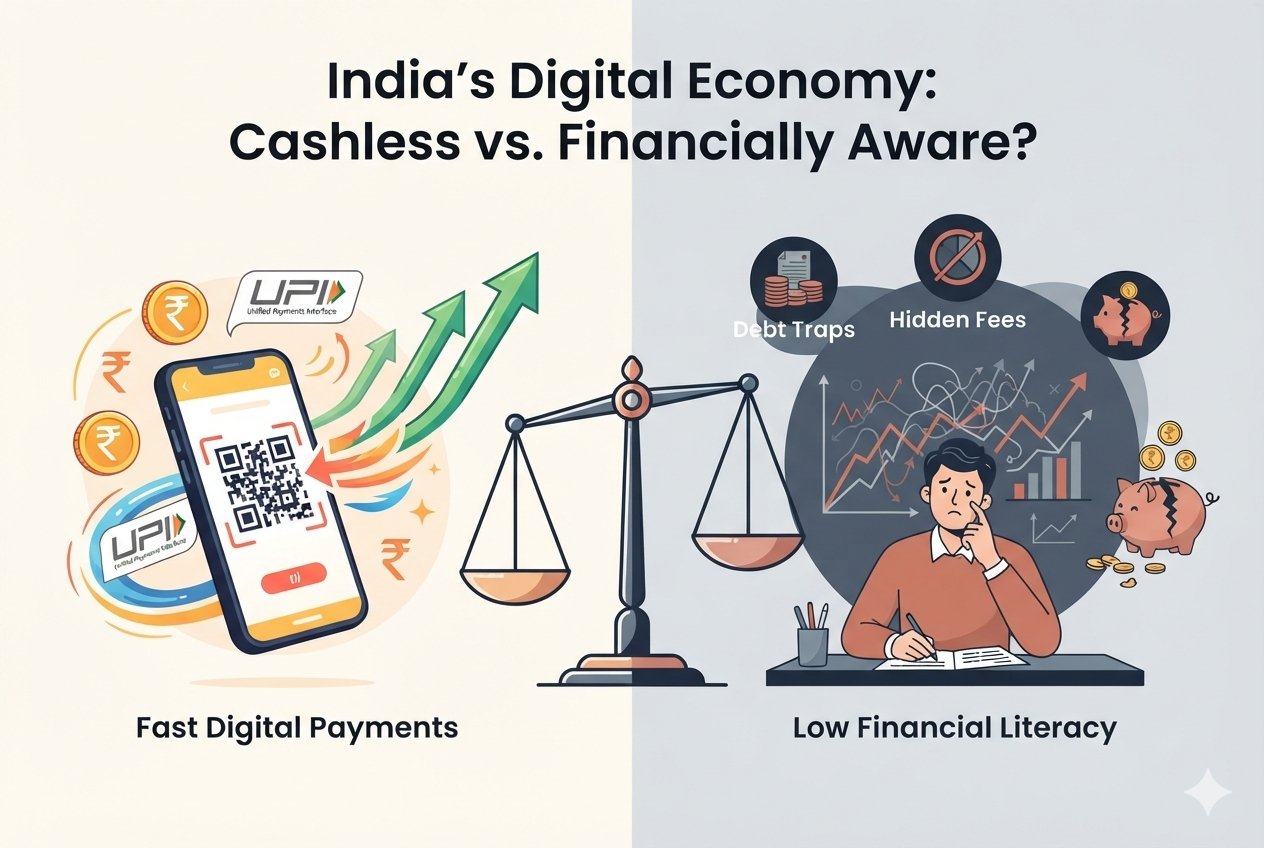
India’s digital payment revolution has transformed the way people transact. From small street vendors to large businesses, QR codes and UPI have become an integral part of everyday financial life.
But an important question deserves attention:
Are we becoming digitally empowered, or simply digitally dependent?
India’s digital economy has grown beyond convenience. Digital payments have reduced transaction barriers, improved accessibility and helped millions participate in the formal financial ecosystem.
However, the growth of digital transactions must go hand in hand with financial awareness.
The Other Side of Digital Convenience
While digital payments make transactions faster, they also introduce challenges:
- Cybersecurity risks: Increasing digital transactions create opportunities for online fraud and financial scams.
- Lack of financial awareness: Many users understand how to make payments but may not understand digital lending, interest rates or financial risks.
- Digital dependency: Technical failures, network issues and payment disruptions can affect individuals and businesses.
- Data privacy: Financial convenience also raises questions about how personal and transactional information is protected.
What Does India Need Next?
The next phase of India’s digital transformation should not focus only on increasing digital transactions. It should focus on creating financially informed digital citizens.
Financial literacy, cybersecurity awareness, responsible borrowing and stronger consumer protection must become essential components of digital growth.
The Bigger Economic Picture
A successful digital economy is not measured merely by the number of transactions processed. It is measured by how confidently, safely and responsibly people participate in it.
India has made remarkable progress in building digital financial infrastructure. The next challenge is ensuring that financial awareness grows at the same pace.
Because a truly cashless economy must also be a financially conscious economy.