By The Worldonomics Times
International trade is facing growing uncertainty as geopolitical tensions, regional conflicts, changing trade policies, economic sanctions, and disruptions to major shipping routes reshape the global business environment. For decades, international commerce has relied on interconnected supply chains, predictable trade regulations, and relatively stable transportation networks. Today, these foundations are under increasing pressure as governments prioritise national security, strategic independence, and domestic economic interests.
The consequences extend far beyond the countries directly involved in geopolitical disputes. Businesses are experiencing higher operating costs, manufacturers are reconsidering sourcing strategies, and governments are working to protect essential supplies of energy, food, technology, and industrial materials.
According to the United Nations Conference on Trade and Development (UNCTAD), global merchandise trade growth is expected to slow in 2026 as geopolitical uncertainty weighs on investment, trade flows, and supply chains. The organisation’s May 2026 outlook projected real merchandise trade growth of between 1.5% and 2.5%, compared with 4.7% in 2025. These projections underline the risks facing the international trading system.
Geopolitical Conflicts Disrupt Global Trade Routes
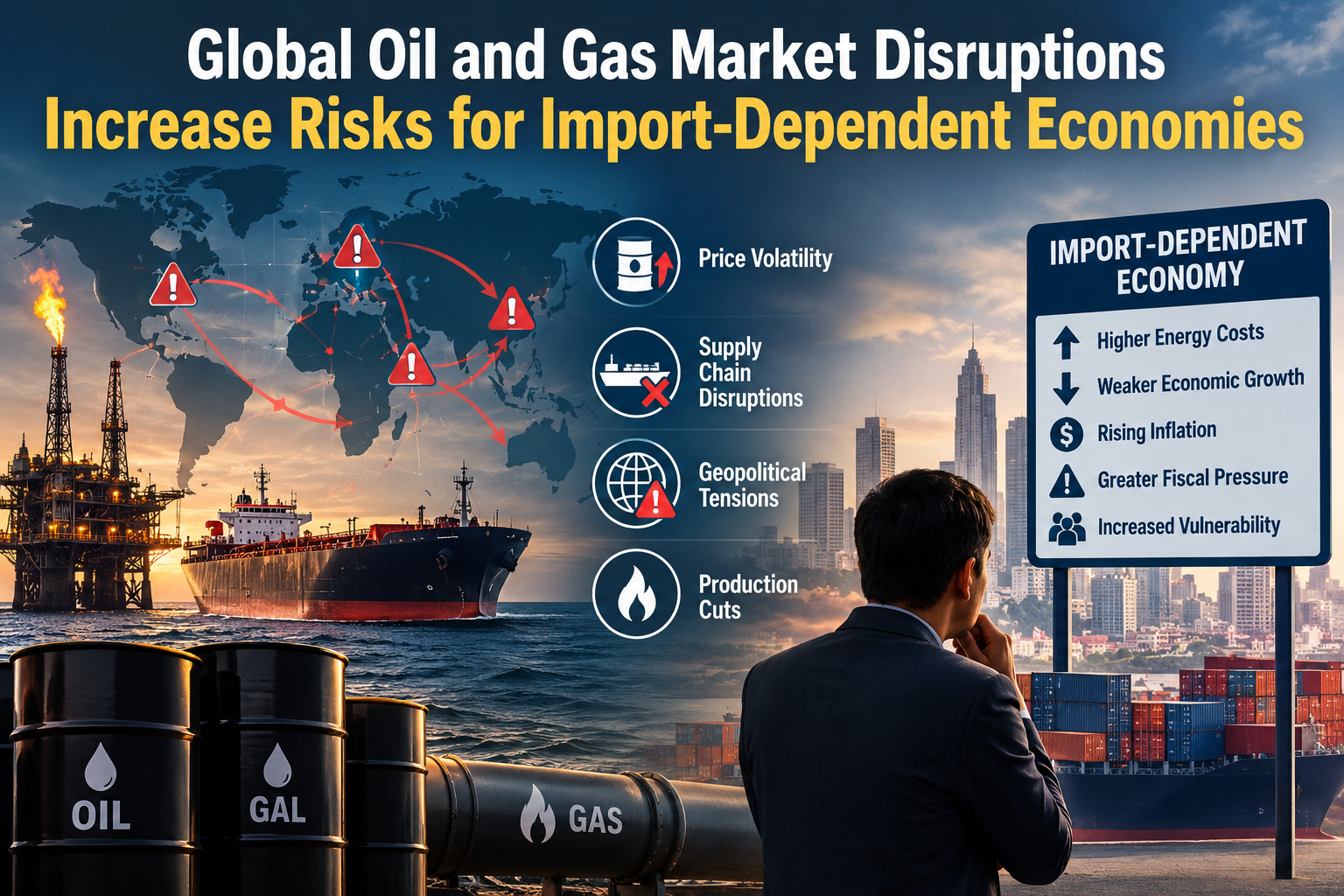
One of the most immediate challenges for international trade is the disruption of important maritime transportation routes. A substantial proportion of global merchandise trade moves through strategic waterways, making international shipping particularly vulnerable to regional conflicts and security threats.
The Strait of Hormuz, the Red Sea, the Bab el-Mandeb Strait, and the Suez Canal are important links in global supply networks. Disruptions in these areas can force shipping companies to change routes, extend delivery times, and pay higher insurance and fuel costs.
The conflict in the Middle East during 2026 has demonstrated how quickly geopolitical developments can affect international commerce. Disruptions to energy shipments and maritime transportation have created uncertainty for importers, exporters, logistics companies, and energy-dependent industries.
When ships are forced to take longer routes, businesses face additional transportation expenses and delays. These costs can eventually reach consumers through higher prices for imported goods and essential commodities.
Trade Restrictions and Tariff Policies Increase Uncertainty
Changing tariff policies and trade restrictions are adding another layer of complexity to international business.
Governments increasingly use tariffs, export controls, economic sanctions, and investment restrictions to protect domestic industries and address national security concerns. Although such measures may serve specific policy objectives, frequent changes can make international business planning difficult.
Manufacturers that depend on imported components may face higher production costs when tariffs increase. Exporters can also lose access to important markets if trading partners introduce new restrictions or retaliatory measures.
The World Trade Organization’s 2026 World Trade Report highlights the serious challenges facing the multilateral trading system. It warns that geopolitical tensions and growing differences in national economic policies are placing pressure on established trade rules.
The report also illustrates the potential economic costs of fragmentation. In a scenario where global trade divides into geopolitically aligned blocs, WTO simulations suggest that global GDP could decline by 5.1% and global exports by 18.6%.
These risks demonstrate why predictable trade policies and international cooperation remain essential.
Global Supply Chains Face Pressure
Modern manufacturing depends on complex international supply chains. A single product may involve raw materials from one country, components from another, assembly in a third, and distribution across several international markets.
Geopolitical tensions can interrupt these networks through sanctions, border restrictions, export controls, transportation disruptions, or shortages of essential materials.
Industries such as automobiles, electronics, pharmaceuticals, semiconductors, chemicals, and renewable energy equipment are particularly exposed because they depend on specialised components and international suppliers.
Businesses are responding by diversifying suppliers, increasing inventories, relocating selected production activities, and exploring alternative trade routes.
Although these strategies can improve resilience, they may also increase operating costs. Companies must balance the efficiency of global sourcing with the need to maintain reliable access to essential materials.
Impact on Developing Economies
Developing economies often face greater challenges during periods of international trade uncertainty. Many depend on imported energy, fertilisers, food products, industrial equipment, and advanced technologies to support domestic economic activity.
Higher shipping costs and commodity prices can increase import bills, weaken external financial positions, and contribute to domestic inflation. Countries with limited financial resources may find it particularly difficult to absorb prolonged disruptions.
UNCTAD has highlighted the vulnerability of developing economies to geopolitical shocks, especially when energy and shipping disruptions increase the cost of essential imports.
At the same time, changing global supply chains may create opportunities for emerging markets. Countries offering competitive manufacturing capabilities, reliable infrastructure, skilled workers, and stable business environments could attract new investment as companies diversify their production networks.
India’s Position in a Changing Global Trade Environment
India has an important opportunity to strengthen its position in international trade as global companies reconsider their supply chain strategies.
With a large domestic market, expanding manufacturing capabilities, improving logistics infrastructure, and a growing technology sector, India can become an increasingly attractive destination for international investment and production diversification.
However, the country is not insulated from global disruptions. Higher energy prices, shipping delays, trade restrictions, and volatility in international commodity markets can affect Indian exporters and import-dependent industries.
Sectors such as pharmaceuticals, automobiles, electronics, textiles, engineering goods, and chemicals may experience both challenges and new opportunities as international sourcing patterns change.
Strengthening domestic manufacturing, expanding trade partnerships, improving port and transport infrastructure, and supporting small and medium-sized exporters will be important for India’s long-term competitiveness.
India’s participation in regional and bilateral trade agreements can also help businesses access new markets and reduce excessive dependence on a limited number of trading partners.
The Future of International Trade Cooperation
Despite rising geopolitical tensions, international trade remains essential for economic growth, employment, technological development, and access to resources.
No country can efficiently produce every product and service required by its economy. International cooperation therefore remains necessary to maintain stable supply chains, encourage investment, and support economic development.
The World Trade Organization and other multilateral institutions have an important role in facilitating dialogue, resolving trade disputes, and promoting transparent trade regulations.
Governments must also recognise that excessive trade fragmentation can increase costs for businesses and consumers while reducing opportunities for developing economies.
A more resilient international trading system will require stronger cooperation on customs procedures, digital trade, transportation security, critical supply chains, and investment regulations.
The Worldonomics Times View
Geopolitical tensions are changing the structure of international trade, making economic relationships increasingly influenced by national security, strategic competition, and political priorities.
In our view, the biggest challenge is not simply the possibility of individual trade disruptions but the growing uncertainty surrounding the rules and relationships that support global commerce.
Governments should avoid unnecessary trade barriers and prioritise dialogue when economic disagreements arise. While protecting national interests is important, policies that create prolonged uncertainty can damage businesses, discourage investment, and increase costs for consumers.
For businesses, supply chain diversification, strategic inventory management, digital transformation, and careful assessment of geopolitical risks will become essential elements of long-term planning.
India and other emerging economies should use this changing environment to strengthen manufacturing capacity, improve trade infrastructure, and develop broader international partnerships.
Ultimately, global trade cannot remain sustainable through competition and restrictions alone. It requires cooperation, transparency, and a shared commitment to economic stability.
The future of international commerce will depend on how effectively countries balance national interests with the benefits of global economic integration. Those that build resilient supply chains while maintaining constructive international relationships will be better positioned to navigate uncertainty and capture the opportunities of a changing global economy.