From Social Media Posts to Sustainable Enterprises: Understanding India’s New Digital Business Revolution
A decade ago, content creation was largely considered a hobby. Today, it has evolved into a serious business opportunity, creating entrepreneurs, generating employment and attracting investments.
From YouTubers and Instagram influencers to podcasters, educators and independent digital publishers, creators are building businesses around their knowledge, creativity and audiences.
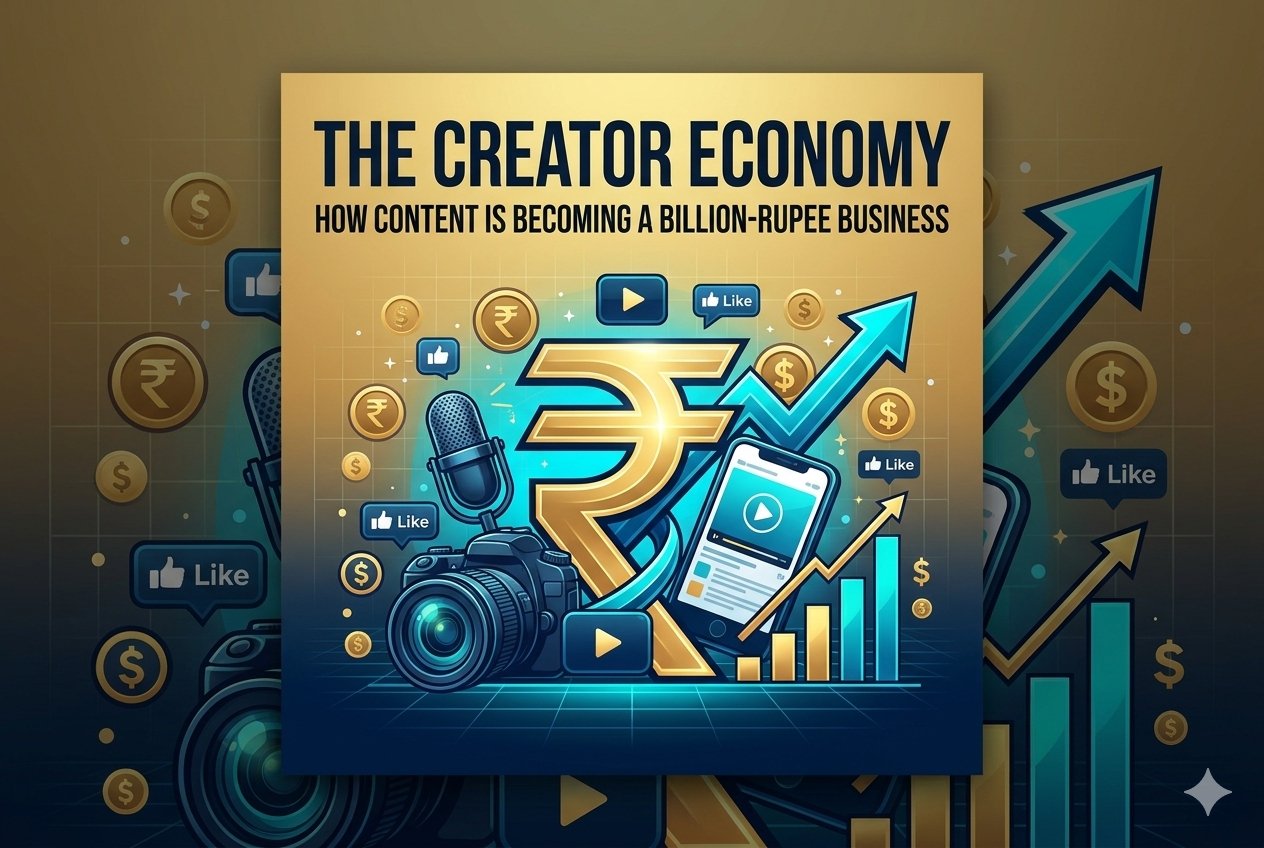
Welcome to the Creator Economy, where content is no longer just entertainment; it is an economic asset.
1. What Is the Creator Economy?
The creator economy refers to the ecosystem of individuals and businesses that create, distribute and monetise digital content through online platforms.
It includes:
- Video creators and social media influencers.
- Independent journalists and digital publishers.
- Online educators and knowledge entrepreneurs.
- Podcasters and digital storytellers.
- Designers, animators and digital artists.
The ecosystem also includes brands, advertising agencies, technology platforms, talent management companies and payment service providers.
2. India’s Creator Economy: More Than Just Social Media
India is emerging as one of the world’s significant digital content markets.
According to the YouTube Impact Report highlighted at the YouTube Impact Summit 2026, YouTube’s creative ecosystem contributed more than ₹18,000 crore to India’s GDP in 2025 and supported over 9.6 lakh full-time-equivalent jobs.
The government has also highlighted the growing importance of the Orange Economy, which includes creative industries such as animation, visual effects, gaming, comics and digital content production.
This indicates that content creation is increasingly becoming part of India’s broader economic and employment landscape.
3. How Do Content Creators Make Money?
Behind every successful creator is a business model.
Unlike traditional employment, creators can generate income through multiple channels.
Advertising Revenue: Creators earn through advertisements displayed on their content, subject to platform policies and eligibility requirements.
Brand Collaborations: Companies pay creators to promote products and services to targeted audiences.
Subscriptions and Memberships: Exclusive content, premium communities and paid memberships provide recurring revenue opportunities.
Digital Products: Creators can sell online courses, e-books, templates, research reports and other digital products.
Affiliate Marketing: Creators earn commissions by referring customers to products or services.
This diversification is important because depending entirely on one platform or revenue stream can expose a creator’s business to considerable risk.
4. The Financial Side of Content Creation
One interesting aspect of the creator economy is that it combines creativity with financial management.
A content creator operating professionally must understand several business fundamentals:
- Revenue recognition and income tracking.
- Budgeting and cash-flow management.
- Tax compliance and financial documentation.
- Contract management and commercial negotiations.
- Intellectual property rights and licensing.
- Cost management and return on investment.
For instance, a creator may generate substantial revenue but still struggle financially because of production expenses, employee payments, marketing costs and irregular income.
Therefore, financial discipline is just as important as creative talent.
5. The Challenges: Is Every Creator a Successful Entrepreneur?
Despite its opportunities, the creator economy comes with significant risks.
Platform Dependency: Changes in algorithms, monetisation policies or account restrictions can directly affect income.
Unpredictable Earnings: Unlike salaried employment, creator income can fluctuate considerably.
Intellectual Property Risks: Copyright infringement, unauthorised content usage and ownership disputes can create legal and financial challenges.
Competition and Sustainability: Consistently producing original and engaging content requires time, investment and creativity.
Digital Fraud and Misleading Promotions: Undisclosed sponsorships and misleading product endorsements can damage consumer trust and brand reputation.
The long-term success of this industry will depend on transparency, professional management and responsible content creation.
6. The Future: From Individual Creators to Creator-Led Businesses
The next phase of the creator economy may be defined by professionalisation.
Creators are increasingly moving beyond individual social media accounts to establish production studios, digital education businesses, media companies and independent brands.
Artificial intelligence is also changing content research, editing, translation and distribution.
However, technology alone cannot guarantee success. Originality, credibility and audience trust will remain important competitive advantages.
For India, the opportunity extends beyond social media. It includes employment generation, digital entrepreneurship, creative exports and the development of globally competitive media businesses.
Conclusion: Content Is the New-Age Enterprise
The creator economy demonstrates how individual knowledge, creativity and digital platforms can combine to create economic value.
What once began as a form of online expression is increasingly developing into a structured business ecosystem.
However, sustainable success requires more than followers and views. It demands financial planning, regulatory awareness, intellectual property protection and a long-term business strategy.
In the new digital economy, content may attract attention, but credibility, consistency and financial discipline create lasting value.
— Ankita Nag