By The Worldonomics Times
The European economy is demonstrating resilience despite persistent energy price increases, inflationary pressures, geopolitical uncertainty, and challenging global economic conditions. While rising energy costs and higher borrowing expenses continue to create difficulties for businesses and households, economic activity across the region has remained stronger than many analysts initially expected.
Europe’s ability to withstand recent economic shocks reflects several supporting factors, including resilient consumer spending, infrastructure investment, expanding digital industries, and improved energy efficiency. However, the outlook remains uncertain as geopolitical tensions, international supply disruptions, and inflation continue to influence business confidence and financial markets.
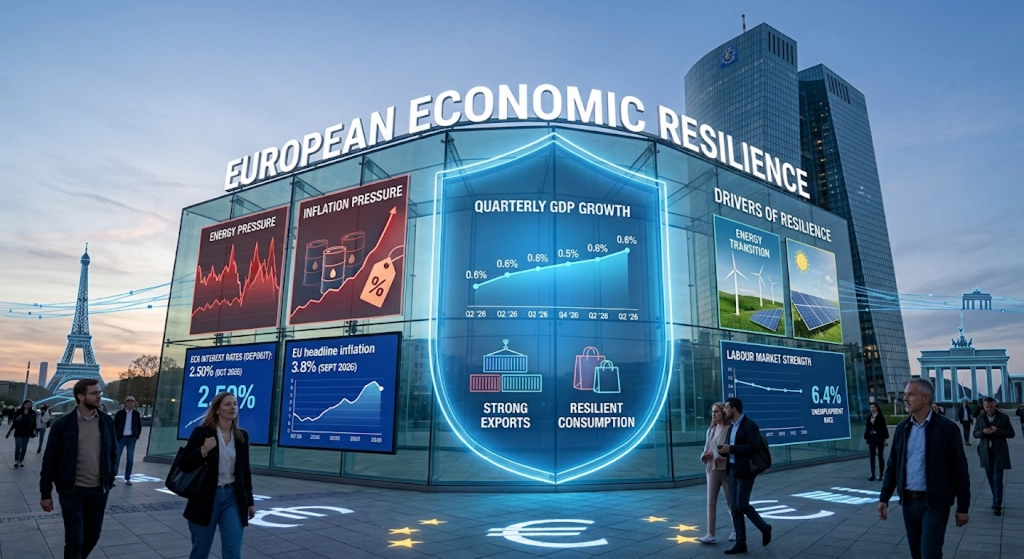
According to preliminary estimates reported in October 2026, the eurozone economy expanded by 0.4% in the third quarter, exceeding economists’ expectations of 0.2%. Annual growth reached 1.3%, demonstrating that economic activity has continued despite significant external challenges.
These developments suggest that Europe’s economy is not immune to global uncertainty, but its underlying strengths are helping it manage the pressure.
Economic Growth Remains Positive Despite Global Challenges
European economic growth has remained positive, supported by domestic demand, investment, and activity in several important industries.
The European Central Bank has reported that services activity recovered during the third quarter, while manufacturing, digital services, and exports benefited from investment related to artificial intelligence. Government spending on infrastructure and defence has also contributed to economic activity.
According to BusinessEurope’s Autumn 2026 Economic Outlook, published on November 12, the European Union’s economy is projected to grow by 1.4% in 2026, while eurozone growth is expected to reach 1.2%.
These projections indicate that the European economy has performed better than previously anticipated despite the renewed energy shock.
Nevertheless, growth remains uneven across countries. Germany has recorded modest expansion, while Spain and the Netherlands have demonstrated stronger performance. France and Italy have faced comparatively greater economic difficulties.
The differences highlight how domestic demand, industrial structure, government spending, and national economic policies influence individual countries’ ability to withstand external shocks.
Rising Energy Prices Continue to Create Inflationary Pressure
Energy remains one of the biggest challenges facing the European economy.
Geopolitical tensions and disruptions to international energy supplies have contributed to higher oil, natural gas, and electricity prices. These increases affect transportation, manufacturing, agriculture, construction, and other energy-dependent industries.
The European Central Bank’s October 2026 Economic Bulletin reported that eurozone inflation increased to 3.8% in September, compared with 3.2% in August. Energy inflation rose sharply to 18.9%, highlighting the significant influence of higher energy costs on consumer prices.
Expensive energy also affects household budgets. Higher electricity, heating, and transportation expenses reduce disposable income and can discourage consumer spending.
Although Europe has reduced its dependence on fossil fuels compared with previous decades, energy market volatility continues to influence production costs and economic confidence.
European Central Bank Faces Difficult Monetary Policy Decisions
The European Central Bank faces the challenge of controlling inflation without unnecessarily weakening economic growth.
Higher interest rates can help reduce inflation by limiting borrowing, consumption, and excessive investment. However, they also increase financing costs for businesses, households, and governments.
At its October 29 meeting, the ECB kept its three key interest rates unchanged. The central bank emphasised that rising energy prices create additional upside risks to inflation and downside risks to economic growth.
The ECB has maintained a data-dependent approach, indicating that future decisions will depend on inflation developments, wage trends, financial conditions, and the broader economic outlook.
A November 12 Reuters survey of economists found that all 71 respondents expected the ECB to increase its deposit rate by 0.25 percentage points in December, although opinions differed over whether further increases would be necessary in 2027.
This uncertainty demonstrates the difficult balance between maintaining price stability and supporting economic activity.
Businesses Adapt to Higher Operating Costs
European businesses are facing considerable pressure from rising energy prices, transportation expenses, labour costs, and financing requirements.
Energy-intensive industries, including chemicals, steel, automotive manufacturing, and heavy engineering, are particularly exposed to fluctuations in electricity and natural gas prices.
Small and medium-sized enterprises also face difficulties because they often have limited financial resources to absorb sudden increases in operating expenses.
However, many companies are responding by improving energy efficiency, investing in automation, adopting digital technologies, and diversifying their supply chains.
Investment in artificial intelligence and advanced manufacturing is also supporting productivity and business competitiveness.
According to BusinessEurope’s November outlook, business sentiment has improved compared with the spring of 2026, although conditions remain uneven across industries and countries.
Maintaining competitiveness will depend on whether European businesses can manage higher costs while continuing to invest in innovation and modern production capabilities.
Energy Transition Strengthens Europe’s Long-Term Resilience
One important reason for Europe’s ability to manage energy shocks is its gradual transition towards a more diversified energy system.
Investment in renewable energy, electricity infrastructure, energy storage, and efficiency improvements has reduced the region’s exposure to fossil fuel price fluctuations.
An October 2026 analysis by the European Central Bank noted that the eurozone economy is now only around half as reliant on oil as it was in the early 1990s. Improvements in energy efficiency and the expansion of less energy-intensive services have helped reduce the economic impact of oil supply shocks.
However, the transition remains incomplete. Europe still depends on international energy markets, and disruptions to gas and oil supplies can affect industrial production and household costs.
Continued investment in renewable energy, modern electricity grids, storage technologies, and cross-border energy infrastructure will therefore be essential.
Implications for India and Global Trade
Europe remains an important trading partner for India, making its economic performance relevant to Indian exporters, manufacturers, and service providers.
Stronger European demand can create opportunities for Indian businesses operating in pharmaceuticals, textiles, engineering goods, information technology, automobiles, and other export-oriented industries.
However, prolonged inflation and higher borrowing costs in Europe could weaken consumer demand and reduce import growth.
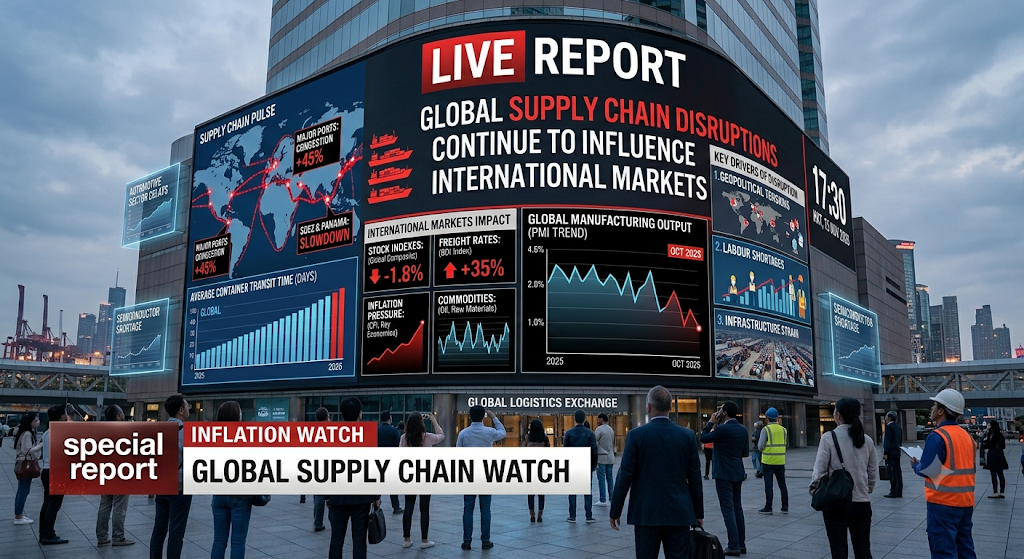
Energy price volatility can also affect international commodity markets, transportation expenses, and global supply chains, indirectly influencing Indian businesses.
For India, maintaining diversified export markets, strengthening manufacturing capabilities, and improving trade partnerships will be important in managing uncertainty in the European market.
The Worldonomics Times View
Europe’s economic performance demonstrates that resilience is not simply determined by short-term growth figures. It also depends on the ability of economies to adapt to external shocks, maintain investment, protect employment, and strengthen long-term competitiveness.
In our view, Europe has demonstrated important strengths through improved energy efficiency, resilient services activity, infrastructure spending, and investment in digital technologies. These factors have helped the region absorb some of the impact of higher energy prices and geopolitical uncertainty.
However, policymakers must avoid becoming complacent. Persistent inflation can weaken household purchasing power, while higher interest rates may discourage business investment and increase financial pressure on governments.
European countries should prioritise affordable energy, industrial modernisation, supply chain diversification, and investment in emerging technologies. Greater coordination among European economies will also be necessary to strengthen energy security and maintain a competitive internal market.
For businesses, productivity improvements, responsible financial planning, and technological innovation will remain essential to navigating uncertain economic conditions.
Ultimately, Europe’s resilience offers an important lesson for other economies: sustainable growth requires more than short-term financial stability. It depends on strong institutions, diversified energy sources, productive investment, and the ability to respond effectively to changing global conditions.
Although energy and inflation pressures are likely to remain important challenges, Europe’s economic foundations provide reasons for cautious optimism. The region’s ability to balance price stability with investment and innovation will determine how successfully it navigates the next phase of global economic uncertainty.