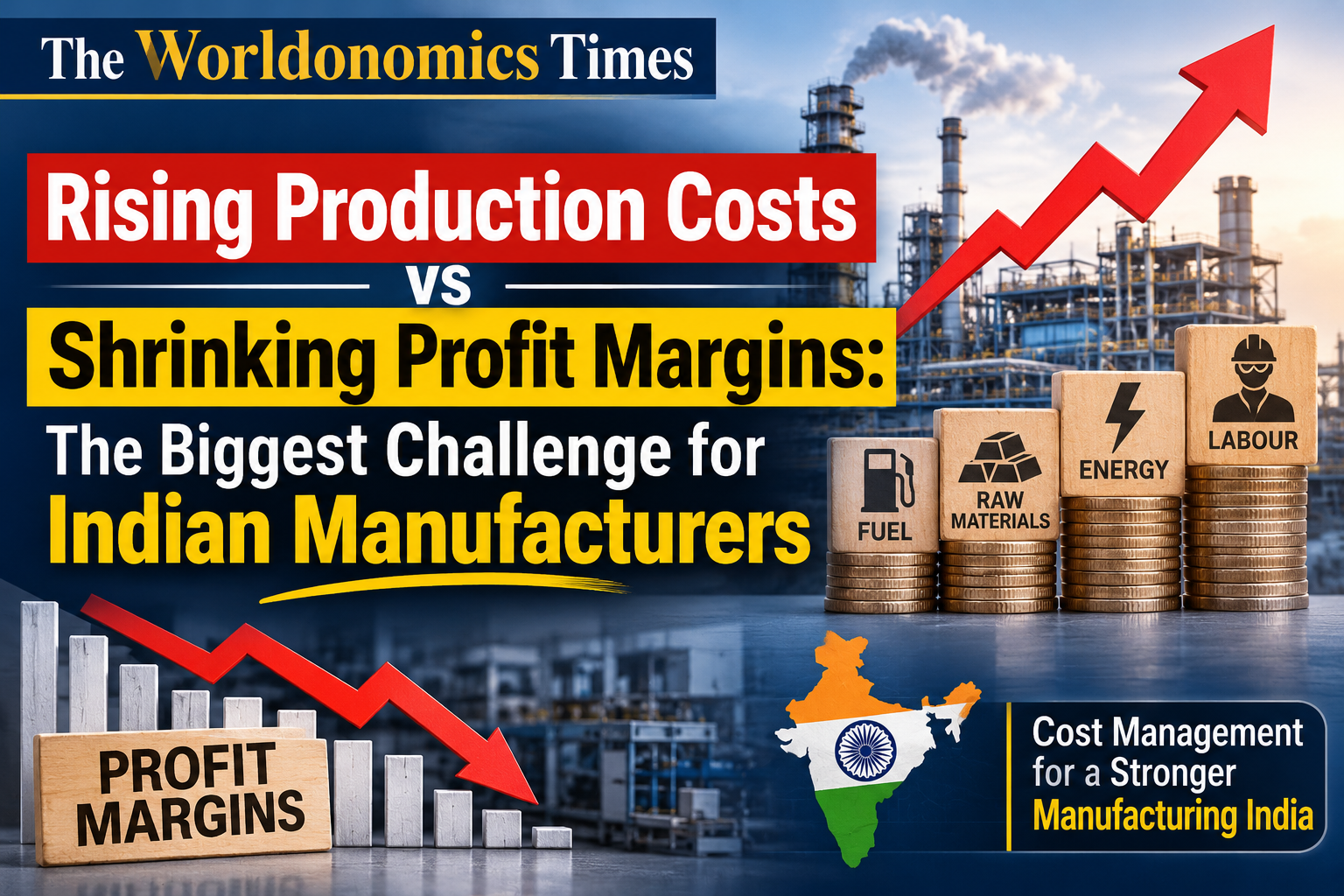
India’s manufacturing sector is facing a growing financial challenge: the rising cost of production and the increasing difficulty of protecting profit margins. While industrial activity and business demand continue to evolve, manufacturers are struggling to balance higher input costs with competitive product pricing.
The issue is not simply about expensive raw materials. It involves energy prices, transportation, labour expenses, inventory management and the ability of businesses to transfer additional costs to customers.
The Rising Cost of Manufacturing
Recent economic indicators highlight the growing pressure on production costs. According to the Ministry of Commerce and Industry, India’s Wholesale Price Index (WPI) inflation increased to 12.29% in October 2026, compared with 11.39% in September.
More significantly, inflation in the Fuel and Power category reached 32.84%, while manufactured products recorded inflation of 9.54%. Basic metals, chemicals, textiles and rubber and plastic products were among the categories contributing to wholesale price pressures.
These developments matter because manufacturing depends heavily on energy, raw materials and industrial inputs. An increase in electricity, fuel, metals or chemical prices can raise the cost of producing everything from automobiles and machinery to packaged consumer goods.
Why Are Profit Margins Under Pressure?
Higher production costs do not automatically translate into higher selling prices.
Manufacturers operate in competitive markets where customers are sensitive to price changes. Increasing product prices may result in reduced demand, loss of market share or customers switching to cheaper alternatives.
The Reserve Bank of India’s Industrial Outlook Survey for Q2 2026-27 also highlighted elevated raw material cost pressures, while manufacturers reported moderation in selling-price sentiments.
This creates a difficult situation: businesses are paying more to produce goods but cannot necessarily charge customers proportionately more.
Consequently, the difference between revenue and production costs becomes narrower, putting pressure on operating profitability.
The Role of Cost Accounting in Protecting Profitability
In this environment, cost accounting is no longer limited to calculating the cost of a finished product. It has become an important management tool for controlling expenses and supporting strategic decisions.
Businesses need to identify where costs are increasing, understand the reasons behind cost variations and evaluate whether existing production processes remain efficient.
Some important cost-management approaches include:
- Standard Costing and Variance Analysis: Comparing actual costs with predetermined standards helps identify material price, material usage, labour and overhead variances.
- Activity-Based Costing (ABC): Allocating overheads according to activities provides better visibility into the actual cost of individual products and processes.
- Marginal Costing: Understanding contribution and break-even levels helps management make informed pricing and production decisions.
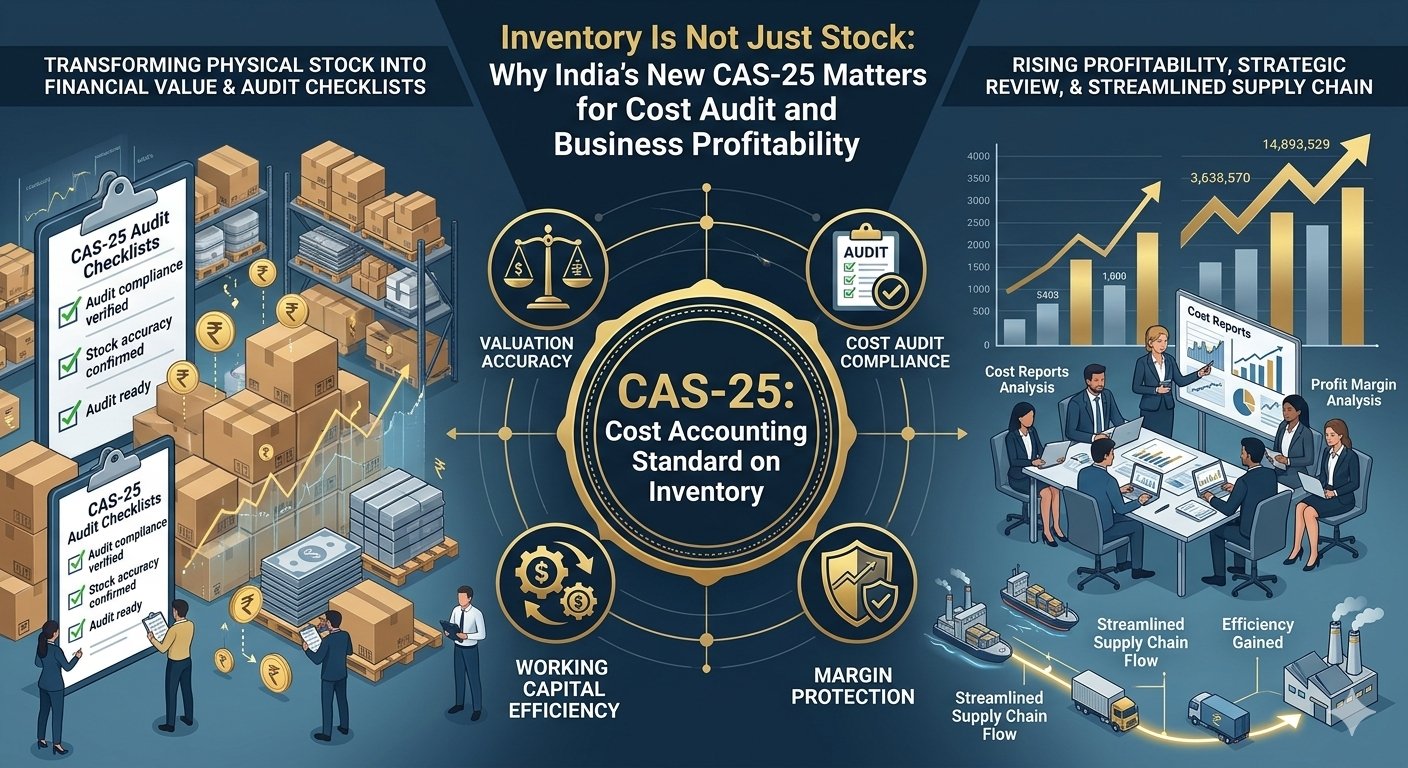
- Inventory Management: Reducing excess inventory, wastage and storage costs can release working capital and improve operational efficiency.
- Budgetary Control: Regular monitoring of production budgets helps identify unnecessary expenditure before it affects profitability.
The objective should not be indiscriminate cost-cutting. Reducing quality, maintenance or essential workforce expenditure may create larger financial problems in the long run.
Can Technology Help Reduce Production Costs?
Technology offers another opportunity for manufacturers to improve cost efficiency. Automation, predictive maintenance, digital inventory systems and data-driven production planning can reduce material wastage, machine downtime and avoidable operating expenses.
However, technological investment also involves capital expenditure, implementation costs and employee training. Businesses must therefore evaluate the long-term financial benefits against the initial investment through appropriate capital budgeting techniques.
For smaller manufacturers and MSMEs, adopting technology gradually may be more practical than making large investments immediately.
The Way Forward
India’s manufacturing competitiveness will depend not only on increasing production capacity but also on improving cost efficiency and financial discipline.
Manufacturers need to focus on accurate product costing, efficient resource utilisation, supplier negotiations, energy management and better working-capital control.
Government policy and infrastructure development can support the sector, but individual businesses must also strengthen their internal cost-management systems.
Conclusion
Rising production costs and shrinking profit margins represent a significant challenge for Indian manufacturers. In an environment where passing additional costs to customers is not always possible, profitability increasingly depends on how effectively businesses manage their resources.
Ultimately, the competitive advantage will belong not simply to manufacturers that produce more, but to those that understand their costs better, control operational inefficiencies and protect profitability without compromising quality.