By The Worldonomics Times
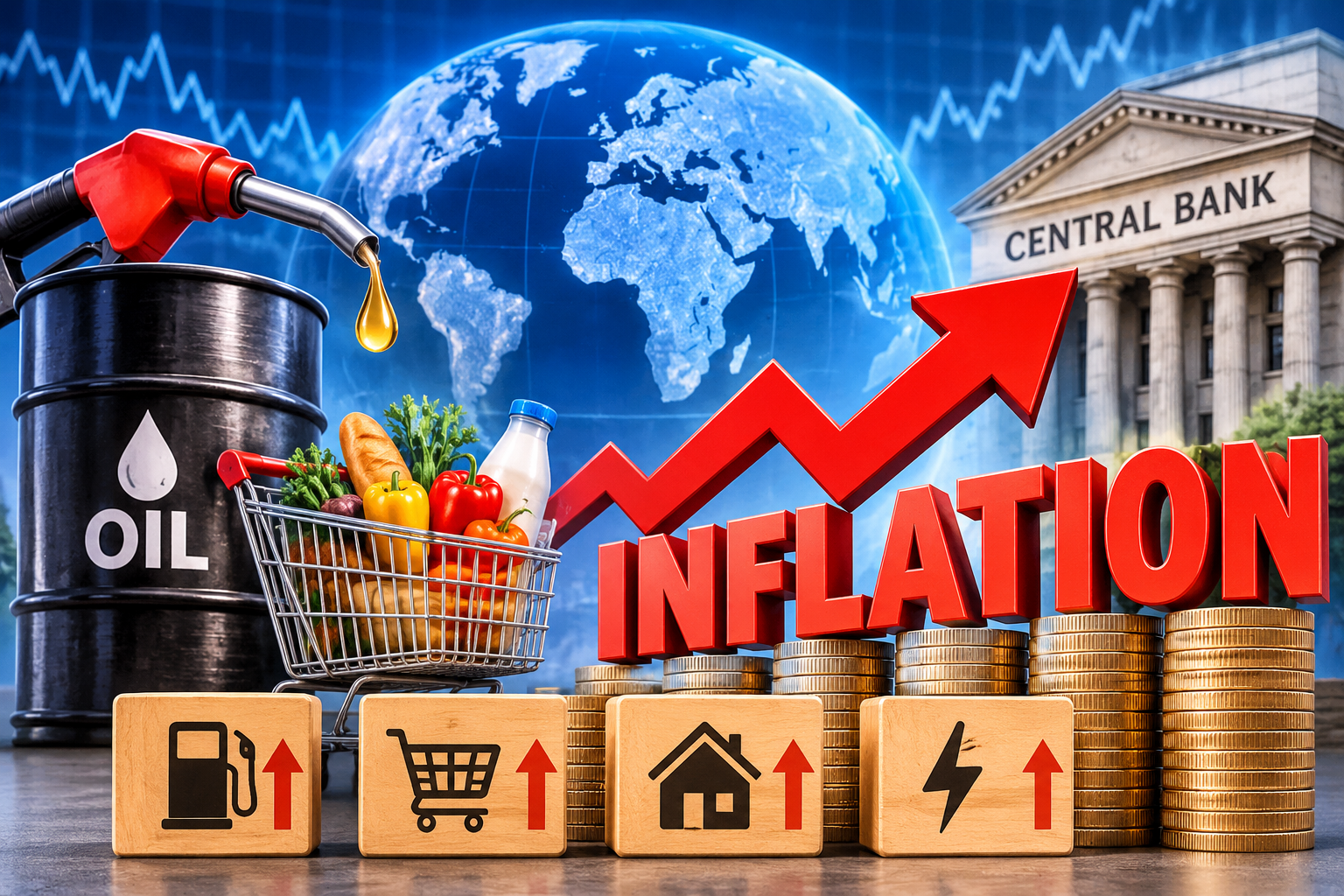
Global inflation is once again becoming a major concern for policymakers as rising energy costs, geopolitical uncertainty and persistent price pressures complicate the economic outlook. Although inflation had moderated in several major economies, recent developments in international energy markets have slowed progress towards price stability.
Higher oil, gas and electricity prices are increasing operating expenses for businesses and reducing household purchasing power. These pressures are creating difficult decisions for central banks, which must control inflation without unnecessarily weakening economic growth.
The International Monetary Fund’s October 2026 World Economic Outlook projects global headline inflation at 4.7% in 2026, before easing to 4.1% in 2027. The upward pressure is largely associated with higher commodity prices, particularly energy and food. The IMF also warns that further geopolitical disruptions could keep inflation elevated for longer.
Rising Energy Prices Push Inflation Higher
Energy prices have become one of the most important drivers of renewed inflationary pressure.
Oil and natural gas are essential inputs across transportation, electricity generation, manufacturing, agriculture and international logistics. When energy prices increase, businesses face higher production and distribution expenses. These costs can eventually be passed on to consumers through more expensive goods and services.
The Organisation for Economic Co-operation and Development reported that annual inflation across its member economies increased to 4.5% in September 2026, compared with 4.3% in August. Energy inflation accelerated sharply to 17.4%, from 13.6% in the previous month, while core inflation remained broadly stable at 3.7%.
The increase in energy prices was widespread, with energy inflation rising in 31 of the 37 OECD countries for which data were available. In the euro area, headline inflation reached 3.8% in September, while the October preliminary estimate indicated a further increase to 4.0%.
Geopolitical tensions in the Middle East have added to uncertainty by increasing risks to oil production, transportation and shipping routes. Even when supplies are not completely interrupted, higher insurance premiums, freight costs and delivery delays can raise the final price of energy and other imported products.
Food and Transportation Costs Add to Household Pressure
The impact of inflation extends beyond energy markets.
Higher fuel prices increase the cost of transporting agricultural products, industrial materials and consumer goods. Farmers also face pressure from more expensive fertilisers, fuel and agricultural equipment.
Food inflation is particularly concerning because lower-income households generally spend a larger share of their income on essential goods. When food and transportation expenses increase, families have less money available for healthcare, education, housing and discretionary purchases.
The IMF has warned that low-income countries and vulnerable households face significant risks from higher food prices, transportation disruptions and increased fertiliser costs. It also highlights the importance of targeted assistance rather than broad price controls when governments need to protect households from cost-of-living pressures.
For businesses, these developments can reduce profit margins and complicate investment decisions. Smaller companies are particularly vulnerable because they often have less financial flexibility to absorb increases in operating expenses.
Central Banks Face Difficult Monetary Policy Decisions
The renewed inflationary pressure is creating a challenging environment for central banks worldwide.
Monetary authorities generally use interest rates to influence borrowing, spending and investment. Higher rates can reduce demand and help control inflation, but they also increase the cost of mortgages, business loans and government borrowing.
The difficulty is greater when inflation is driven by supply-side factors such as higher oil prices or disrupted shipping routes. Raising interest rates cannot directly increase energy production or restore disrupted supply chains. However, central banks may need to tighten policy if higher costs begin spreading into wages, services and broader consumer prices.
This risk of second-round inflation effects is central to current policy discussions. Policymakers are closely monitoring whether businesses pass higher input costs to consumers and whether workers demand higher wages to compensate for declining purchasing power.
Different Approaches Among Major Central Banks
Major central banks are responding to inflation according to their domestic economic conditions.
United States Federal Reserve: The Federal Reserve maintained its federal funds target range at 3.75%–4.00% at its October 28 meeting. It noted that inflation remained elevated despite resilient economic activity. More recently, comments from Federal Reserve officials have highlighted concerns about persistent services inflation and the possibility that businesses could pass higher input costs on to consumers. This has strengthened expectations of further monetary tightening, although future decisions will depend on incoming economic data.
European Central Bank: The ECB kept its three key interest rates unchanged at its October 29 meeting. However, it warned that the continuing energy shock could increase inflation while weakening economic growth. The central bank is particularly concerned about indirect and second-round effects if elevated energy costs begin influencing other prices and wages.
Bank of England: The Bank of England increased Bank Rate by 0.25 percentage points to 4% in November. UK inflation reached 3.5% in September, and the Bank expects it could rise to approximately 5% by the middle of 2027 as higher energy costs affect household bills and businesses. Its policy decision reflects concerns that inflationary pressures could become more widespread.
These different decisions demonstrate that there is no single monetary policy response suitable for every economy. Central banks must consider domestic inflation, employment, economic growth, currency movements and the extent of exposure to international energy markets.
Implications for Emerging Economies
Emerging economies face particular challenges when global inflation rises.
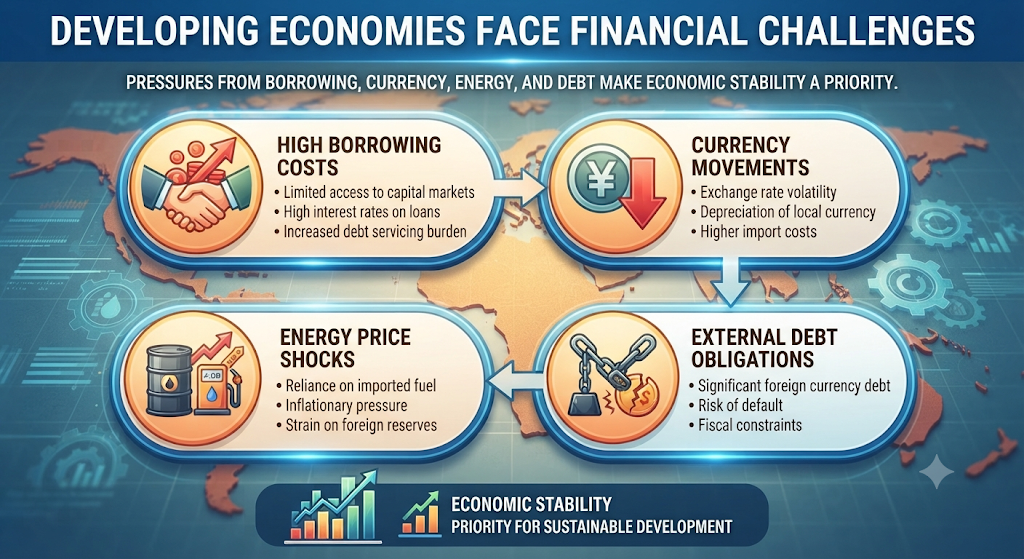
Many developing countries depend heavily on imported crude oil, natural gas, fertilisers and industrial inputs. Higher international prices can increase import bills, weaken domestic currencies and place pressure on foreign exchange reserves.
Currency depreciation can further increase inflation by making imported products more expensive. This creates a difficult situation for policymakers, who may need to maintain higher interest rates even when domestic economic growth is slowing.
Countries with limited fiscal resources also have less flexibility to protect households through subsidies or financial assistance. As a result, rising energy and food costs can have a disproportionate impact on lower-income populations.
The IMF’s October outlook highlights that energy-importing economies with limited participation in technology-driven growth face a particularly difficult combination of higher import costs, weaker real incomes and tighter financial conditions.
Implications for India
India is particularly exposed to international energy-price movements because it relies substantially on imported crude oil to meet domestic demand.
Higher global oil prices can increase the country’s import bill, put pressure on the rupee and raise transportation and manufacturing costs. These effects can eventually influence prices across sectors such as aviation, logistics, chemicals, fertilisers and agriculture.
The Reserve Bank of India has highlighted the risks created by geopolitical uncertainty, energy-price volatility and supply-chain pressures. Its October 2026 monetary policy decision increased the policy repo rate by 25 basis points to 5.50% and shifted the policy stance towards calibrated tightening. The RBI also projected consumer price inflation at 5.2% for the 2026–27 financial year, reflecting concerns about food, fuel and broader price pressures.
For India, maintaining price stability while supporting economic expansion will require careful monetary and fiscal management. Diversifying energy imports, strengthening domestic renewable energy capacity, improving logistics and maintaining adequate food supplies can help reduce the economy’s exposure to external price shocks.
The Worldonomics Times View
Rising global inflation demonstrates how geopolitical developments and energy-market disruptions can influence economic conditions across countries. Although inflation had declined from earlier peaks in many regions, higher energy prices are creating fresh challenges for households, businesses and policymakers.
Central banks must now balance two important objectives: controlling inflation and protecting economic growth. Excessively rapid monetary tightening could weaken investment, employment and consumer spending, while an insufficient response could allow temporary price shocks to become persistent inflation.
Governments also have an important role in addressing supply-side vulnerabilities. Investment in energy diversification, infrastructure, agricultural productivity and resilient supply chains can reduce the impact of future disruptions.
For India and other emerging economies, managing imported inflation will remain a major priority. Stable energy supplies, responsible fiscal policies and effective monetary decisions will be essential for maintaining economic confidence.
Ultimately, the global inflation outlook will depend on energy prices, geopolitical developments, food supplies and the ability of policymakers to prevent temporary cost increases from becoming entrenched across the wider economy. Sustainable price stability will require coordinated action, prudent policy decisions and stronger economic resilience.