The proposed GST framework aims to simplify tax administration for nearly 70 lakh CGST taxpayers, reduce jurisdictional complexities and improve transparency for businesses across India.
By The Worldonomics Times | 19 November 2026
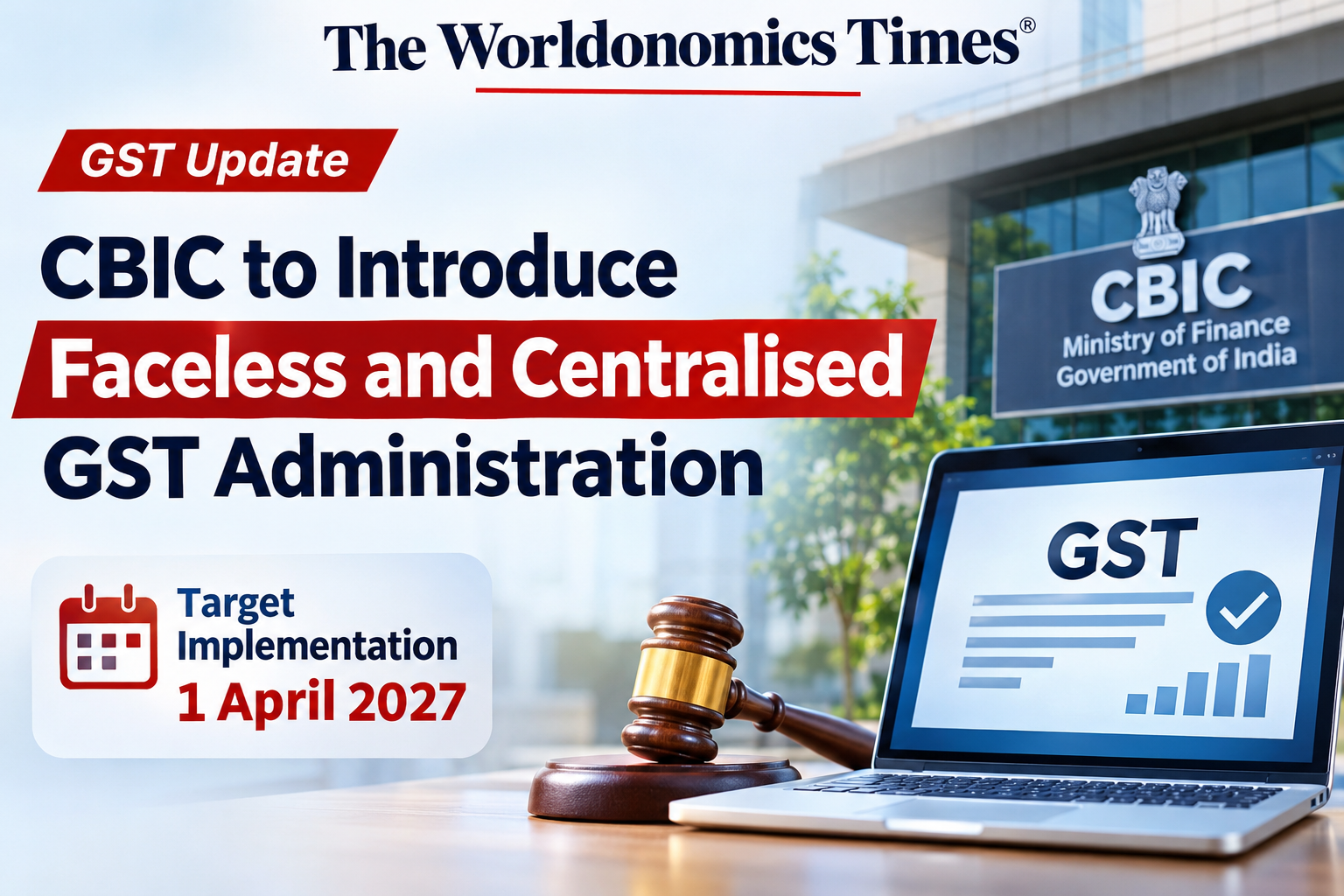
India’s Goods and Services Tax (GST) administration is preparing for a significant transformation, with the Central Board of Indirect Taxes and Customs (CBIC) working on a new framework for faceless and centralised administration of Central GST (CGST) taxpayers. The proposed reform is expected to simplify interactions between taxpayers and tax authorities, reduce compliance difficulties and improve the overall ease of doing business.
CBIC Chairman Vivek Chaturvedi recently announced that the draft framework would be released shortly for public and stakeholder consultation. The proposed system is likely to be implemented from April 1, 2027, subject to finalisation of the framework and necessary approvals.
The announcement was made at an event organised by the PHD Chamber of Commerce and Industry (PHDCCI), where the CBIC Chairman highlighted the government’s intention to move towards a more efficient, transparent and taxpayer-friendly GST administration.
A New Administrative Framework for 70 Lakh Taxpayers
The proposed framework is expected to cover approximately 70 lakh taxpayers registered under the Central GST administration.
Currently, businesses operating in multiple locations often face administrative complexities arising from different GST jurisdictions. Companies having several GST registrations within a state or across different states may need to interact with multiple tax offices for registration-related matters, return scrutiny, adjudication and appeals.
The proposed reform seeks to address these challenges by introducing two distinct administrative arrangements:
- Centralised administration for large taxpayers: Businesses with multiple GST registrations will be able to access services through a centralised administrative arrangement.
- Faceless administration for other taxpayers: Smaller businesses and taxpayers will be provided with a faceless assessment and assistance mechanism, reducing the need for routine physical interactions with tax officials.
This differentiated approach is intended to ensure that both large corporate taxpayers and smaller businesses receive more efficient tax administration services.
Centralised GST Administration for Large Businesses
One of the most important features of the proposed reform is the centralised administrative arrangement for large taxpayers.
Businesses operating through multiple GST Identification Numbers (GSTINs), either within a state or across different states, frequently encounter challenges in dealing with different administrative jurisdictions.
Under the proposed arrangement, eligible large taxpayers could approach a single physical administrative office for a range of GST-related services.
These services are expected to include:
- GST registration-related matters.
- Scrutiny of GST returns.
- Tax adjudication proceedings.
- Review of assessment and adjudication orders.
- Appeal-related administrative matters.
The objective is to provide a unified administrative interface for businesses rather than requiring them to coordinate with multiple jurisdictional offices.
According to the CBIC Chairman, approximately 2 lakh taxpayers have registrations across multiple CGST jurisdictions, either within a state or across different states. These businesses could be among the key beneficiaries of the proposed centralised model.
Faceless GST Assessment for Other Taxpayers
For other taxpayers, particularly smaller businesses and entrepreneurs, CBIC intends to introduce a faceless assessment and assistance system.
Under this approach, tax administration is expected to rely more extensively on digital platforms, reducing the requirement for physical visits to GST offices.
The proposed mechanism may facilitate the electronic handling of tax notices, hearings, submissions and orders through a national platform.
For small businesses, MSMEs, startups, traders, consultants and e-commerce sellers, this could significantly improve convenience and reduce the time spent on administrative procedures.
A technology-driven assessment mechanism may also help establish greater consistency in the treatment of taxpayers across different geographical locations.
However, the detailed procedures, allocation of cases and safeguards for taxpayers will become clearer only after CBIC publishes the draft framework.
How Will the Reform Benefit Businesses and MSMEs?
The proposed GST administrative reform could deliver several benefits to India’s business ecosystem.
1. Reduced Compliance Burden
Businesses may spend less time coordinating with multiple tax offices and managing jurisdiction-specific administrative requirements.
2. Improved Transparency
Faceless proceedings could reduce unnecessary physical interactions and promote greater transparency in tax administration.
3. Ease of Doing Business
A simplified administrative structure could make GST compliance easier for companies operating across multiple states.
4. Better Administrative Efficiency
Centralised handling of matters involving large taxpayers could improve coordination and streamline administrative processes.
5. Support for MSMEs and Startups
Smaller businesses may benefit from digital assistance, reduced procedural difficulties and more convenient access to tax administration services.
A Shift Towards Trust-Based Tax Administration
The proposed framework forms part of a broader effort to modernise India’s GST administration.
Recent GST reform discussions have increasingly focused on reducing procedural difficulties, improving refund mechanisms, simplifying compliance and creating a more balanced relationship between taxpayers and tax authorities.
The CBIC Chairman has emphasised that tax administration should function as an economic partnership with businesses rather than being perceived merely as an enforcement mechanism.
The proposed faceless and centralised framework reflects this broader objective of creating a system that combines effective revenue administration with greater taxpayer convenience.
What Should Tax Professionals and Businesses Expect?
Chartered Accountants (CAs), Cost and Management Accountants (CMAs), Company Secretaries (CSs), GST practitioners and finance professionals will have an important role in understanding and implementing the proposed changes.
Once the draft framework is released, professional bodies, industry associations and businesses will have an opportunity to examine its provisions and submit suggestions.
Tax professionals should particularly examine the proposed procedures relating to jurisdiction, notices, hearings, adjudication, appeals and the transfer of pending proceedings.
Businesses with multiple GST registrations should also assess how the proposed centralised arrangement could affect their existing compliance and internal tax management systems.
Conclusion
The proposed faceless and centralised GST administration framework could mark an important milestone in the evolution of India’s indirect tax system.
By providing centralised services to large taxpayers and faceless assistance to other businesses, CBIC aims to simplify administrative procedures, improve transparency and reduce the compliance burden for nearly 70 lakh CGST taxpayers.
If implemented effectively from April 1, 2027, the reform could strengthen India’s business environment and make GST administration more accessible, consistent and technology-driven.
However, the proposal is still at the draft consultation stage. The final framework and its detailed implementation guidelines will determine the extent of benefits for taxpayers across the country.
The Worldonomics Times will continue to track important GST developments, tax policy changes and regulatory reforms affecting India’s business and professional community.