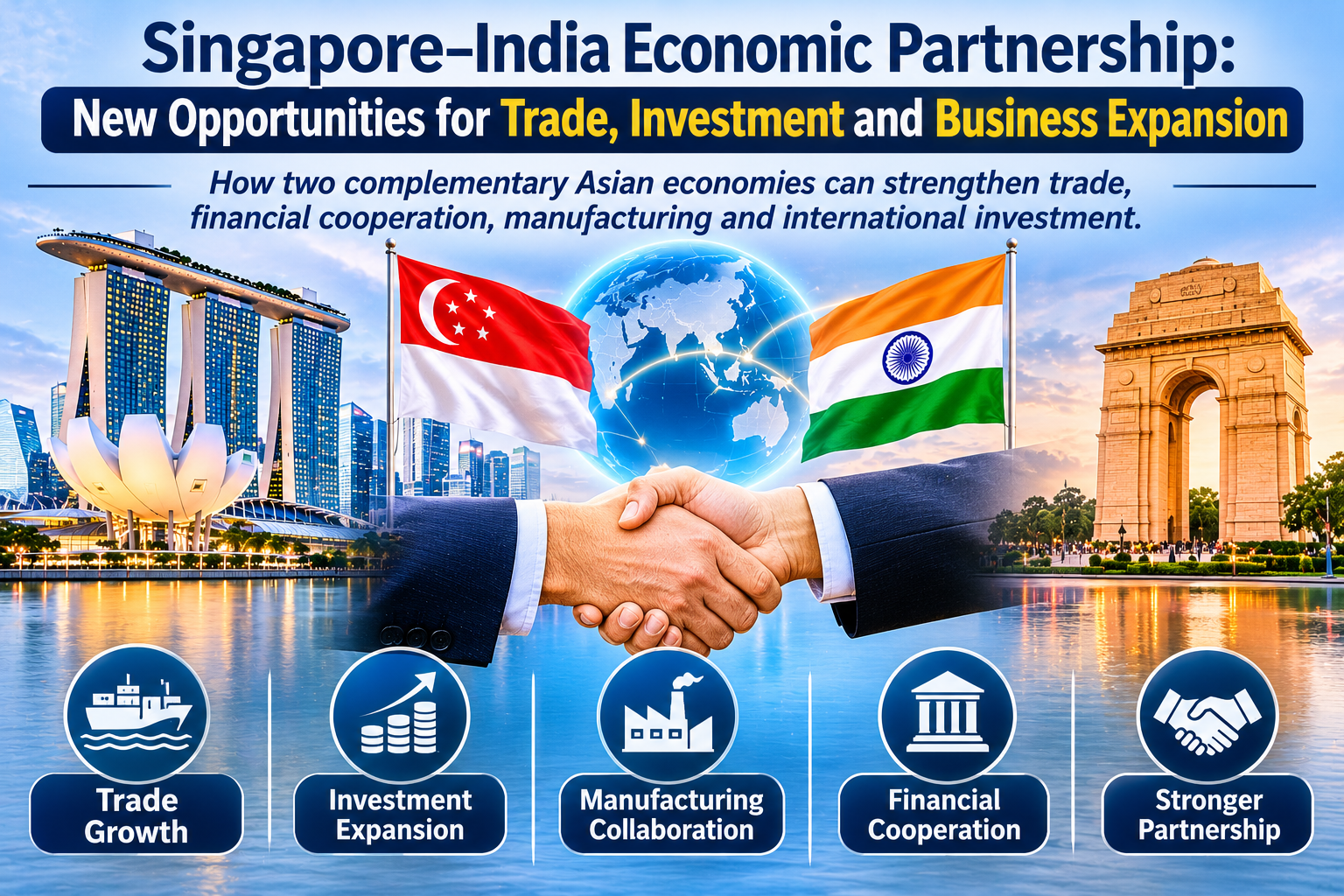
How two complementary Asian economies can strengthen trade, financial cooperation, manufacturing and international investment.
Introduction
Singapore and India have developed a strong and increasingly diversified economic partnership over the past two decades. Their relationship is built on trade, foreign investment, financial cooperation, technological development and growing business connections. Although the two economies differ considerably in size, structure and development priorities, they complement each other in several important ways. India offers a large domestic consumer market, a skilled workforce, manufacturing potential and an expanding digital economy. Singapore, on the other hand, provides access to international capital, advanced financial services, world-class infrastructure and extensive business connections across Southeast Asia and global markets.
This complementary relationship creates significant opportunities for businesses seeking international expansion. For Indian companies, Singapore can serve as a strategic gateway to global investors and regional markets. Similarly, Singapore-based businesses can use India’s growing economy to access new consumers, manufacturing facilities and investment opportunities.
1. Evolution of Singapore–India Economic Relations
The economic relationship between Singapore and India received an important boost with the signing of the Comprehensive Economic Cooperation Agreement (CECA) in 2005. The agreement established a framework for improving trade, investment and economic cooperation between the two countries.
Over time, the partnership has expanded beyond traditional merchandise trade to include services, banking, financial markets, information technology, education and professional services.
Bilateral trade has grown substantially, reaching approximately US$34 billion in recent years. Singapore has also emerged as one of India’s leading sources of foreign direct investment (FDI), with annual investment inflows approaching US$15 billion in a recent year. Cumulative investments over the longer term demonstrate the considerable confidence of Singapore-based investors in India’s economic potential.
These developments reflect a relationship that is no longer limited to the exchange of goods. Instead, it represents a broader economic partnership involving capital movement, business collaboration, technology transfer and international market access.
2. Foreign Investment: Singapore as a Gateway to Indian Markets
Singapore plays an important role in facilitating foreign investment into India. Its developed financial infrastructure, stable regulatory environment, international banking network and investment-friendly business ecosystem make it an attractive location for international investors.
Singapore-based investment flows into India cover several important sectors, including:
- Financial Services: Investment in banking, insurance, financial technology and asset management.
- Manufacturing: Capital investment in industrial facilities, production infrastructure and supply-chain development.
- Information Technology: Funding for technology companies, digital platforms and software development.
- Infrastructure: Investment opportunities in logistics, transportation, renewable energy and urban development.
- Start-ups: Funding support for emerging businesses, innovation and technology-driven enterprises.
For Indian businesses, Singapore provides opportunities to raise international capital, establish regional headquarters and develop connections with global institutional investors.
However, cross-border investment requires careful consideration of taxation, foreign exchange regulations, corporate reporting and compliance requirements. Businesses must evaluate applicable laws in both jurisdictions to ensure that investment structures remain transparent and commercially sustainable.
3. Manufacturing and Semiconductor Industry: Emerging Areas of Cooperation
Manufacturing represents one of the most promising areas of future cooperation between Singapore and India.
India is actively working to strengthen its manufacturing ecosystem, reduce import dependence and become a more competitive participant in global supply chains. Government initiatives supporting domestic manufacturing, electronics production and semiconductor development are creating opportunities for international partnerships.
Singapore has considerable experience in precision engineering, electronics manufacturing, semiconductor-related activities and advanced industrial technologies. This expertise can complement India’s manufacturing ambitions.
Potential areas of collaboration include:
- Semiconductor manufacturing and supporting industries.
- Electronics and electrical equipment production.
- Precision engineering and industrial automation.
- Research and development partnerships.
- Technical training and workforce development.
- Supply-chain management and quality-control systems.
Such partnerships could provide Indian manufacturers with access to advanced production techniques, technical expertise and international business networks. Singaporean companies could benefit from India’s expanding industrial base, competitive production environment and growing domestic demand.
Nevertheless, successful collaboration will require long-term investment, technology partnerships, infrastructure development and consistent regulatory support.
4. Digital Finance and Cross-Border Payment Opportunities
Digital financial services have become another important dimension of Singapore–India economic cooperation.
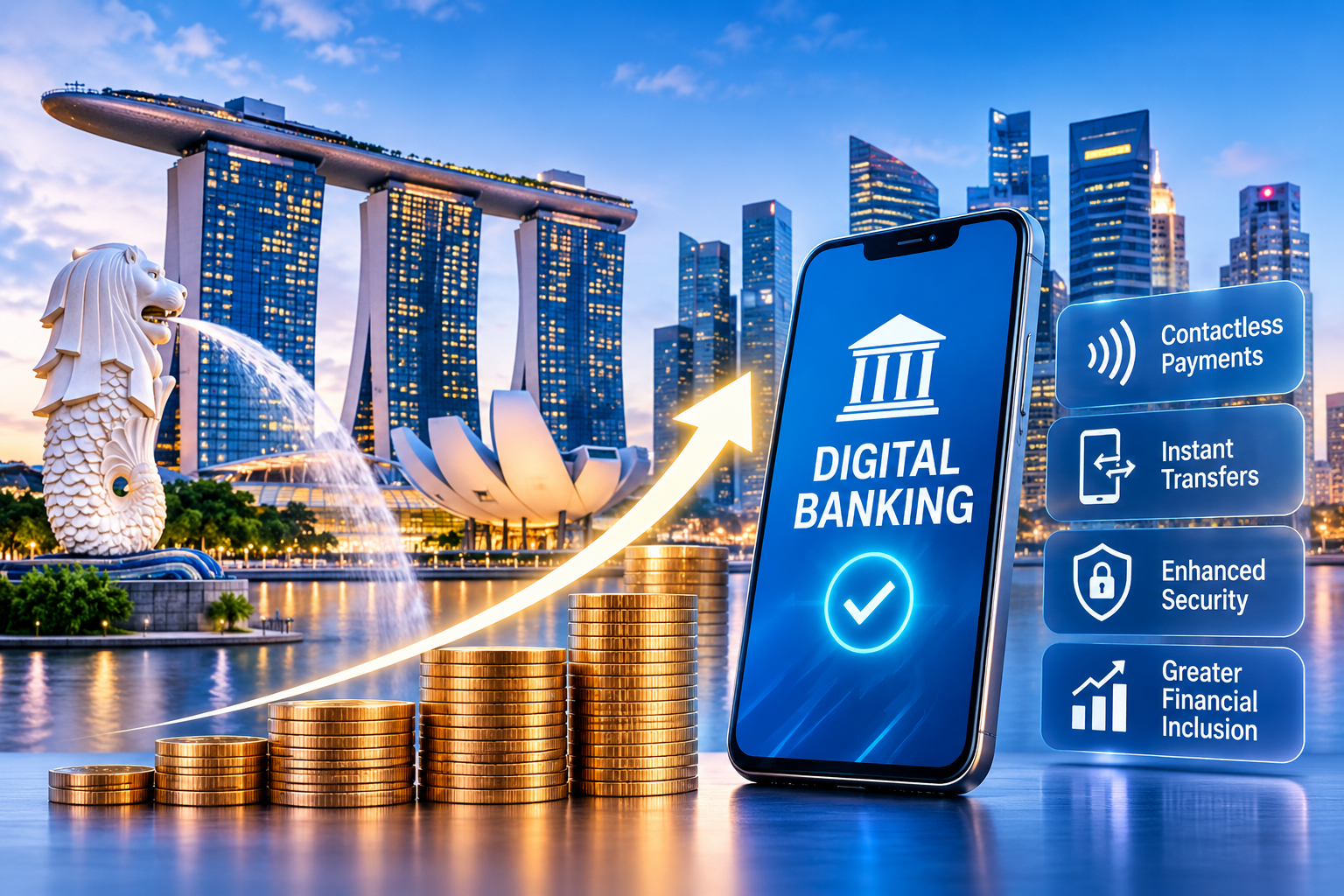
India’s Unified Payments Interface (UPI) has transformed domestic digital payments by enabling fast, convenient and relatively low-cost transactions. Singapore has also developed advanced digital payment infrastructure, including PayNow.
The linkage between India’s UPI and Singapore’s PayNow systems represents an important development in cross-border payment connectivity.
Such cooperation can benefit individuals, businesses, students and small enterprises by improving the efficiency of international money transfers.
For small and medium-sized enterprises (SMEs), more efficient payment systems can reduce transaction costs, improve cash-flow management and simplify international business operations.
Further developments in financial technology could support digital banking, international remittances, trade finance and electronic payment services.
However, the expansion of cross-border digital finance must also address cybersecurity, data protection, anti-money laundering requirements and regulatory coordination between the two countries.
5. Opportunities for Businesses and Entrepreneurs
The Singapore–India economic partnership offers opportunities for businesses of different sizes.
Indian companies looking to expand internationally can use Singapore as a regional business and financial hub. Establishing a presence in Singapore may help them access international investors, customers and business partners across Southeast Asia.
Similarly, Singaporean companies can explore India’s expanding consumer market and growing demand for technology, infrastructure, financial services and industrial products.
Some important opportunities include:
For Indian Businesses
- Access to international capital and institutional investors.
- Regional headquarters and business expansion opportunities.
- International trade and distribution networks.
- Technology partnerships and knowledge transfer.
- Opportunities in financial services and manufacturing.
For Singaporean Businesses
- Access to India’s large consumer market.
- Investment opportunities in infrastructure and manufacturing.
- Expansion into India’s digital economy.
- Partnerships with Indian start-ups and technology companies.
- Access to skilled professionals and production capabilities.
Small and medium-sized businesses can also benefit from improved digital connectivity, financial cooperation and simplified international business processes.
6. Taxation, Regulatory Compliance and Investment Risks
Despite the considerable opportunities, cross-border business activities involve several financial and regulatory challenges.
Differences in taxation systems, corporate laws, reporting requirements and foreign investment regulations can create complexities for businesses operating in both countries.
Some important areas requiring attention include:
Taxation and Transfer Pricing: Companies operating across both jurisdictions must consider applicable tax laws, transfer pricing regulations and the India–Singapore Double Taxation Avoidance Agreement (DTAA).
Foreign Exchange Regulations: Indian companies receiving or making international investments must comply with applicable foreign exchange rules, including the Foreign Exchange Management Act (FEMA).
Corporate Governance: Businesses must maintain appropriate financial records, statutory filings, internal controls and disclosure practices.
Currency Fluctuations: Changes in the Indian rupee and Singapore dollar exchange rates can affect investment returns, import costs and international payment obligations.
Due Diligence: Investors should examine the financial position, ownership structure, legal compliance, taxation exposure and operational risks of potential business partners before entering into transactions.
Effective financial planning and professional due diligence are essential for reducing these risks and ensuring sustainable cross-border business operations.
7. Lessons from Singapore’s Business and Financial Ecosystem
Singapore provides an important example of how stable institutions, transparent regulations, efficient infrastructure and strong financial governance can support international investment.
Its business environment demonstrates the importance of predictable policies, efficient regulatory administration, investor confidence and a well-developed financial services sector.
India can draw useful lessons from Singapore in areas such as:
- Simplification of business registration and regulatory procedures.
- Strengthening corporate governance and financial transparency.
- Improving logistics and industrial infrastructure.
- Promoting international financial services.
- Encouraging innovation and technology-based entrepreneurship.
- Strengthening investor protection and regulatory efficiency.
However, India’s economic scale, population, regional diversity and development requirements are considerably different. Therefore, Singapore’s model cannot be directly replicated. Instead, selected practices can be adapted to India’s economic and institutional conditions.
8. Future Prospects: Green Finance, Artificial Intelligence and Sustainable Supply Chains
The next phase of Singapore–India economic cooperation is likely to focus increasingly on emerging technologies and sustainable economic development.
Green finance offers opportunities for investment in renewable energy, sustainable infrastructure, energy efficiency and environmentally responsible industrial projects.
Artificial intelligence (AI), financial technology, data analytics and digital infrastructure could create new opportunities for technology companies and financial institutions in both countries.
Supply-chain diversification is another important priority. Businesses are increasingly looking for reliable international production networks, and cooperation between Singapore’s regional connectivity and India’s manufacturing capabilities could support this objective.
Potential future areas of cooperation include:
- Renewable energy and green infrastructure financing.
- Artificial intelligence and advanced technology development.
- Semiconductor research and electronics manufacturing.
- Sustainable logistics and supply-chain management.
- Digital banking and international financial services.
- Start-up investment and innovation partnerships.
For these opportunities to become commercially successful, governments, financial institutions, investors and private businesses will need to strengthen cooperation and establish clear regulatory and investment frameworks.
Conclusion
The Singapore–India economic partnership represents an important example of how two complementary economies can create mutual opportunities through trade, investment, technology and financial cooperation.
India contributes market scale, skilled human resources, manufacturing potential and a rapidly expanding digital economy. Singapore contributes international financial connectivity, advanced infrastructure, institutional efficiency and access to regional markets.
Although differences in taxation, regulations, currency movements and business practices continue to create challenges, the long-term opportunities remain significant.
Going forward, greater cooperation in manufacturing, semiconductor development, digital finance, green investment and artificial intelligence could strengthen this relationship further. For Indian businesses, Singapore can provide a platform for international expansion, while Singaporean investors can participate in India’s growing economic opportunities.
About Author:-
CMA Vivek Kumar (ACMA), an Associate Member of ICMAI and B.Com (Accounting Honours) graduate, is an author, finance professional, and Founder of VK Chartered Academy (www.cacmacstestseries.com). He specializes in statutory and tax audits, taxation, financial reporting, GST advisory, and corporate compliance. He also mentors CA, CMA, and CS aspirants through structured academic guidance and exam-oriented test series, bridging practical industry expertise with professional education. Email: cmavivek2026@gmail.com