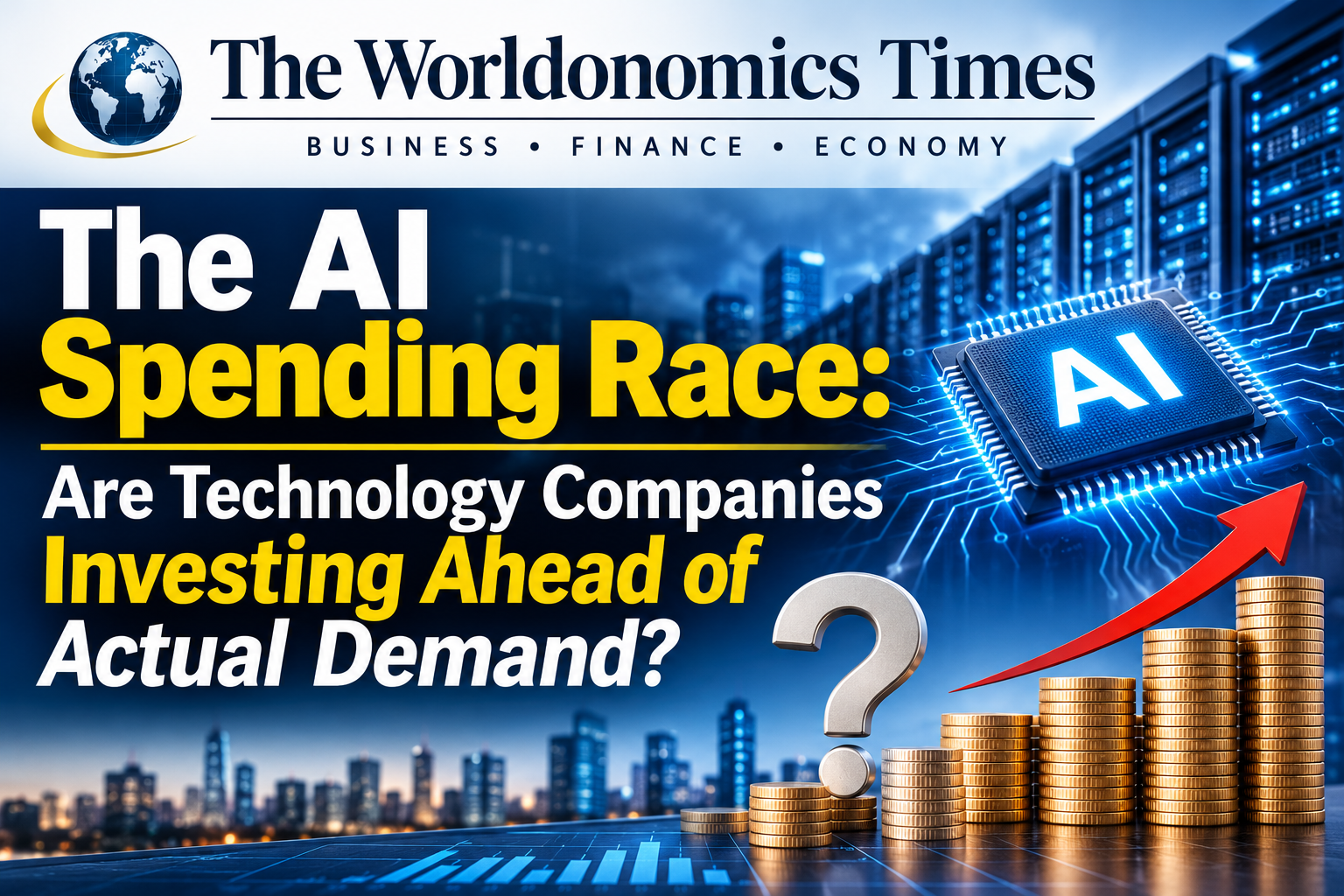
Artificial Intelligence (AI) has become one of the biggest investment priorities in the global technology industry. From advanced semiconductor chips and massive data centres to cloud computing infrastructure, technology companies are committing billions of dollars to secure their position in the AI revolution. However, behind this investment boom lies an important financial question: Are companies generating enough revenue to justify the enormous cost of building an AI-driven future?
The race to dominate AI is no longer just about technological innovation. It is increasingly about capital expenditure, profitability, cash flow and return on investment (ROI).
The Unprecedented Scale of AI Investment
Major technology companies, including Microsoft, Alphabet, Amazon and Meta, are investing heavily in data centres, specialised processors and AI computing capacity.
According to J.P. Morgan Global Research (October 2026), global AI-related capital expenditure is projected to approach $900 billion in 2026, with cumulative investment potentially reaching $5.5 trillion by 2030.
Meanwhile, IDC reported that global AI infrastructure spending reached $121.4 billion in Q2 2026, representing 53% year-on-year growth.
These figures demonstrate that AI is no longer an experimental technology investment. It is becoming a major component of global corporate capital allocation.
Why Are Technology Companies Spending So Aggressively?
Several factors are driving this investment boom:
- Competition for Market Leadership: Companies fear losing market share if competitors develop more advanced AI models and services.
- Growing Computing Demand: Generative AI requires specialised chips, high-performance servers and substantial computing capacity.
- Cloud Business Expansion: Businesses are increasingly integrating AI into software, customer service, analytics and enterprise operations.
- Long-Term Strategic Positioning: Technology companies are investing today to capture future revenue opportunities and establish competitive advantages.
Consequently, AI infrastructure is increasingly being treated as a strategic long-term asset rather than an ordinary technology expense.
The Growing Gap Between Investment and Profitability
Despite enormous spending, converting AI investments into sustainable financial returns remains challenging.
Building infrastructure does not automatically generate revenue. Companies must attract customers willing to pay for AI services while managing substantial development and operating costs.
According to KPMG’s Global AI Pulse Q1 2026, involving 2,110 senior executives across 20 countries, 95% of organisations reported having an AI strategy, but only 8% reported established ROI.
Similarly, McKinsey’s 2026 research highlights that widespread AI adoption has not yet translated into meaningful financial impact for most organisations.
This creates a significant corporate finance challenge: technology adoption must eventually translate into measurable revenue growth, cost savings or improved productivity.
The Cash Flow Challenge: Can Companies Afford the AI Race?
One of the biggest financial consequences of AI expansion is the pressure it places on free cash flow.
Capital expenditure requires substantial upfront investment, while the revenue generated from infrastructure may take years to materialise.
A September 2026 analysis by Barclays Private Bank found that Microsoft, Alphabet, Amazon and Meta collectively spent approximately $165 billion on cash capital expenditure in Q2 2026, compared with $88 billion in the corresponding quarter of 2025. Their combined free cash flow was approximately $6.7 billion during the quarter.
S&P Global Ratings also warned that hyperscaler capital expenditure could exceed $1.3 trillion by 2027, increasing the importance of financing and debt management. Aug 27, 2026
These developments highlight why cash flow sustainability, capital allocation and investment efficiency are becoming central concerns for technology companies.
Energy and Infrastructure: The Hidden Cost of AI
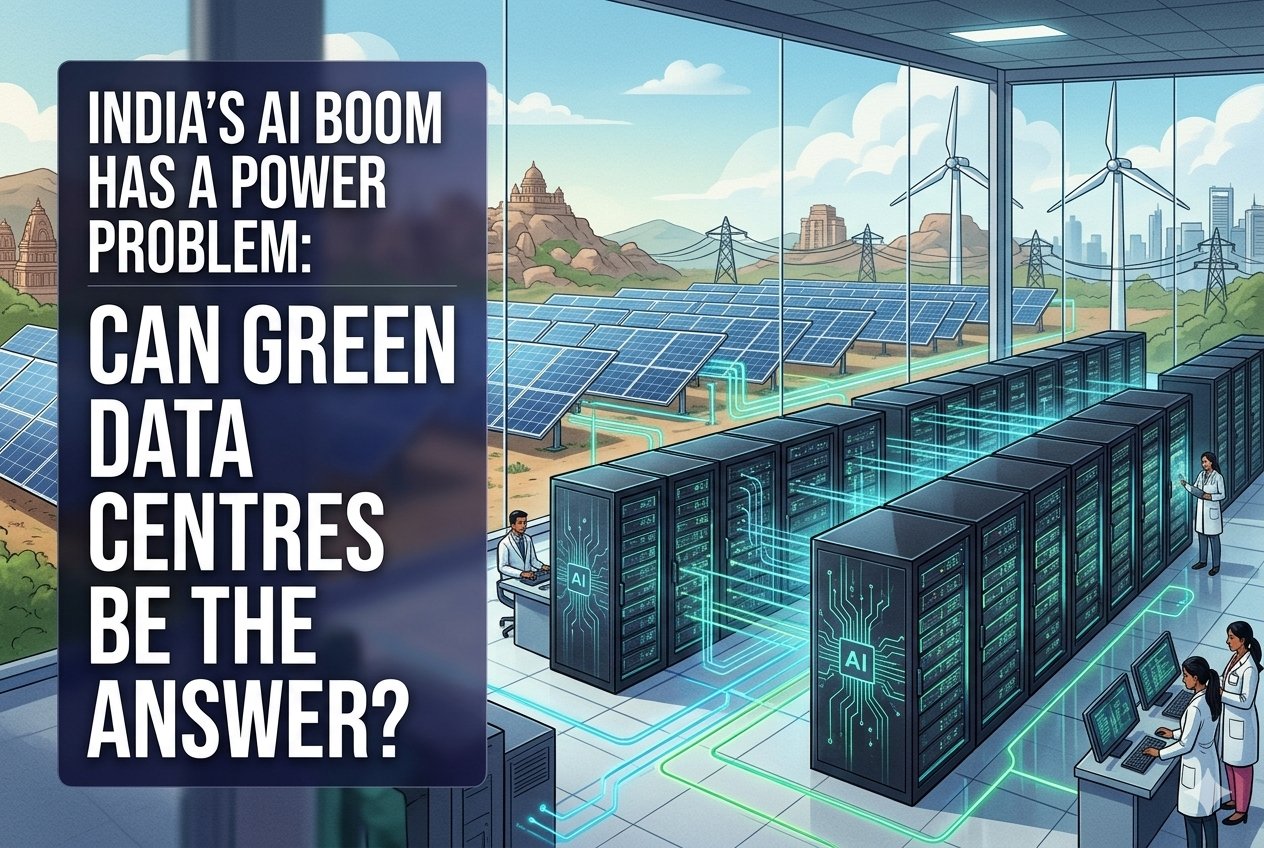
AI investment extends beyond purchasing advanced processors and constructing data centres. It also requires electricity, cooling systems, reliable power grids and supporting infrastructure.
According to the International Energy Agency (IEA), global electricity consumption by data centers is projected to increase from approximately 485 TWh in 2025 to 950 TWh by 2030.
Rising energy requirements could increase operating expenses, delay infrastructure projects and affect expected investment returns.
Therefore, the economics of AI depend not only on technological innovation but also on the availability and cost of supporting infrastructure.
What Does This Mean for India?
India has an opportunity to benefit from the global AI investment cycle through data-centre development, cloud infrastructure, semiconductor manufacturing and software services.
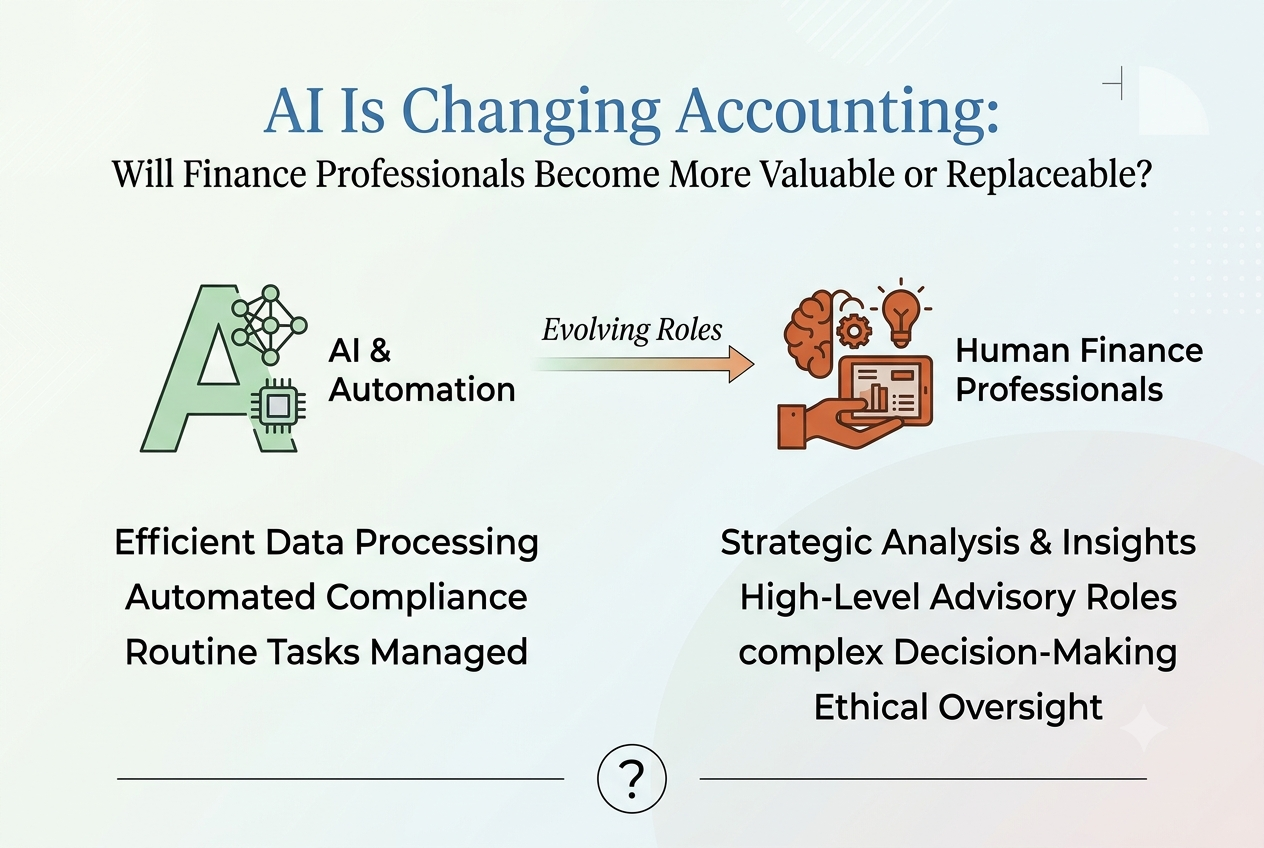
AI can also improve productivity in Indian businesses, particularly in accounting, banking, taxation, financial analysis and customer management.
However, sustainable growth will depend on reliable electricity, infrastructure investment, skilled professionals and the ability to generate sufficient commercial demand.
Conclusion: Investment Must Eventually Deliver Returns
The AI spending race represents a major transformation in global corporate investment. Companies are committing enormous resources today in anticipation of future technological and commercial opportunities.
However, market leadership cannot be measured by capital expenditure alone. Sustainable success will depend on revenue generation, operating efficiency, cash flow and the ability to earn acceptable returns on invested capital.
AI may reshape industries, but the fundamental principles of corporate finance remain unchanged: every major investment must ultimately justify its cost.
The real winner of the AI race may not be the company spending the most, but the one converting its AI investments into sustainable profitability.