The Worldonomics Times | November 2026
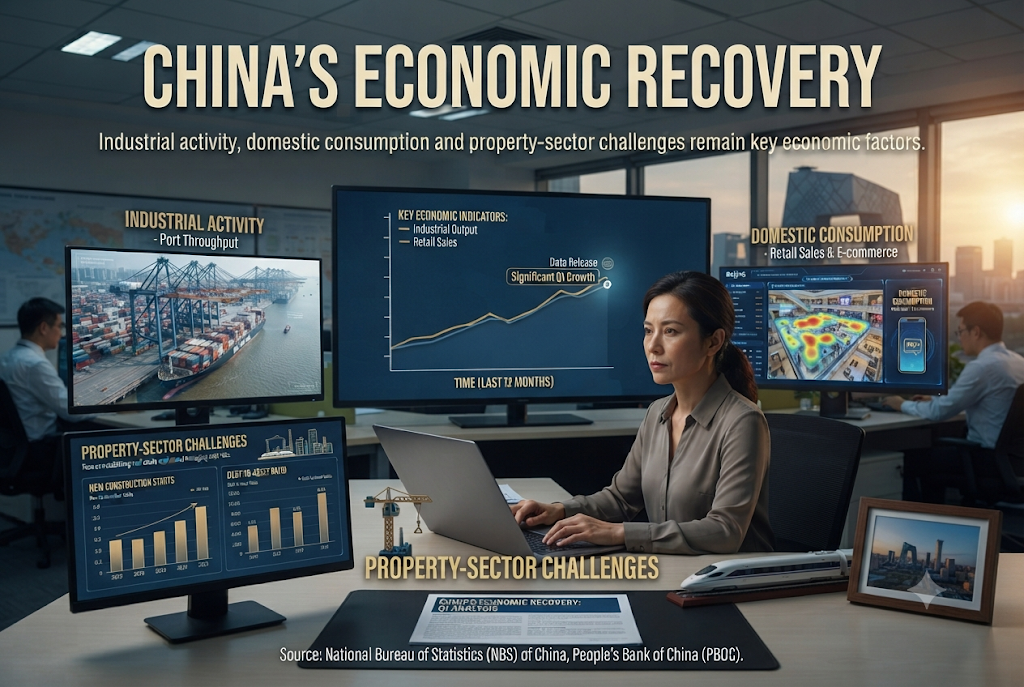
China’s economic recovery remains an important factor shaping the global economic outlook. As the world’s second-largest economy, China’s performance has significant implications for international trade, manufacturing, commodity markets and global investment. While the country continues to benefit from its industrial capabilities, technological development and export activities, domestic consumption and ongoing challenges in the property sector remain important concerns.
China’s economic landscape is undergoing a period of adjustment as policymakers seek to strengthen domestic demand, support businesses and maintain financial stability. The recovery is influenced by several interconnected factors, including industrial production, household confidence, infrastructure investment, real estate conditions and international trade. How these areas develop will play an important role in determining China’s economic direction in the coming months.
Industrial Activity Supports Economic Growth
Industrial production continues to be a major pillar of China’s economy. The country maintains a strong manufacturing base across sectors such as electronics, automobiles, machinery, steel, chemicals and renewable energy equipment.
Investment in advanced manufacturing, electric vehicles, semiconductors, automation and clean-energy technologies is creating opportunities for industrial development. Chinese manufacturers are also increasingly focusing on technological innovation, production efficiency and higher-value products to strengthen their competitiveness in international markets.
However, industrial growth faces challenges, including changing global demand, trade restrictions, excess production capacity in certain industries and competitive pricing pressures. Manufacturers must balance production expansion with profitability and sustainable demand.
The ability to move towards technology-driven and higher-value manufacturing will remain an important factor in China’s long-term economic development.
Domestic Consumption: A Key Recovery Challenge
Strengthening domestic consumption is one of the central priorities for China’s economic recovery. Household spending supports businesses, employment and service-sector activity, making consumer confidence an important indicator of economic health.
However, households have become cautious about spending amid concerns surrounding employment prospects, income growth and property-market conditions. This caution can affect demand for consumer goods, automobiles, housing-related products, travel and other discretionary services.
To encourage consumption, policymakers have introduced measures aimed at supporting household spending and improving market confidence. Retail promotions, consumer incentives and initiatives supporting equipment upgrades and product replacement can contribute to demand across selected industries.
Nevertheless, sustainable improvement in consumption will depend on stronger household confidence, stable employment, income growth and greater financial security. A recovery supported by domestic demand would help create a more balanced economic growth model.
Property Sector Remains a Major Concern
The property sector continues to be one of the most significant challenges facing China’s economy. Real estate has historically played an important role in investment, employment, household wealth and demand for construction materials.
However, the prolonged property-market downturn has affected housing sales, developer finances and consumer confidence. Financial difficulties among property developers have also raised concerns about unfinished projects, debt obligations and the overall stability of the real estate market.
Weak property demand can have broader consequences for related industries, including steel, cement, construction, home furnishings and financial services. Local governments that rely on land-related revenues may also face additional fiscal pressures.
Government support measures have focused on improving housing delivery, addressing financial difficulties and stabilising market conditions. However, restoring confidence will require sustained improvements in housing demand, developer financial health and the overall real estate environment.
Government Policies and Economic Support
Chinese policymakers face the challenge of supporting economic activity while managing financial risks and maintaining long-term stability. Fiscal support, monetary adjustments, infrastructure investment and targeted industry incentives are among the tools being used to encourage growth.
Investment in transportation, digital infrastructure, renewable energy and advanced manufacturing remains important for strengthening industrial competitiveness. At the same time, measures supporting private businesses and household consumption could help improve domestic economic momentum.
The effectiveness of these policies will depend on how successfully they translate into stronger business investment, consumer spending and employment opportunities.
Global Trade and International Implications
China’s economic performance has significant implications for the international economy. Its manufacturing sector supplies products and industrial components to markets worldwide, while its demand for energy, metals and agricultural commodities influences global prices and trade flows.
A stronger Chinese recovery could support international exporters, commodity-producing economies and global manufacturing supply chains. Conversely, weaker domestic demand or industrial uncertainty could affect trading partners and international businesses.
Changing trade relationships, tariffs, geopolitical developments and supply-chain diversification are also influencing China’s position in the global economy. Businesses operating internationally will need to monitor these developments when making investment and sourcing decisions.
The Worldonomics Times View
The Worldonomics Times believes that China’s economic recovery should be assessed through more than industrial production and export performance. Sustainable progress will depend on strengthening household confidence, restoring stability in the property sector and creating a healthier balance between investment and domestic consumption.
Industrial innovation and manufacturing strength provide important economic opportunities, but long-term resilience also requires stronger consumer demand and confidence in the domestic market.
Policymakers will need to maintain a balanced approach that supports economic activity while addressing financial vulnerabilities. Businesses, meanwhile, should focus on productivity, technological advancement and adapting to changing domestic and international demand.
Outlook: Building a More Balanced Economic Recovery
China’s economic outlook will continue to depend on the performance of its industrial sector, the recovery of household consumption and improvements in the property market. While manufacturing and technological investment offer opportunities, structural challenges require sustained policy attention.
The transition towards a more consumption-driven and innovation-oriented economy will be important for China’s long-term development. Progress in employment, household income, financial stability and business confidence will help determine the strength of this transition.
Ultimately, China’s recovery is not only a domestic economic issue but also a significant factor in global growth. Its ability to balance industrial expansion, consumer demand and financial stability will influence international trade, investment opportunities and the broader direction of the world economy.
The Worldonomics Times | Bringing global economic developments, financial insights and business perspectives into focus.