The Worldonomics Times | November 2026
Global interest rates remain a major influence on the international economic landscape as central banks navigate the complex relationship between inflation, economic growth and financial stability. Monetary policymakers across major economies are carefully assessing economic indicators before making decisions on borrowing costs and liquidity conditions. While controlling inflation remains an important priority, concerns about slowing economic activity, employment and investment are creating additional challenges for central banks.
Interest-rate decisions have consequences that extend beyond national borders. They influence consumer spending, business investment, currency movements, international capital flows and financial market performance. As a result, investors, businesses and governments closely monitor central bank announcements to understand the future direction of monetary policy.
Central Banks Face a Delicate Economic Balance
Central banks play a crucial role in maintaining price stability and supporting sustainable economic activity. When inflation remains elevated, policymakers may maintain higher interest rates to moderate borrowing and reduce excessive demand. However, when economic growth weakens, lower borrowing costs may become necessary to encourage investment and consumption.
The challenge lies in determining the appropriate timing and scale of monetary adjustments. Reducing interest rates too quickly could create renewed inflationary pressures, while maintaining restrictive policies for an extended period could weaken business activity and household spending.
The US Federal Reserve, European Central Bank, Bank of England and other major monetary authorities continue to assess inflation, employment, wages and economic output when determining their policy approaches. Differences in domestic economic conditions mean that central banks may follow different interest-rate paths.
Inflation Remains a Key Policy Consideration
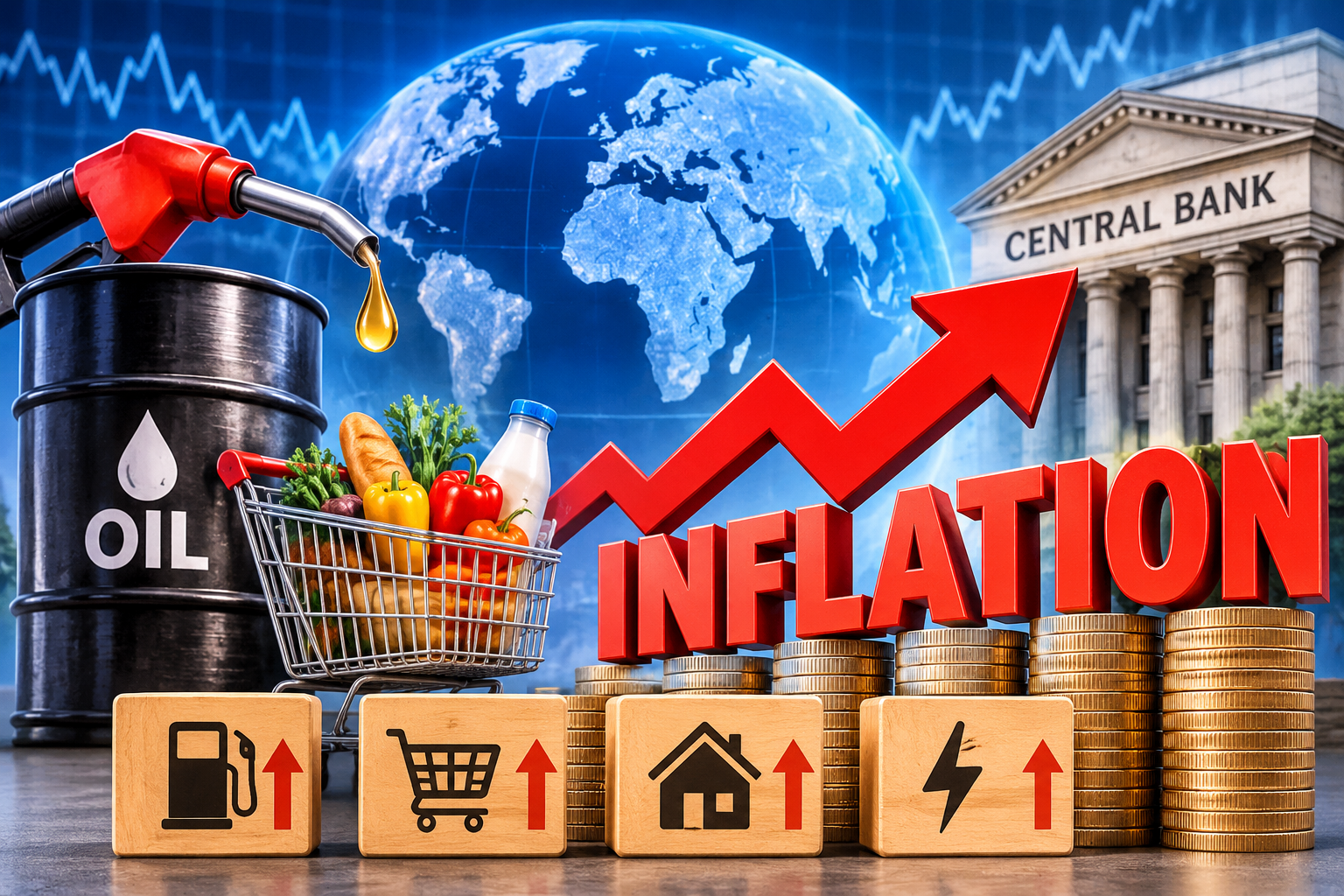
Inflation continues to be one of the most important factors influencing global monetary policy. Rising prices for housing, energy, food, transportation and services can reduce household purchasing power and increase operating expenses for businesses.
Although inflationary pressures may ease in certain sectors, persistent price increases in essential services and wages can make it difficult for central banks to achieve their inflation objectives.
Policymakers therefore monitor indicators such as consumer price inflation, core inflation, producer prices and wage growth. These indicators help determine whether price pressures are declining consistently or remain a concern.
Central banks must also consider external developments, including geopolitical tensions, energy-market disruptions and international trade uncertainty, which can create additional inflationary pressures.
Impact on Consumers and Businesses
Interest-rate movements directly affect households and businesses through borrowing costs. Higher rates generally increase the cost of mortgages, personal loans, credit cards and business financing. This can encourage households to reduce discretionary spending and companies to postpone expansion plans.
For businesses, expensive credit can influence decisions related to infrastructure, hiring, equipment purchases and research and development. Small and medium-sized enterprises may face particular challenges because their access to affordable financing is often more limited.
Conversely, lower interest rates can encourage borrowing, support investment and improve consumer spending. However, the benefits depend on business confidence, household income and the overall economic environment.
The relationship between interest rates and economic activity therefore remains an important consideration for policymakers seeking to maintain sustainable growth.
Financial Markets Respond to Monetary Policy Signals
Financial markets are highly sensitive to changes in interest-rate expectations. Bond yields, equity prices, currency valuations and commodity markets can react significantly to central bank announcements and economic data.
When investors expect interest rates to remain elevated, government bond yields may adjust upwards, while higher financing costs can place pressure on equity valuations. Growth-oriented companies are particularly sensitive because their future earnings are often valued against prevailing interest rates.
On the other hand, expectations of monetary easing may support financial markets by improving liquidity conditions and reducing the cost of capital.
Foreign exchange markets also respond to differences in interest rates between countries. Changes in these differences can influence international investment flows and currency demand, creating opportunities and risks for businesses engaged in global trade.
Emerging Economies Face Additional Challenges
Emerging markets often experience additional pressure when major central banks maintain higher interest rates. Stronger demand for dollar-denominated assets can contribute to capital outflows and currency depreciation in some developing economies.
A weaker domestic currency can increase the cost of imported goods, energy and dollar-denominated debt repayments, potentially creating additional inflationary pressures.
However, countries with strong foreign exchange reserves, stable financial systems and sound economic fundamentals may be better positioned to manage external financial volatility.
For emerging economies, maintaining monetary credibility while supporting domestic investment and employment remains an important policy challenge.
The Worldonomics Times View
The Worldonomics Times believes that the global interest-rate environment requires a measured and flexible approach from central banks. Monetary policy must respond to changing economic conditions while avoiding unnecessary disruption to businesses, households and financial markets.
Inflation control remains essential, but economic growth, employment and financial stability must also be considered when making policy decisions. Consistent communication and data-driven decision-making can help reduce uncertainty and strengthen investor confidence.
Businesses should prepare for different interest-rate scenarios by maintaining financial discipline, managing debt exposure and prioritising productive investments. Investors, meanwhile, should pay close attention to inflation trends, central bank guidance and international economic developments.
Outlook: Monetary Policy to Shape the Next Phase of Growth
Looking ahead, global interest-rate movements will continue to influence economic growth, investment decisions and financial market expectations. The direction of monetary policy will depend on how inflation evolves, whether employment remains resilient and how major economies respond to changing economic conditions.
Central banks may follow different policy paths depending on their domestic priorities, creating variations in borrowing costs and international capital flows.
Ultimately, the challenge for policymakers will be to achieve price stability without undermining economic expansion. A balanced monetary environment, supported by credible policies and resilient financial systems, will be essential for encouraging sustainable investment and long-term global growth.
The Worldonomics Times | Bringing global economic developments, financial insights and business perspectives into focus.