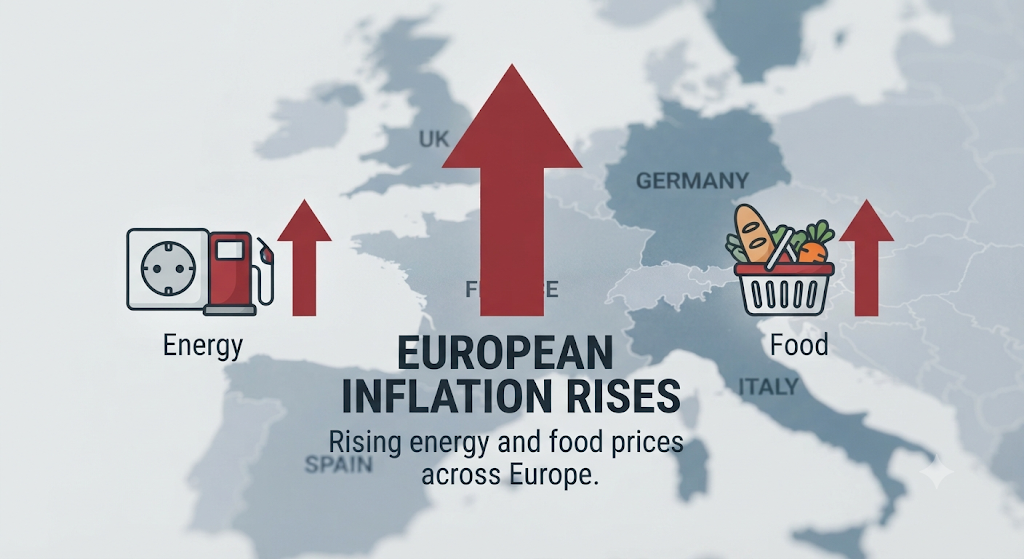
Rising energy and food prices are creating renewed inflationary challenges across parts of Europe, putting pressure on household purchasing power, business profitability and the European Central Bank’s monetary policy outlook.
Europe is facing renewed inflationary pressure as increasing energy and food costs challenge economic stability across several countries. After making efforts to bring inflation under control, European economies are once again dealing with uncertainty surrounding essential commodity prices, household expenses and business operating costs.
The latest inflationary concerns highlight the vulnerability of European economies to international energy markets, geopolitical developments and supply-chain disruptions. Although inflation trends differ across individual countries, rising prices for essential goods and services remain a major concern for consumers, businesses and policymakers.
The situation also creates a difficult balancing act for European authorities, who must protect purchasing power while supporting economic growth and maintaining financial stability.
Energy Prices Remain a Major Inflation Driver
Energy continues to be one of the most influential factors affecting Europe’s inflation outlook. The region’s dependence on international energy supplies makes it particularly sensitive to fluctuations in oil, natural gas and electricity prices.
Geopolitical tensions, disruptions to international supply routes and changes in global energy demand can influence the cost of imported energy. These developments can increase electricity bills, transportation expenses and industrial production costs.
Manufacturing, chemicals, transportation and other energy-intensive industries are particularly exposed to higher energy prices. When businesses experience increasing operating expenses, they may transfer some of these costs to consumers through higher product and service prices.
For households, rising energy bills can reduce disposable income and limit spending on other necessities. This creates additional pressure on consumer confidence and overall economic activity.
Europe’s transition towards renewable energy offers an important long-term opportunity to reduce exposure to international fossil-fuel markets. However, ensuring affordable and reliable energy during this transition remains a significant policy challenge.
Food Inflation Adds to Household Financial Pressure
Food prices are another important source of inflationary pressure across European economies.
Agricultural production is influenced by weather conditions, fertiliser costs, labour availability and transportation expenses. Extreme weather events, including droughts and floods, can disrupt agricultural output and create supply shortages.
International trade disruptions and geopolitical developments can further increase uncertainty in food markets.
For European households, rising food prices directly affect everyday living expenses. Lower- and middle-income families are particularly vulnerable because a significant proportion of their budgets is allocated to essential goods.
Restaurants, supermarkets, food-processing companies and agricultural businesses are also affected by changing input costs. Smaller businesses may find it difficult to absorb higher expenses without increasing prices.
Improving agricultural productivity, strengthening domestic food supply chains and investing in modern farming technologies will be important for reducing long-term vulnerability.
European Central Bank Faces a Policy Challenge
Renewed inflationary pressure creates a complicated environment for the European Central Bank (ECB).
The ECB must maintain price stability while considering the broader economic consequences of monetary policy decisions. Interest rates influence borrowing costs, consumer spending, housing markets and business investment.
If inflation remains elevated, policymakers may need to maintain a cautious monetary approach. However, higher borrowing costs can also weaken economic activity, particularly in countries already experiencing slow growth.
An important challenge is distinguishing between temporary supply-driven inflation and persistent price pressures.
Higher interest rates cannot directly resolve energy shortages or agricultural supply disruptions. Therefore, monetary policy must be supported by appropriate government measures addressing the underlying causes of rising prices.
Clear communication and predictable policy decisions will remain essential for maintaining confidence among businesses, investors and consumers.
Impact on European Businesses and Industries
Rising inflation can create considerable difficulties for businesses operating across Europe.
Manufacturers face increasing expenses for electricity, raw materials and transportation. Retailers must manage higher procurement costs while attempting to maintain competitive prices. Service-sector businesses may also experience pressure from rising wages, rent and operating expenses.
Small and medium-sized enterprises are particularly vulnerable because they generally have fewer financial resources to absorb sudden cost increases.
Businesses are increasingly focusing on operational efficiency, supply-chain diversification, energy conservation and digital transformation to manage these challenges.
Investment in renewable energy, automation and advanced production technologies can help companies reduce long-term operating expenses and improve competitiveness.
Economic Implications for European Consumers
Persistent inflation can influence consumer behaviour and weaken household confidence.
When essential expenses increase faster than incomes, families may reduce spending on travel, entertainment, clothing and other discretionary products. This can affect businesses across the retail, hospitality and tourism sectors.
Higher living costs can also create greater financial pressure on pensioners, students and households with limited savings.
Governments may need to consider targeted financial assistance and social protection measures to support vulnerable sections of society. However, such interventions must be carefully designed to avoid creating additional inflationary pressures.
Protecting household purchasing power while maintaining fiscal discipline will remain an important policy priority.
Europe’s Long-Term Economic Outlook
Despite the inflationary challenges, Europe has significant opportunities to strengthen its economic resilience.
Investment in renewable energy, electricity infrastructure, agricultural innovation and advanced manufacturing can help reduce dependence on volatile international markets.
Improving cross-border energy connectivity, strengthening supply chains and encouraging technological development will also support long-term competitiveness.
European economies must focus on building an economic environment that combines price stability with investment, productivity and sustainable growth.
The Worldonomics Times View
The renewed inflationary pressure across Europe highlights the importance of economic resilience in an increasingly interconnected global economy.
Energy and food prices are not merely market indicators; they directly influence household welfare, business competitiveness and the overall stability of national economies.
The Worldonomics Times believes that European policymakers must adopt a balanced strategy that addresses both immediate inflationary concerns and long-term structural vulnerabilities.
The European Central Bank should remain committed to price stability, while governments must accelerate investment in renewable energy, modern agriculture and efficient infrastructure. Targeted support for vulnerable households and small businesses should also remain a priority.
Europe must reduce its exposure to external supply disruptions without compromising affordability or industrial competitiveness.
Ultimately, sustainable economic stability requires more than controlling inflation figures. It requires building an economy where energy remains affordable, food supplies are secure, businesses remain competitive and households can maintain their purchasing power.