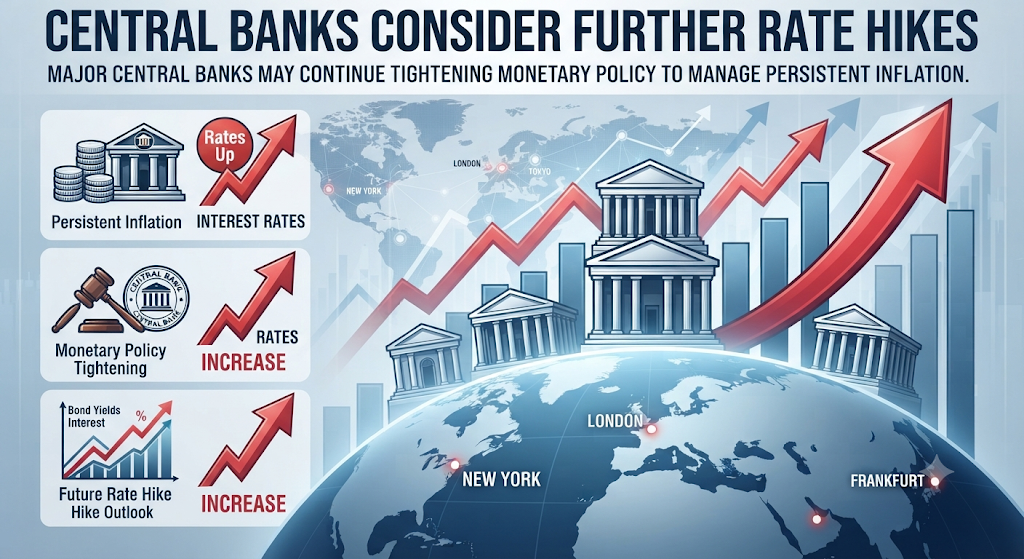
Major central banks are facing renewed pressure to maintain restrictive monetary policies as inflation remains persistent across several economies. Potential interest-rate increases could help control rising prices but may also slow economic growth, investment and consumer spending.
Central banks across the world are confronting a difficult economic environment as persistent inflation continues to challenge policymakers. Despite previous monetary tightening measures, rising prices in essential sectors, including energy, food, housing and services, remain a concern for several major economies.
In response, leading monetary authorities may consider further interest-rate increases to bring inflation under control and maintain financial stability. However, the possibility of additional rate hikes has raised concerns among businesses, investors and consumers, particularly as higher borrowing costs can weaken economic activity.
The challenge for policymakers is to control inflation without pushing their economies towards slower growth or recession. This delicate balance is becoming increasingly important as geopolitical tensions, international trade uncertainty and commodity-market fluctuations continue to influence the global economic outlook.
Why Central Banks Are Considering Further Rate Hikes
Interest rates are among the most important instruments available to central banks for managing inflation. When prices rise persistently, monetary authorities may increase policy rates to make borrowing more expensive and moderate overall demand.
Higher interest rates generally increase the cost of loans for households and businesses. Consumers may postpone major purchases, while companies may reconsider expansion plans and capital investments. Reduced spending and borrowing can gradually ease demand-driven inflationary pressure.
However, inflation is not always caused by excessive demand. Supply-chain disruptions, higher energy prices, food shortages and geopolitical developments can also contribute to rising prices.
This creates a complicated situation for central banks because higher interest rates cannot directly resolve supply shortages or reduce international commodity prices.
Nevertheless, policymakers may use tighter monetary conditions to prevent temporary price increases from becoming embedded in inflation expectations.
Federal Reserve and the US Monetary Outlook
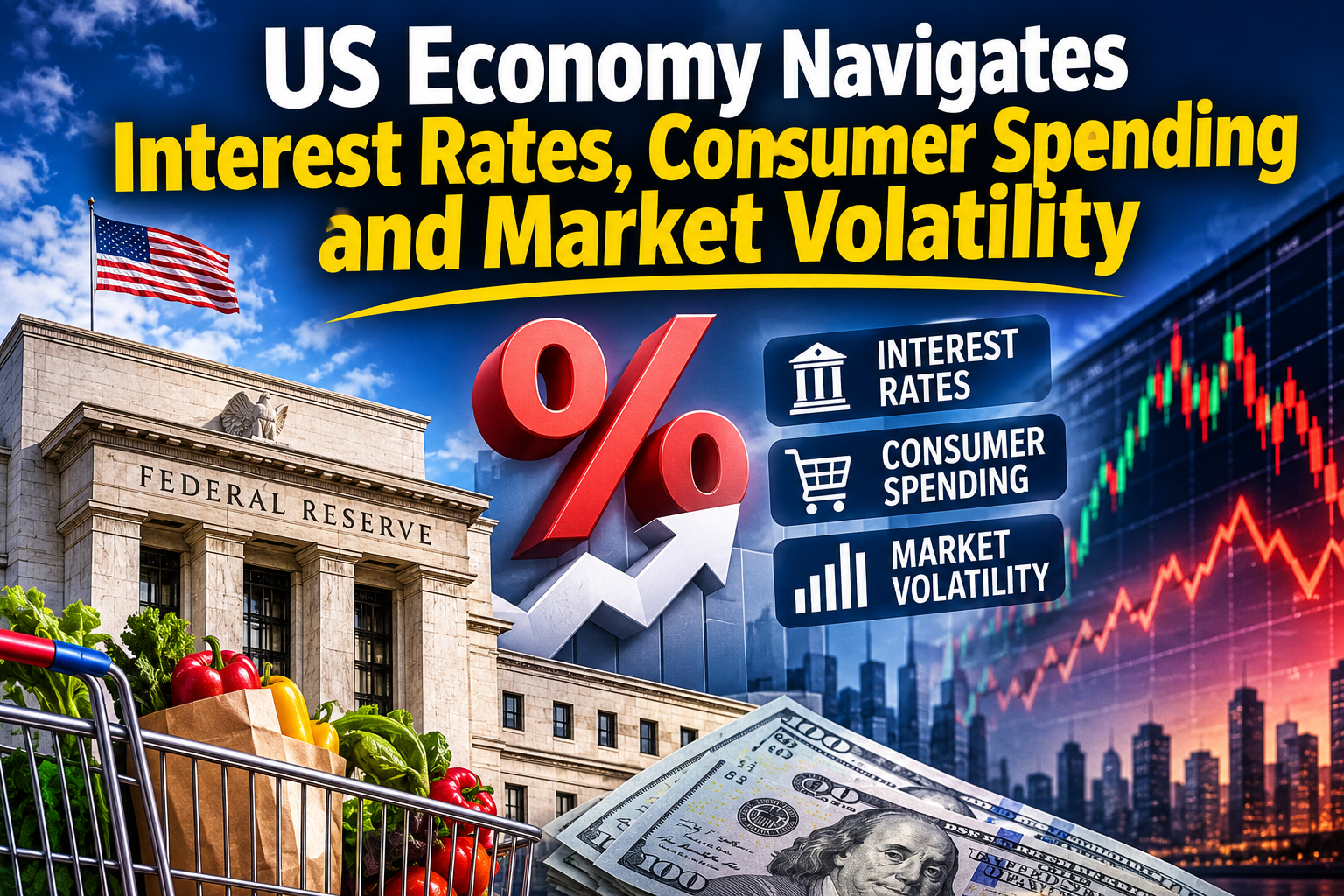
The United States Federal Reserve remains one of the most influential central banks in the global financial system. Its monetary policy decisions affect international borrowing costs, investment flows, currency markets and financial conditions.
Persistent inflation can create pressure on the Federal Reserve to maintain a cautious policy approach. Employment conditions, consumer spending and wage growth are among the indicators that policymakers monitor when evaluating future interest-rate decisions.
Higher borrowing costs can influence mortgage payments, automobile financing, credit-card expenses and corporate lending. While these measures may help moderate inflation, they can also reduce household purchasing power and business investment.
The Federal Reserve must therefore carefully assess economic data before deciding whether additional tightening is necessary.
European Central Bank Faces Similar Challenges
The European Central Bank also faces the challenge of maintaining price stability while supporting economic activity across the eurozone.
Energy and food prices remain important considerations for European inflation, particularly because several countries are exposed to international energy-market fluctuations.
Further monetary tightening could help control persistent inflationary pressures. However, higher interest rates may also affect housing markets, business financing and consumer spending.
The diversity of economic conditions across eurozone countries makes monetary policy particularly challenging. Some economies may experience stronger growth, while others face weaker industrial activity and subdued consumer demand.
The ECB must therefore balance inflation management with the need to preserve financial and economic stability across the region.
Impact on Businesses and Investment
The possibility of further interest-rate increases is creating uncertainty for businesses across multiple sectors.
Companies that depend heavily on borrowed capital may face higher financing expenses, potentially delaying infrastructure projects, expansion plans and recruitment.
Small and medium-sized enterprises are particularly vulnerable because they often have limited access to affordable financing.
Higher borrowing costs can also influence industries such as real estate, construction, manufacturing and automotive production, where investment decisions frequently depend on credit availability.
At the same time, businesses may respond by improving operational efficiency, controlling expenses and prioritising projects with stronger financial returns.
Investors are also closely monitoring central bank decisions because interest-rate movements influence equity valuations, bond yields, currency markets and investment strategies.
Effects on Consumers and Household Finances
For households, higher interest rates can create both benefits and financial challenges.
Consumers with variable-rate loans may experience increased monthly repayments, while individuals seeking mortgages or personal loans may face more expensive credit.
Higher borrowing costs can also discourage spending on houses, vehicles and other major purchases.
On the other hand, savers may benefit from improved returns on certain deposits and interest-bearing financial products, depending on how banks adjust their rates.
The overall impact will depend on household debt levels, income growth, savings and the broader economic environment.
Protecting consumer purchasing power while controlling inflation remains an important priority for governments and monetary authorities.
Emerging Economies Face Additional Pressure
Interest-rate decisions by major central banks can have significant consequences for emerging economies.
Higher US interest rates, for example, can encourage international investors to move capital towards dollar-denominated assets. This may create pressure on emerging-market currencies and increase the cost of servicing foreign-currency debt.
Countries that depend heavily on international capital flows may face additional financial uncertainty.
For economies such as India, monetary policymakers must consider domestic inflation, economic growth, currency stability and global financial developments when determining their policy approach.
Maintaining macroeconomic stability while supporting investment and employment will remain essential.
The Road Ahead for Global Monetary Policy
The future direction of interest rates will depend on inflation trends, employment data, economic growth and financial-market conditions.
Central banks are likely to remain cautious, relying on incoming economic indicators before making major policy adjustments.
Clear communication, predictable decision-making and coordination with broader economic policies will be important for maintaining confidence.
Ultimately, the effectiveness of monetary tightening will depend on whether inflation moderates without causing excessive damage to economic activity.
The Worldonomics Times View
The possibility of further interest-rate increases reflects the seriousness of persistent inflation and the difficult choices confronting global policymakers.
While controlling inflation is essential for protecting purchasing power and maintaining economic confidence, excessive monetary tightening can weaken investment, employment and consumer demand.
The Worldonomics Times believes that central banks must adopt a measured, data-driven approach rather than relying on aggressive rate increases as a universal solution. Monetary policy should be supported by government initiatives addressing energy security, food production, infrastructure and supply-chain efficiency.
Policymakers must also recognise that inflation driven by supply-side disruptions requires structural solutions alongside monetary discipline.
Businesses should prepare for potentially higher financing costs by strengthening financial management, improving productivity and prioritising sustainable investments.
Ultimately, the objective of monetary policy should not simply be to bring inflation down, but to achieve price stability without sacrificing long-term economic growth. The success of central banks will depend on their ability to strike this balance in an increasingly uncertain global economy.