Despite geopolitical tensions, economic uncertainty and shifting trade dynamics, the global economy is expected to maintain steady growth in 2026 and 2027, according to projections by the International Monetary Fund (IMF).
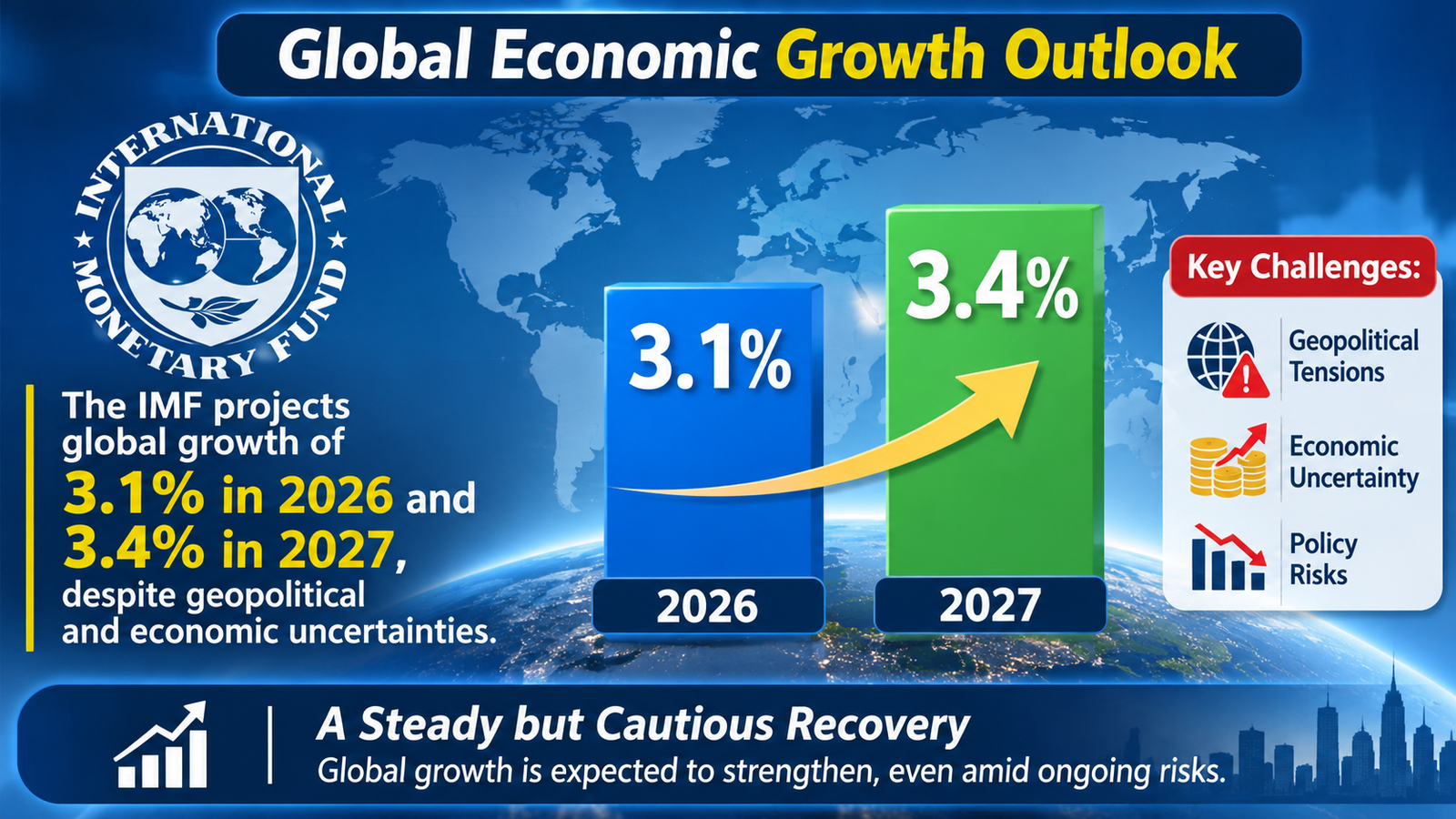
The global economy continues to demonstrate resilience in the face of persistent geopolitical tensions, economic uncertainties and evolving financial conditions. According to the International Monetary Fund (IMF), global economic growth is projected at 3.1% in 2026 and 3.4% in 2027. While these forecasts reflect a moderate pace of expansion, they underscore the ability of economies worldwide to adapt to a changing economic landscape.
The outlook highlights a world economy balancing growth opportunities with structural challenges. From trade disruptions and inflationary pressures to technological transformation and shifting policy priorities, countries are navigating a complex environment that demands flexibility, strategic planning and international cooperation.
A Moderate but Steady Growth Trajectory
The IMF’s projected growth rates suggest that the global economy is likely to sustain momentum over the coming years, although growth remains uneven across regions and sectors. Economic activity is being supported by resilient consumer demand in several economies, investment in technology and infrastructure, and continued adaptation by businesses to changing market conditions.
However, the growth trajectory remains vulnerable to a range of risks. Uncertainty surrounding trade policies, international conflicts, commodity prices and financial market conditions could influence investment decisions and consumer confidence. As countries pursue domestic economic priorities, maintaining a balance between national interests and global economic cooperation will remain essential.
The projected improvement from 3.1% growth in 2026 to 3.4% in 2027 also signals the possibility of gradual strengthening in economic activity. Yet, this expansion is unlikely to be uniform, with individual countries experiencing different growth patterns depending on their fiscal capacity, industrial structure, labour markets and policy frameworks.
Geopolitical Risks and Trade Uncertainty
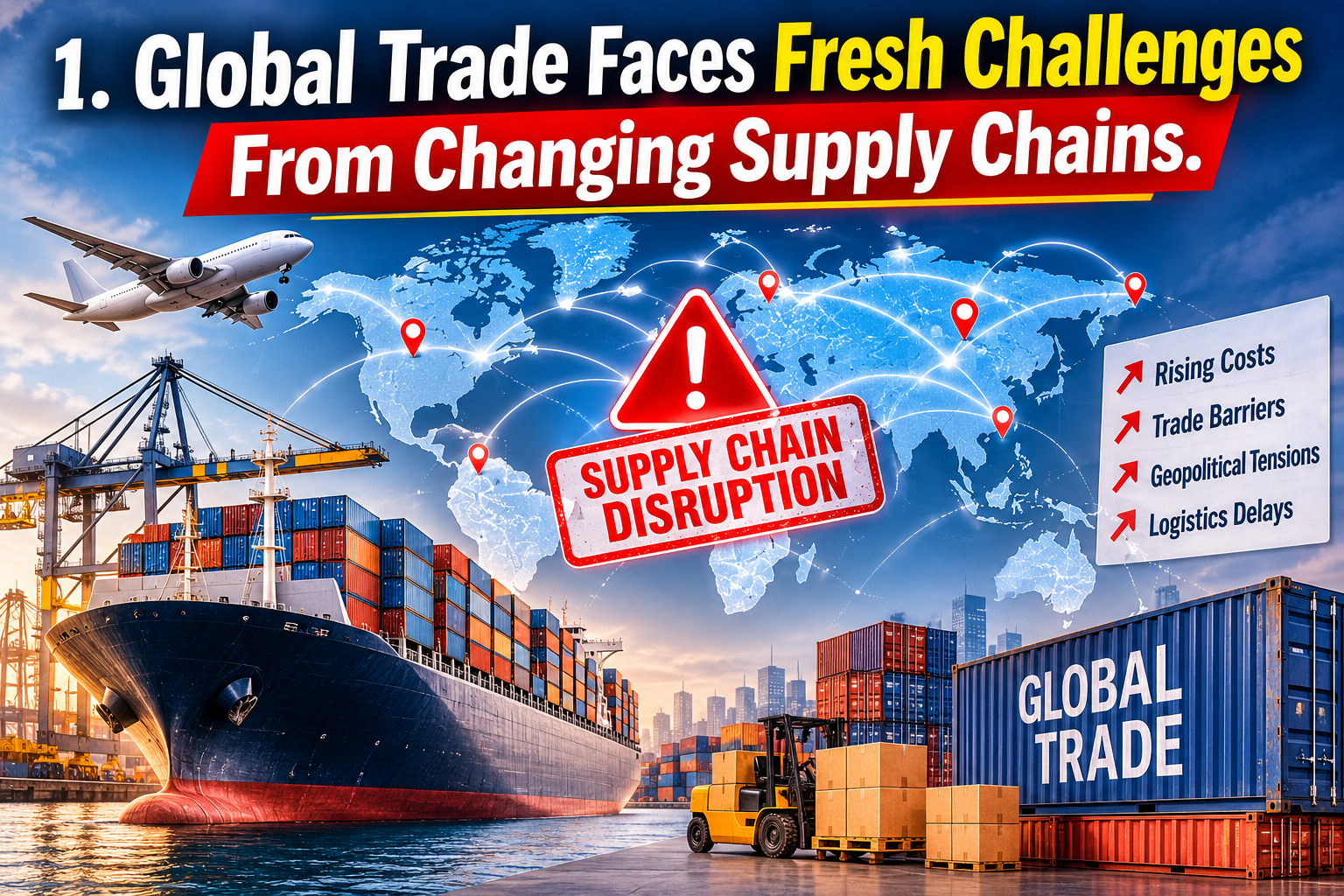
Geopolitical developments remain among the most significant factors influencing the global economic outlook. Regional conflicts, changing alliances, trade restrictions and supply-chain disruptions have reshaped the way businesses and governments approach economic planning. Companies are increasingly reconsidering sourcing strategies, manufacturing locations and investment priorities to reduce exposure to external shocks.
Trade policy uncertainty can affect global growth by discouraging capital investment, increasing production costs and complicating cross-border business operations. Businesses operating internationally are particularly sensitive to changes in tariffs, regulations and market access. As a result, supply-chain diversification and regional trade partnerships are becoming increasingly important strategies for maintaining operational stability.
Despite these challenges, global trade continues to offer opportunities for economic expansion. Countries investing in logistics, digital infrastructure, manufacturing capabilities and trade facilitation could strengthen their competitiveness and attract new investment.
Technology and Investment as Growth Drivers
Technological innovation is emerging as a major contributor to economic transformation. Artificial intelligence, automation, digital services and advanced manufacturing are changing business models, improving operational efficiency and creating new opportunities across industries.
Investment in digital infrastructure and technology adoption could support productivity gains over the medium and long term. Businesses are increasingly integrating digital tools into operations to reduce costs, improve decision-making and enhance customer experiences. However, the benefits of technological progress will depend on workforce adaptability, access to infrastructure and the ability of businesses to implement innovations effectively.
Governments also have an important role in encouraging innovation through supportive policies, education, research funding and investment in infrastructure. Economies that successfully combine technological advancement with skills development may be better positioned to achieve sustainable growth.
Inflation, Monetary Policy and Financial Stability
Inflation and interest-rate developments remain important considerations for policymakers and investors. While the broader inflationary environment may differ across economies, central banks continue to face the challenge of balancing price stability with economic growth.
Higher borrowing costs can restrain investment and consumption, particularly in sectors sensitive to interest rates, including housing, construction and manufacturing. Conversely, easing financial conditions may encourage economic activity but could also introduce risks if inflationary pressures persist.
Financial stability will therefore remain a key priority. Governments and central banks must monitor credit conditions, financial market volatility and debt sustainability while ensuring that policy measures support economic confidence and long-term development.
Emerging Economies and New Opportunities
Emerging and developing economies could play an increasingly important role in shaping global growth. Expanding domestic markets, infrastructure development, demographic advantages and growing digital adoption offer opportunities for businesses and investors.
However, these economies may also face challenges related to currency volatility, external debt, energy costs and capital flows. Strengthening domestic institutions, improving productivity, promoting investment and expanding access to education and technology will be critical to sustaining growth.
For businesses, the evolving global outlook presents opportunities to explore new markets, diversify operations and invest in resilient business models. Strategic planning and risk management will be essential in navigating the uncertainties ahead.
The Worldonomics Times View
The IMF’s growth projections of 3.1% in 2026 and 3.4% in 2027 reflect a global economy that remains resilient, but not without vulnerabilities. Growth alone will not define economic success in the coming years. The quality, inclusiveness and sustainability of growth will matter equally.
The world needs stronger international cooperation, predictable trade policies, responsible financial management and investment in innovation to unlock its economic potential. Businesses must embrace adaptability, governments must strengthen economic foundations, and policymakers must ensure that opportunities created by technological progress and global trade are accessible more broadly.