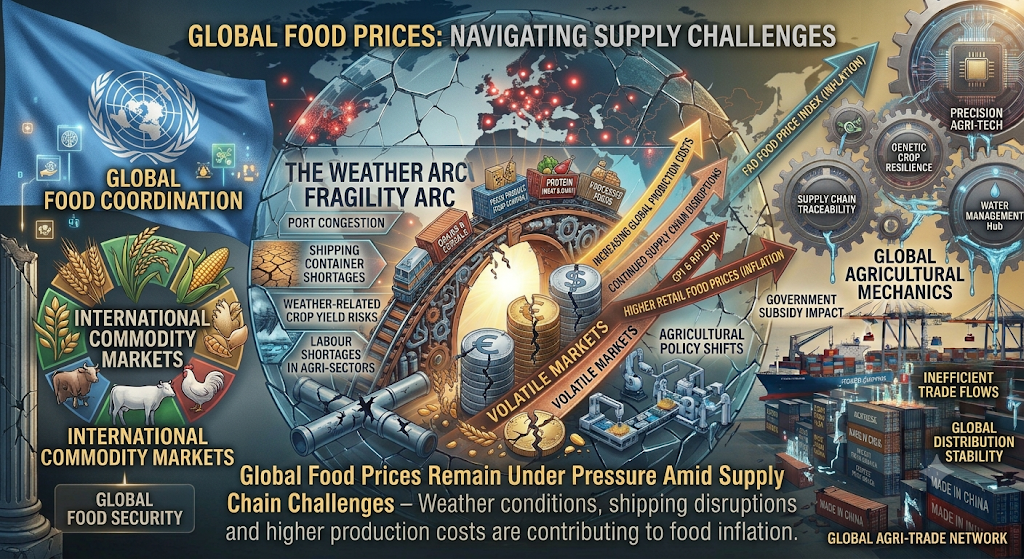
Weather conditions, shipping disruptions and higher production costs are contributing to food inflation.
Global food markets continue to face uncertainty as changing weather patterns, geopolitical tensions and supply-chain disruptions influence agricultural production and international trade. Although some food commodity prices have recently declined, overall food prices remain higher than a year ago, creating continued pressure on households, businesses and governments.
Rising transportation expenses, expensive agricultural inputs and unpredictable harvest conditions are affecting the availability and affordability of essential food products. Developing economies are particularly vulnerable because many depend on imported cereals, edible oils, fertilisers and other agricultural commodities to meet domestic demand.
The situation highlights the growing connection between climate conditions, international logistics, energy markets and global food security.
Global Food Prices Remain Elevated
According to the Food and Agriculture Organization (FAO), the Food Price Index averaged 133.9 points in October 2026, declining by 1.2% from September. However, the index remained 5.9% higher than its level a year earlier.
The monthly decline was mainly supported by lower international prices for cereals, dairy products and meat. The FAO Cereal Price Index fell by 4.5% during October, reflecting weaker import demand and improved production expectations in some major exporting countries.
However, not all food categories experienced a decline. The FAO Sugar Price Index increased by 6.6% in October and was 28.8% higher than a year earlier. Vegetable oil prices also recorded a marginal increase.
These contrasting movements demonstrate that the global food market is experiencing different supply and demand conditions across individual commodities. While improved harvest expectations can reduce prices in one market, weather disruptions and production constraints can increase costs in another.
Extreme Weather Conditions Affect Agricultural Production
Weather uncertainty has become a major concern for agricultural producers. Droughts, excessive rainfall, heatwaves and changing seasonal patterns can reduce crop yields, delay harvesting and affect the quality of agricultural products.
The developing El Niño weather pattern is creating additional uncertainty for the 2026–27 agricultural season. Changes in rainfall and temperature can affect important crop-producing regions, including areas responsible for wheat, rice, maize and sugar production.
FAO has highlighted concerns about lower global rice production in 2026, forecasting a decline of 2.5% to approximately 552 million tonnes. Adverse weather conditions and weaker producer margins are among the factors affecting the outlook.
Sugar production is also facing pressure. Rainfall-related disruptions to sugarcane harvesting and processing in Brazil, together with concerns about production in India and Thailand, have contributed to higher international sugar prices.
These developments demonstrate how climate-related production risks can influence global food availability and market prices.
Shipping Disruptions Increase Transportation Costs
International shipping plays a critical role in the global food supply chain. Agricultural commodities frequently travel long distances between producing and consuming countries, making international trade routes essential for maintaining stable food supplies.
However, geopolitical tensions and disruptions around important maritime routes have increased uncertainty for shipping companies and commodity traders.
The Strait of Hormuz and the Black Sea region are particularly important in the current environment. Disruptions affecting these routes can increase freight costs, insurance premiums and delivery times for agricultural commodities and energy supplies.
Higher transportation expenses eventually affect the prices paid by importers, wholesalers and consumers. Developing countries that depend heavily on imported food may face particularly difficult conditions when shipping costs rise alongside currency depreciation.
The FAO has identified transportation disruptions and concerns surrounding Black Sea trade as important contributors to recent agricultural market volatility.
Higher Fertiliser and Energy Costs Pressure Farmers
Agricultural production depends heavily on energy, fertilisers, machinery, irrigation and transportation. When the prices of these inputs increase, farmers face higher operating expenses, which can reduce profitability and influence future planting decisions.
Fertilisers are especially important because they directly affect agricultural productivity. Higher natural gas prices can increase the cost of producing nitrogen-based fertilisers, while international supply disruptions can make other fertiliser products more expensive or difficult to obtain.
India provides an example of the growing financial pressure. On November 11, the Indian government approved a fertiliser subsidy allocation of approximately ₹623.70 billion for the October 2026–March 2027 winter crop season. The increased support reflects higher international fertiliser costs and supply-chain challenges.
If farmers reduce fertiliser use because of higher prices, agricultural yields could suffer in subsequent seasons. This may create another source of pressure on food availability and consumer prices.
Developing Economies Face Greater Food Security Risks
Higher global food prices can have a particularly serious impact on developing economies, where food represents a substantial share of household expenditure.
When essential commodities become more expensive, low-income households may struggle to maintain adequate nutrition. Governments may also face additional pressure to increase subsidies, provide food assistance and manage domestic price volatility.
The World Bank’s October 2026 Food Security Update indicated that global food supplies remained broadly adequate, although agricultural prices were higher than a year earlier and transportation costs continued to create uncertainty.
The report also highlighted serious food insecurity in parts of Africa, where conflict, extreme weather and economic difficulties are affecting access to essential food supplies.
These conditions show that food security is not determined only by global production levels. Transportation infrastructure, purchasing power, political stability and access to markets are equally important.
The Road Ahead for Global Food Markets
The future direction of global food prices will depend on weather conditions, agricultural output, energy markets and the stability of international trade routes.
Improved harvests and lower shipping costs could help ease pressure on international commodity prices. However, prolonged geopolitical tensions, extreme weather events or further increases in fertiliser and fuel expenses could create renewed price increases.
Governments and international organisations must therefore focus on strengthening agricultural resilience, improving storage facilities, diversifying import sources and investing in modern farming technologies.
Greater cooperation between food-producing and food-importing countries will also be important in preventing export restrictions and supply disruptions from intensifying market instability.
The Worldonomics Times Views
Global food prices remain an important economic concern because their effects extend beyond agricultural markets into household budgets, inflation, trade and economic stability. Although the October decline in the FAO Food Price Index offers some relief, prices remain higher than a year earlier, while weather uncertainty and supply-chain disruptions continue to create risks.
Governments should prioritise agricultural investment, affordable fertiliser supplies, efficient transportation networks and stronger food-storage systems. Supporting farmers through improved technology, irrigation and access to financing can also help protect production against unpredictable weather conditions.
For businesses and investors, monitoring commodity prices, shipping costs and agricultural forecasts will remain essential. Companies operating in food processing, retail and distribution must prepare for continued changes in input costs and consumer demand.
Ultimately, ensuring stable food supplies requires more than increasing agricultural production. It demands resilient supply chains, responsible trade policies and international cooperation. The ability of governments and businesses to address these challenges will play a major role in controlling food inflation and protecting global food security in the coming years.