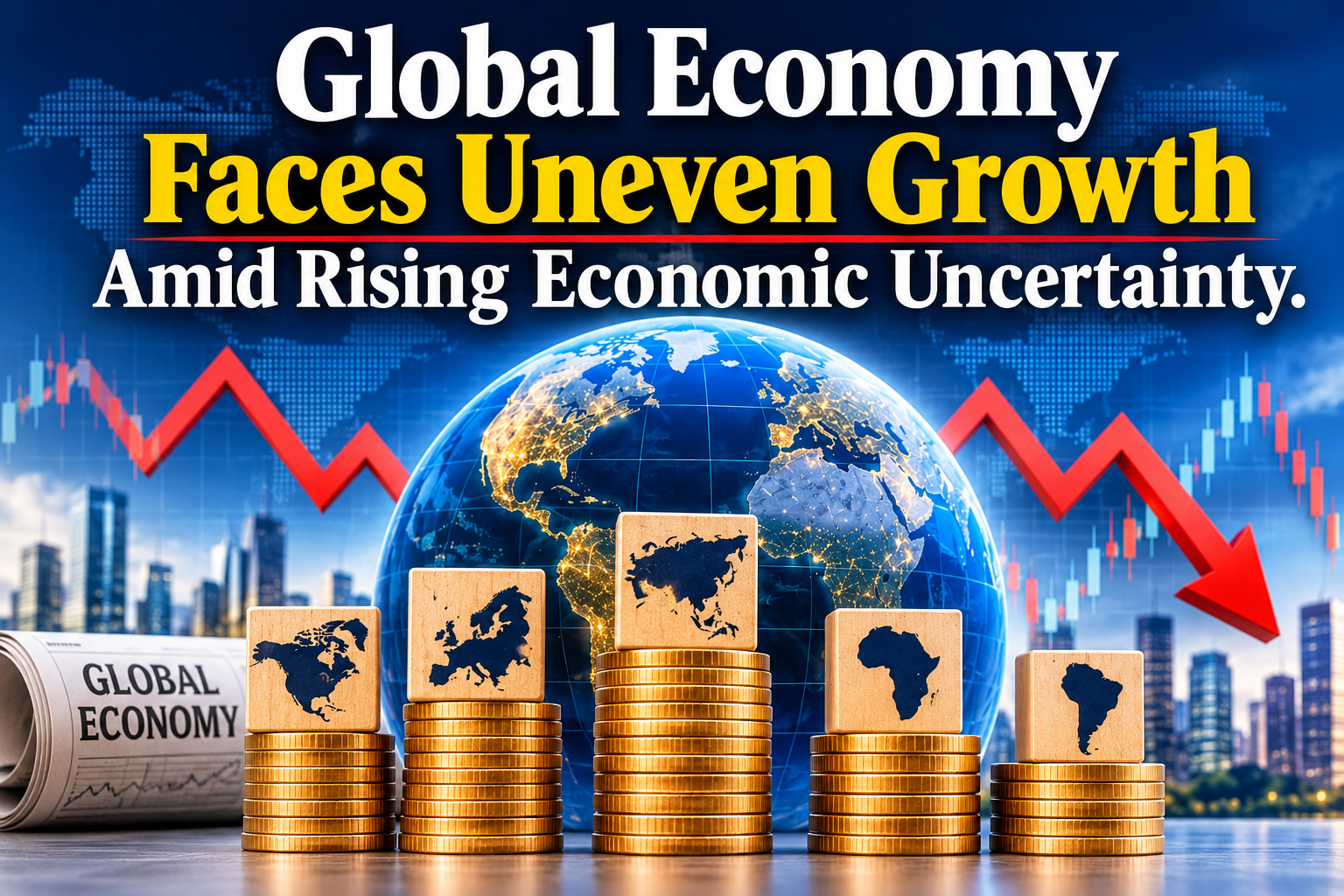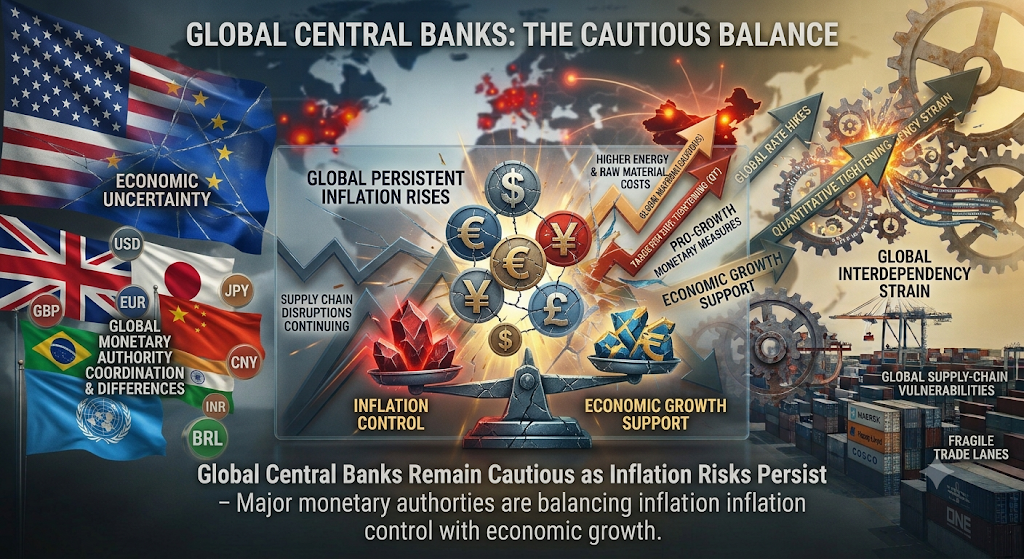
Major Monetary Authorities Are Balancing Inflation Control With Economic Growth
Global central banks are navigating an increasingly complicated economic environment as persistent inflation, rising energy prices, geopolitical tensions, and uncertain growth prospects continue to influence monetary policy decisions. Major monetary authorities are adopting a cautious approach, carefully balancing the need to control inflation against the risk of weakening economic activity through excessive interest rate increases.
Although several central banks have maintained their existing interest rates following previous rounds of monetary tightening, policymakers remain concerned that inflationary pressures could persist longer than anticipated. Rising oil prices, supply-chain disruptions, higher production costs, and international trade uncertainties are creating additional challenges for economies across both developed and emerging markets.
The latest developments indicate that the global monetary policy environment remains restrictive, with further interest rate adjustments still possible if inflation continues to exceed central banks’ targets.
Central Banks Adopt a Data-Driven Approach
Major central banks, including the US Federal Reserve, European Central Bank (ECB), Bank of Japan (BOJ), and Bank of England (BoE), are closely monitoring economic indicators before making further policy decisions.
According to a Reuters report published on November 4, several major central banks paused interest rate adjustments during October after a series of increases in September. However, policymakers indicated that the pause should not necessarily be interpreted as the end of the monetary tightening cycle.
The approach reflects growing uncertainty about the direction of inflation and economic growth. While higher interest rates can reduce consumer spending and business borrowing, keeping rates elevated for too long can weaken investment, employment, and household consumption.
Consequently, central banks are increasingly relying on incoming inflation figures, labour market conditions, wage growth, and economic activity indicators to determine the appropriate timing of future decisions.
Rising Energy Prices Complicate Inflation Management
One of the biggest challenges confronting monetary policymakers is the renewed increase in global energy prices. Geopolitical tensions and disruptions to international supply routes have increased uncertainty in oil and natural gas markets.
Higher energy costs influence a wide range of economic activities, including transportation, manufacturing, electricity generation, agriculture, and logistics. These increases can eventually translate into higher consumer prices, making it more difficult for