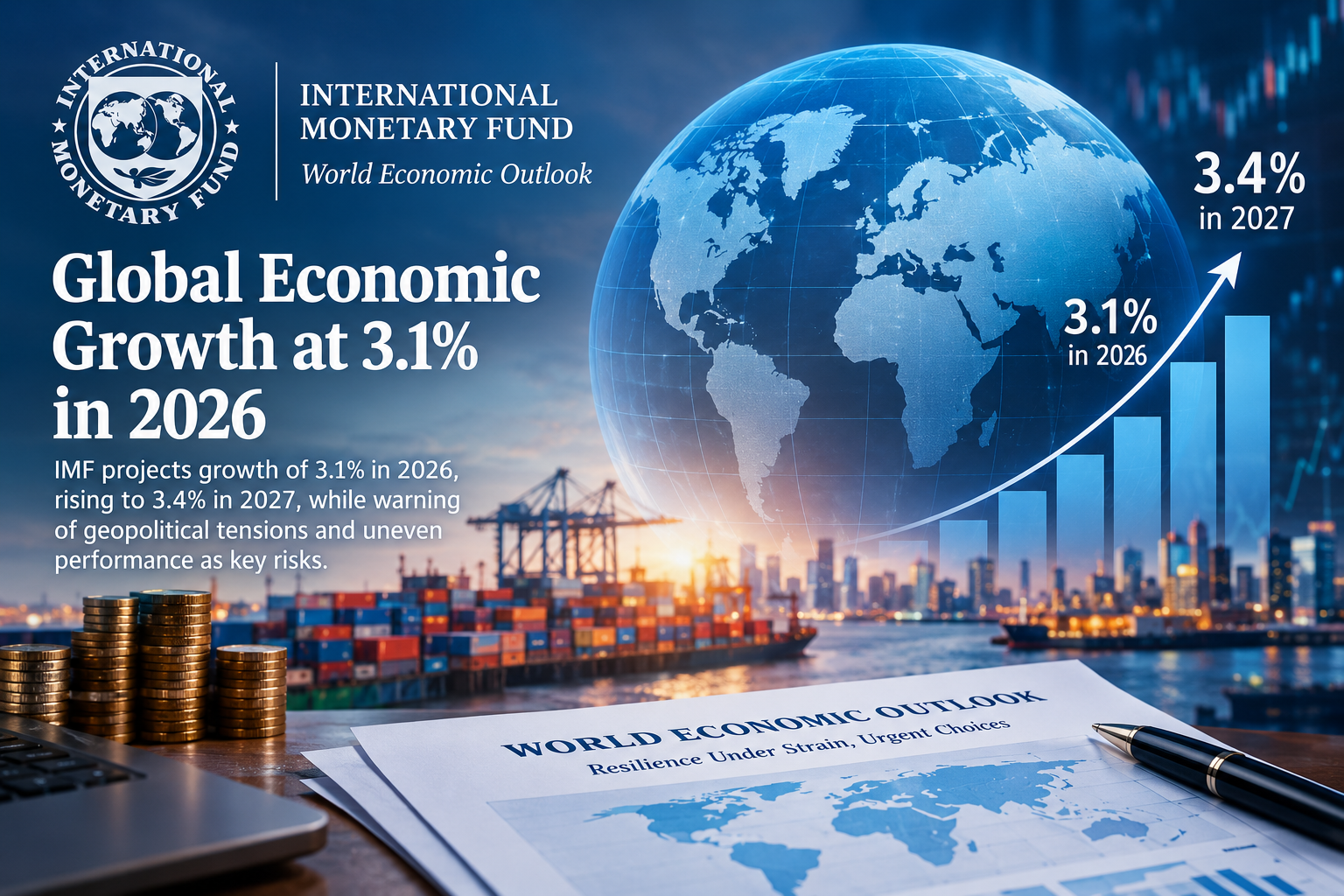
Political changes, geopolitical tensions and shifting economic policies are influencing global financial markets, prompting investors to reconsider portfolio allocations, monitor emerging risks and adopt more cautious investment strategies.
Global financial markets are entering a period of heightened uncertainty as political developments increasingly influence investment decisions, currency movements, bond yields and stock market performance. From election outcomes and government policy changes to international conflicts and trade disputes, political events are becoming important factors shaping the direction of global capital flows.
Investors are closely monitoring developments in major economies because changes in government priorities can affect taxation, public spending, trade regulations, interest rates and international business relationships. Even the possibility of a major policy shift can influence market sentiment before new measures are formally introduced.
Recent market movements following the November 2026 US midterm elections demonstrate how quickly political developments can affect financial markets. Investors have also been assessing broader concerns surrounding inflation, government debt, geopolitical instability and the sustainability of technology-sector valuations.
US Midterm Election Results Influence Market Sentiment
The US midterm elections have attracted considerable attention from international investors because the country plays a central role in global financial markets.
Following the Democratic Party’s success in securing control of both chambers of Congress, financial markets reacted to the possibility of changes in the direction of US economic policy.
According to Reuters reporting on November 4, global stocks declined and the US dollar weakened as investors reassessed the implications for technology investment, government spending and regulation.
Technology-related shares faced particular pressure amid concerns that potential policy changes could affect the large-scale data-centre investments supporting the artificial intelligence industry. Cryptocurrency markets also experienced weakness as investors considered the possibility of stronger regulatory oversight.
Meanwhile, government bonds attracted demand as some investors sought comparatively safer assets.
The developments illustrate how election results can influence market expectations even before governments introduce specific legislative changes.
Geopolitical Tensions Increase Investment Risks
Geopolitical instability remains another major source of financial market uncertainty.
Conflicts, international sanctions, trade restrictions and tensions between major economies can disrupt energy supplies, international shipping and cross-border investment.
Higher geopolitical risks can increase oil and commodity prices, creating inflationary pressure and complicating central bank decisions.
Investors may respond by reducing exposure to riskier assets and increasing allocations to government bonds, gold or other defensive investments.
The economic consequences can be particularly serious for emerging markets that depend on imported energy, international financing and foreign investment.
Countries experiencing currency weakness or high external debt may face additional pressure when international investors become more cautious.
IMF Warns of Growing Financial Stability Risks
The International Monetary Fund’s October 2026 Global Financial Stability Report, titled Resilience, Risk, and Transformation, highlights several risks that could trigger wider financial market disruption.
Although global markets have remained relatively resilient, supported by economic growth and corporate earnings, the IMF warns that financial stability risks remain elevated.
Three major concerns stand out.
First, weaker-than-expected investment returns from artificial intelligence could trigger a correction in technology-related asset valuations.
Second, renewed inflation or concerns about government finances could push sovereign bond yields higher, increasing borrowing costs across the financial system.
Third, growing cyber threats could disrupt financial institutions, payment networks and other essential financial services.
These risks demonstrate that financial markets can appear stable while underlying vulnerabilities continue to build.
Bond Markets and Currency Movements Under Pressure
Government bond markets are particularly sensitive to political and economic developments.
Investors assess government borrowing requirements, fiscal deficits, inflation expectations and central bank policies before deciding whether to purchase or sell sovereign debt.
When concerns about government finances increase, investors may demand higher yields to compensate for additional risk.
Higher bond yields can increase borrowing costs for governments, businesses and households. They can also reduce the attractiveness of equities by making fixed-income investments more competitive.
Currency markets respond to similar developments. Political uncertainty, changes in interest-rate expectations and differences in economic performance can influence the relative value of national currencies.
For emerging economies, sudden changes in global investor sentiment may lead to capital outflows, currency depreciation and tighter domestic financial conditions.
Investors Shift Towards Risk Management and Diversification
In an uncertain environment, investors are increasingly focused on protecting portfolios rather than pursuing returns alone.
Diversification across geographical markets, industries and asset classes can help reduce dependence on individual political or economic outcomes.
Institutional investors may also review their exposure to highly valued technology companies, government bonds and currencies that could be affected by changing policy expectations.
Gold and other defensive assets can attract attention during periods of uncertainty, although their prices also fluctuate and they do not guarantee protection against losses.
Businesses are adopting similar approaches by reviewing international investment plans, monitoring regulatory developments and strengthening financial risk-management systems.
For companies operating across borders, understanding political developments has become an important part of strategic planning.
Emerging Economies Face Additional Challenges
Political developments in major economies can have significant consequences for developing countries.
Changes in US monetary, fiscal or trade policies can influence international capital flows, dollar movements and global borrowing costs.
Emerging markets with strong economic fundamentals, stable institutions and adequate foreign-exchange reserves may be better positioned to manage these changes.
However, countries with high external debt, large current-account deficits or weak fiscal positions may experience greater financial pressure.
India and other emerging Asian economies must therefore maintain macroeconomic stability while attracting investment and expanding international trade.
Consistent economic policies, infrastructure development and stronger domestic financial markets can help reduce vulnerability to external shocks.
The Worldonomics Times View
Global financial markets are increasingly influenced by political decisions, making investment planning more complicated than in previous periods of relative stability.
In our view, the most important lesson from recent market reactions is that political uncertainty can quickly become economic uncertainty. Elections, regulatory changes and geopolitical developments can influence investor confidence, borrowing costs and business decisions even before their full economic consequences become visible.
However, investors should avoid making decisions based solely on short-term political headlines. Markets frequently react to expectations, and initial movements do not always reflect the long-term economic impact of a policy change.
We believe governments must prioritise policy transparency, institutional stability and responsible fiscal management to maintain investor confidence.
For India and other emerging economies, strengthening domestic financial markets, diversifying international investment relationships and maintaining credible economic policies will be essential.
Businesses and investors should also focus on diversification, realistic valuations, liquidity management and careful assessment of geopolitical exposure.
Our position is clear: political developments may create market volatility, but strong economic fundamentals remain the foundation of sustainable investment confidence.
The future of global financial markets will depend not only on political outcomes but also on how effectively governments, businesses and investors respond to changing economic conditions. In an increasingly interconnected world, informed decisions, international cooperation and financial resilience will remain essential to long-term stability.