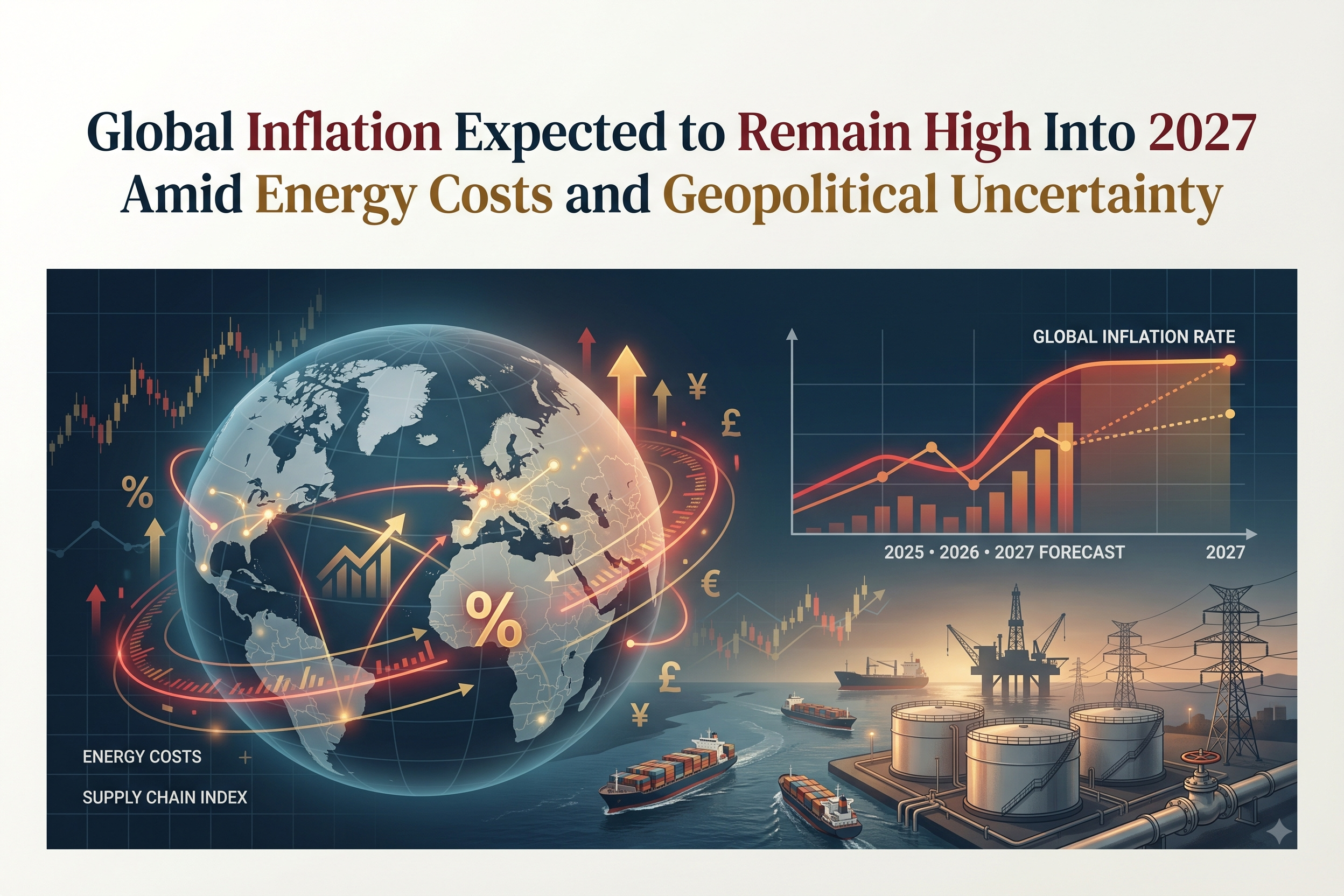
Rising energy prices, persistent supply-chain disruptions and geopolitical tensions continue to create inflationary pressures across major economies, challenging central banks and household budgets worldwide.
Global inflation is expected to remain a major economic concern into 2027, as persistent energy costs, supply-chain challenges and geopolitical uncertainty continue to influence prices across major economies. Economists warn that although some countries have made progress in controlling inflation, the global economic environment remains vulnerable to fresh price increases.
From rising transportation and manufacturing expenses to higher food and energy prices, inflation continues to affect businesses, consumers and financial markets. Governments and central banks are facing the difficult task of maintaining price stability while supporting economic growth in an increasingly uncertain international environment.
The possibility of prolonged inflation could also influence interest rate decisions, investment strategies and consumer spending patterns throughout 2027.
Energy Costs Remain a Major Inflation Driver
Energy prices remain one of the most important factors influencing global inflation. Oil, natural gas and electricity are essential inputs for transportation, manufacturing, agriculture and industrial production.
When energy prices rise, businesses often face higher operating expenses. These additional costs can eventually be passed on to consumers through increased prices for goods and services.
Geopolitical tensions in major energy-producing regions can further complicate the situation by creating uncertainty around supply and international trade routes. Any disruption to energy production, transportation infrastructure or shipping operations can affect global commodity markets.
Countries that depend heavily on imported energy are particularly vulnerable to these developments. Higher import bills can increase production costs, place pressure on national currencies and contribute to broader inflationary pressures.
As a result, energy market stability will remain a critical factor in determining the global inflation outlook through 2027.
Supply-Chain Disruptions Continue to Influence Prices
Global supply chains have become increasingly interconnected, making international trade essential for modern manufacturing and distribution.
However, geopolitical tensions, transportation disruptions, trade restrictions and logistical challenges continue to create uncertainty for businesses operating across international markets.
Manufacturers that depend on imported raw materials, electronic components and industrial equipment may face higher procurement and transportation costs when supply chains become disrupted.
These challenges can affect production schedules, reduce product availability and increase the final prices paid by consumers.
Industries such as automobiles, electronics, pharmaceuticals, food processing and construction are particularly sensitive to supply-chain conditions.
Businesses are increasingly exploring alternative suppliers, regional manufacturing facilities and diversified sourcing strategies to reduce their dependence on individual markets.
While these adjustments can improve long-term resilience, restructuring supply chains may initially involve additional costs, potentially contributing to inflation.
Geopolitical Uncertainty Adds Pressure to the Global Economy
Geopolitical developments remain another significant source of uncertainty for the international economic outlook.
Trade disputes, regional conflicts, economic sanctions and changes in international relations can affect commodity prices, investment decisions and global trade flows.
When geopolitical risks increase, businesses may delay investment plans, reconsider international operations or build additional inventory to protect against potential supply disruptions.
Financial markets can also experience increased volatility as investors reassess economic risks and expectations for future inflation.
For emerging economies, these developments can create additional challenges. Currency depreciation, rising import costs and higher international borrowing expenses may make it more difficult to manage domestic inflation.
The relationship between geopolitical uncertainty and inflation is therefore becoming increasingly important for policymakers and investors.
Central Banks Face Difficult Interest Rate Decisions
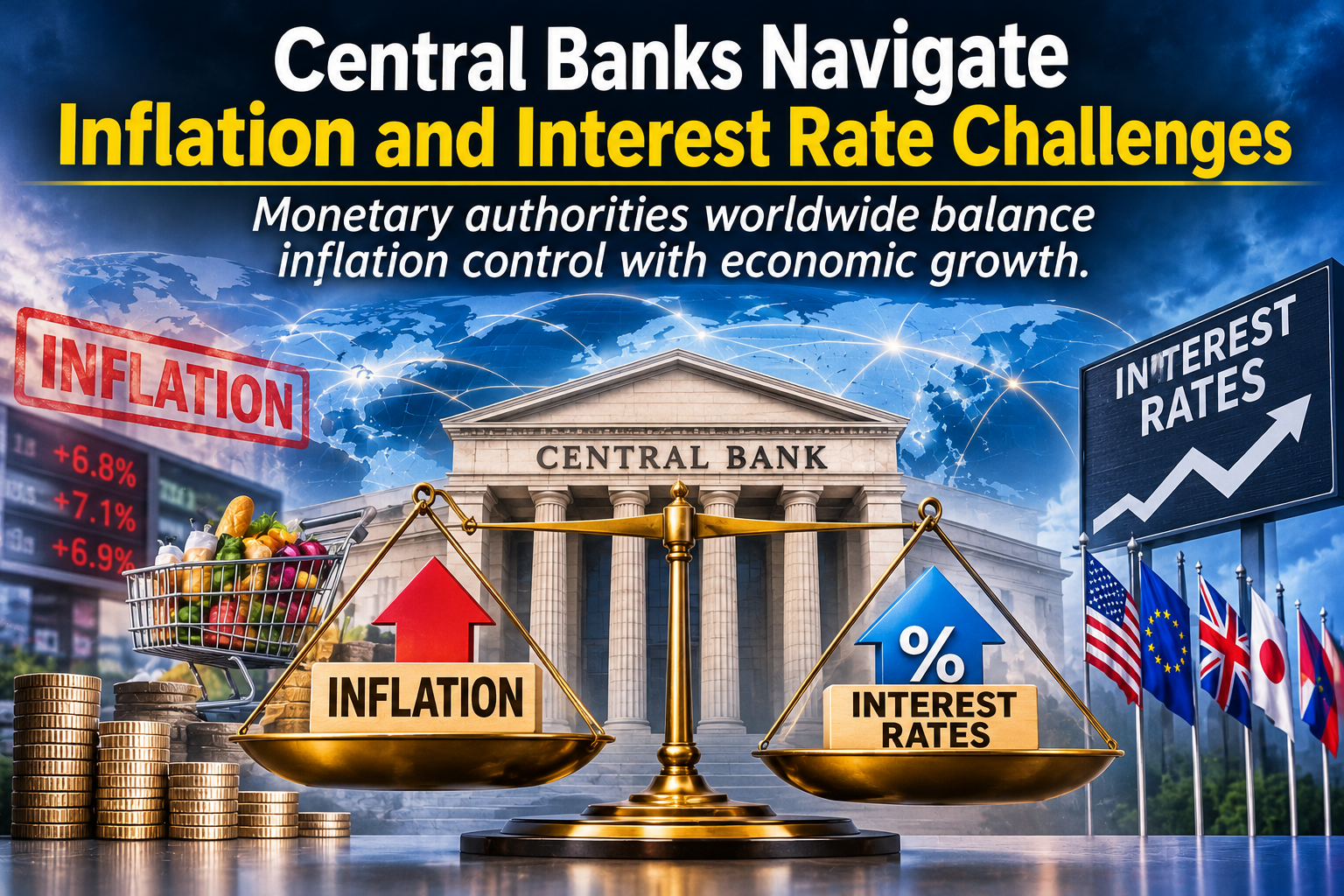
Persistent inflation presents a major challenge for central banks worldwide.
Institutions such as the US Federal Reserve, European Central Bank and Bank of England must carefully evaluate price movements before making decisions about interest rates.
When inflation remains elevated, central banks may maintain restrictive monetary policies or consider additional rate increases to moderate demand.
Higher interest rates generally increase borrowing costs for households and businesses. This can reduce spending, discourage excessive credit expansion and help ease inflationary pressure.
However, prolonged high interest rates can also slow economic growth, reduce business investment and increase financial pressure on households with outstanding loans.
Central banks must therefore strike a careful balance between controlling inflation and avoiding unnecessary economic weakness.
Their future decisions will depend on developments in consumer prices, employment, wage growth, energy markets and overall economic activity.
Impact on Consumers and Businesses
Persistent inflation can have significant consequences for everyday economic activity.
For households, rising prices reduce purchasing power, particularly when wages fail to keep pace with increases in essential expenses. Food, housing, transportation, electricity and healthcare costs can place additional pressure on family budgets.
Lower-income households are often more vulnerable because essential goods and services represent a larger share of their total spending.
Businesses also face growing challenges. Higher raw material prices, energy expenses, transportation charges and financing costs can reduce profit margins.
Small and medium-sized enterprises may find it particularly difficult to absorb these increases without raising prices or reducing operating expenses.
Companies may respond by improving efficiency, renegotiating supplier agreements, investing in technology or reconsidering expansion plans.
Emerging Economies Face Additional Risks
Developing economies could experience greater inflationary pressure because of their dependence on imported energy, food commodities and industrial materials.
Currency fluctuations can make imports more expensive, particularly when the US dollar strengthens against local currencies.
Higher international interest rates may also increase borrowing costs and create challenges for governments managing public debt.
Countries such as India and other emerging Asian economies must carefully monitor international commodity prices, exchange rates and domestic demand.
At the same time, investments in renewable energy, local manufacturing, infrastructure and diversified supply chains could help reduce long-term exposure to external economic shocks.
Strengthening domestic production capabilities may become an important part of national strategies to improve economic resilience.
What to Expect in 2027
The global inflation outlook will depend on several interconnected factors, including energy market developments, international trade conditions, geopolitical stability and central bank policies.
Investors and policymakers will closely monitor:
- Energy prices: Changes in crude oil, natural gas and electricity prices could influence production and transportation expenses.
- Supply-chain stability: Improvements in international logistics could reduce costs, while fresh disruptions may increase inflationary pressure.
- Geopolitical developments: International conflicts and trade restrictions could affect commodity availability and global investment confidence.
- Interest rate decisions: Central bank policies will influence borrowing, spending and investment activity.
- Currency movements: Exchange rate fluctuations could increase the cost of imported goods and raw materials.
Although inflation trends may differ across countries, maintaining price stability will remain a central economic priority.
The Worldonomics Times View
The possibility of elevated global inflation extending into 2027 highlights the structural challenges facing the international economy. Energy dependence, fragile supply chains and geopolitical uncertainty have made price stability increasingly difficult to achieve.
In our view, controlling inflation requires more than monetary tightening. Central banks play an essential role, but governments must also focus on strengthening domestic production, improving energy security, diversifying supply chains and investing in resilient infrastructure.
Businesses should prepare for continued cost uncertainty by improving operational efficiency and reducing excessive dependence on vulnerable international supply networks.
For investors, the coming period will require careful attention to inflation data, interest rate expectations, commodity prices and currency movements.
Ultimately, sustainable global economic growth will depend on the ability of governments, businesses and financial institutions to manage inflation without undermining employment, investment and consumer confidence.
As the world approaches 2027, economic resilience and long-term stability will be just as important as growth itself.