The Worldonomis Times
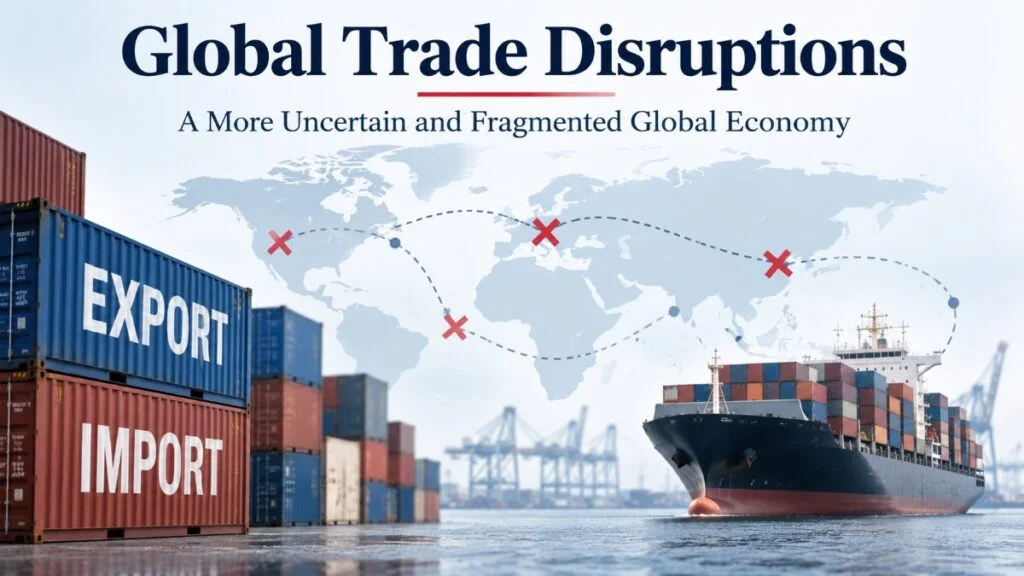
Global trade, once considered a powerful engine of economic integration and international cooperation, is facing growing uncertainty as governments introduce new tariffs, revise trade agreements, and implement changing economic policies. Rising geopolitical tensions, protectionist measures, and shifting diplomatic relationships are reshaping the international trading environment. These developments are creating challenges for businesses, manufacturers, exporters, importers, and consumers across the world.
In an increasingly interconnected economy, changes in trade policies in one major economy can have consequences far beyond its borders. As countries reconsider their economic priorities and national interests, the global trading system is entering a period of significant transformation.
Rising Tariffs Reshape International Trade
Tariffs have once again become a major instrument of international economic policy. Governments are increasingly using import duties to protect domestic industries, reduce dependence on foreign suppliers, encourage local manufacturing, and strengthen national economic security.
While tariffs may provide temporary advantages to domestic producers, they also increase the cost of imported goods and raw materials. Businesses that depend on international supply chains face higher production expenses, which can ultimately translate into increased prices for consumers.
The impact is particularly significant for industries such as automobiles, electronics, steel, pharmaceuticals, textiles, and machinery, where production often depends on components sourced from multiple countries.
According to the World Trade Organization (WTO), restrictive trade measures increased considerably during the first half of 2026. Its November 2026 trade monitoring report recorded 333 new restrictive and other non-facilitating measures during this period, while the accumulated stock of import-related restrictive measures covered approximately 21.3% of global imports.
These developments demonstrate how rapidly changing trade policies are influencing international business decisions.
Global Supply Chains Under Pressure
Modern manufacturing depends heavily on global supply chains, with raw materials, components, technology, and finished products moving across several countries before reaching consumers.
However, frequent tariff adjustments, export restrictions, and geopolitical disagreements are making these networks increasingly difficult to manage. Companies are being forced to reconsider sourcing strategies, production locations, and distribution arrangements to reduce exposure to unexpected trade barriers.
Many businesses are responding by diversifying suppliers, expanding regional manufacturing operations, and exploring alternative trading partners. The strategy of relying on a limited number of countries for essential supplies is gradually giving way to more flexible and diversified supply-chain models.
Although these adjustments can improve long-term resilience, they also require substantial investment, infrastructure development, and operational planning.
Geopolitical Tensions Add to Economic Uncertainty
Trade policies are no longer determined solely by economic considerations. National security, strategic competition, political relationships, and technological independence are increasingly influencing international commerce.
Major economies are introducing measures that affect sensitive sectors such as semiconductors, artificial intelligence, telecommunications, energy, and advanced manufacturing. Export controls and restrictions on strategic technologies are creating additional complications for businesses operating internationally.
Furthermore, conflicts and disruptions to important shipping routes have increased transportation costs, insurance expenses, and delivery uncertainties.
Such developments highlight the vulnerability of global trade to political and geographical disruptions. Businesses must now consider not only market demand and production costs but also geopolitical risks when making international investment decisions.
Emerging Economies Face Both Challenges and Opportunities
Developing economies are experiencing mixed consequences from these changes. On one hand, higher tariffs, uncertain market access, and increased compliance requirements can affect their exports and investment prospects. On the other hand, companies seeking alternatives to established manufacturing centres may increasingly consider emerging markets.
Countries such as India, Vietnam, Indonesia, and Mexico have opportunities to strengthen their positions in international supply chains by improving infrastructure, developing skilled workforces, and offering competitive manufacturing environments.
For India, the changing global trade landscape presents an opportunity to expand exports in pharmaceuticals, engineering goods, electronics, textiles, and information technology services. However, achieving this potential will require competitive production costs, consistent trade policies, efficient logistics, and stronger international trade partnerships.
Emerging economies must also balance domestic industrial development with their commitment to maintaining open and mutually beneficial international trade relationships.
Businesses Must Adapt to a Changing Trade Environment
For companies engaged in international trade, flexibility and strategic planning have become essential. Businesses can no longer depend entirely on stable tariff structures or predictable international regulations.
They must closely monitor policy developments, evaluate alternative suppliers, strengthen contractual arrangements, and assess the financial impact of potential tariff increases.
Digital technologies, artificial intelligence, advanced logistics systems, and real-time trade monitoring can help businesses identify risks and improve operational efficiency.
Small and medium-sized enterprises (SMEs), which often have limited financial resources, may face greater difficulties adapting to changing regulations. Governments and financial institutions should therefore provide accessible trade information, export assistance, and financial support to help smaller businesses remain competitive.
The Role of International Cooperation
Despite growing protectionist tendencies, international cooperation remains essential for maintaining a stable global trading system. Institutions such as the World Trade Organization play an important role in encouraging transparency, resolving trade disputes, and establishing common rules.
Countries must recognise that excessive trade restrictions can create retaliatory measures, weaken investor confidence, increase production costs, and disrupt economic growth.
Constructive dialogue, transparent policy implementation, and mutually beneficial trade agreements can help reduce uncertainty. Rather than pursuing isolated economic strategies, governments should focus on building resilient trade relationships that support both domestic industries and international cooperation.
The Worldonomis Times View
The Worldonomis Times believes that the growing disruption in global trade is not simply a temporary consequence of tariff disagreements; it reflects a deeper transformation in the international economic order.
While governments have legitimate reasons to protect strategic industries and strengthen domestic economies, excessive protectionism should not become a substitute for competitiveness, innovation, and international cooperation.
The future of global trade will depend on how effectively countries balance national economic interests with the benefits of an interconnected world economy. Businesses must become more adaptable, emerging economies must strengthen their industrial capabilities, and policymakers must prioritise stability and transparency.
The global economy does not need more trade barriers; it needs smarter trade policies, stronger partnerships, and fairer opportunities.
Ultimately, sustainable economic growth will depend not on how effectively countries restrict international trade, but on how successfully they cooperate, compete, and create shared prosperity in an increasingly interconnected world.