New IRN facility for reverse charge transactions to streamline GST compliance and strengthen digital invoice reporting
New Delhi | 19 November 2026
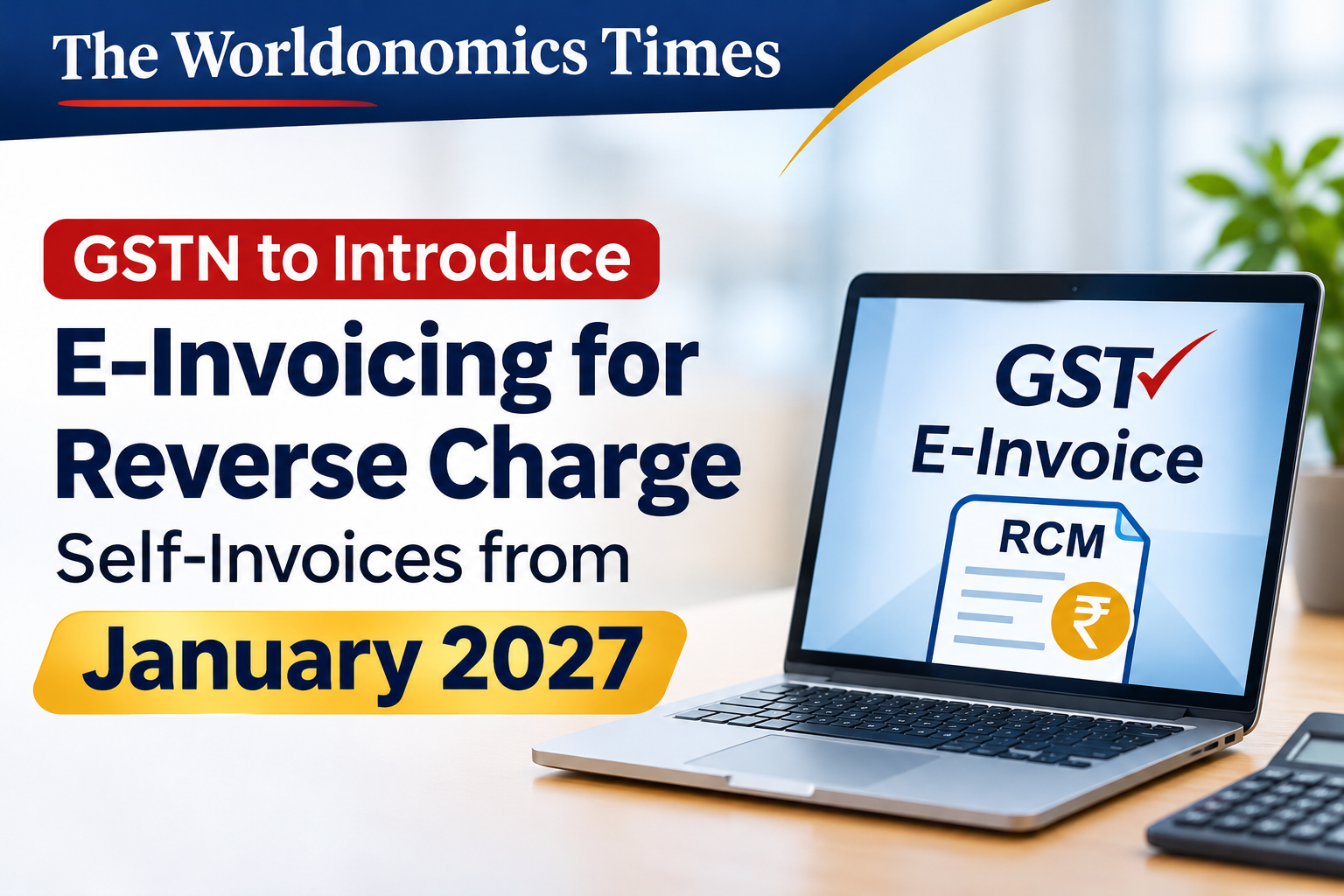
The Goods and Services Tax Network (GSTN) is introducing an important enhancement to India’s e-invoicing framework by enabling the generation of Invoice Reference Numbers (IRNs) for self-invoices issued under the Reverse Charge Mechanism (RCM). The new facility will cover specified reverse charge transactions involving purchases from unregistered suppliers and imports of services.
According to the announced implementation schedule, the facility will be available on a voluntary basis from 15 December 2026 and is expected to become mandatory from 1 January 2027. The initiative is aimed at strengthening digital documentation, improving transparency and bringing greater consistency to GST compliance for reverse charge transactions.
Understanding the New GSTN Facility
Under the Reverse Charge Mechanism, the responsibility to pay GST shifts from the supplier to the recipient of goods or services in specified circumstances.
Under Section 31(3)(f) of the Central Goods and Services Tax (CGST) Act, 2017, a registered person liable to pay tax under reverse charge in respect of supplies received from an unregistered supplier is required to issue an invoice.
Similarly, under Section 31(3)(g), the recipient is required to issue a payment voucher when making payment to the supplier.
The new GSTN facility will enable eligible taxpayers to generate IRNs for such self-invoices through the e-invoice system.
Two New Document Types Introduced
To facilitate reporting of reverse charge self-invoices, two specific document types are being introduced:
1. RCMDOM – Reverse Charge Domestic Transactions
This document type will be used for self-invoices relating to eligible domestic reverse charge transactions, particularly purchases from unregistered suppliers.
2. RCMIMP – Reverse Charge Import of Services
This document type will be used for self-invoices relating to eligible import of services transactions where GST is payable by the recipient under the reverse charge mechanism.
The introduction of separate document categories is expected to help distinguish reverse charge transactions from conventional supplier-issued tax invoices and improve the accuracy of invoice reporting.
Implementation Timeline
GSTN has proposed a phased implementation to provide businesses and technology service providers with sufficient time to prepare for the revised requirements.
| Particulars | Date |
|---|---|
| Voluntary availability | 15 December 2026 |
| Expected mandatory implementation | 1 January 2027 |
The voluntary phase will provide an opportunity for taxpayers to familiarise themselves with the revised process, test system compatibility and identify potential operational issues before mandatory implementation.
Impact on Businesses and Taxpayers
The proposed enhancement will have implications for businesses that regularly undertake transactions covered by the Reverse Charge Mechanism.
1. Changes in Accounting and ERP Systems
Businesses may need to update their accounting software, enterprise resource planning (ERP) systems and invoice management processes to accommodate the new document types and IRN generation requirements.
2. Improved Documentation
The generation of IRNs for eligible self-invoices will strengthen digital documentation and create a more structured record of reverse charge transactions.
3. Better GST Reconciliation
Digital invoice reporting can support reconciliation between purchase records, GST returns and accounting ledgers, thereby reducing discrepancies and improving compliance controls.
4. Enhanced Audit Trail
The facility is expected to provide a stronger digital audit trail for transactions covered under reverse charge provisions. This can be particularly useful during GST audits, departmental scrutiny and internal financial reviews.
5. Increased Compliance Responsibility
Businesses will need to identify transactions attracting reverse charge, determine the applicable tax liability and ensure that the required self-invoices are generated and reported within the prescribed framework.
What Should Businesses Do Now?
With the proposed mandatory implementation approaching, businesses should begin preparing their systems and internal processes.
Key preparatory steps include:
- Review all transactions attracting GST under the Reverse Charge Mechanism.
- Identify purchases from unregistered suppliers and applicable import of services transactions.
- Coordinate with ERP and accounting software service providers.
- Update invoice-generation and GST compliance workflows.
- Train accounts and taxation teams on the new document types.
- Strengthen reconciliation between purchase registers, self-invoices and GST returns.
- Test the voluntary facility once it becomes available.
CA, CMA, CS professionals and GST consultants can play an important role in helping businesses assess the impact of the new requirements and implement appropriate compliance controls.
Implications for the GST Compliance Ecosystem
India’s GST framework has increasingly moved towards technology-driven compliance through e-invoicing, e-way bills, automated return filing and data-based verification.
The extension of IRN generation to reverse charge self-invoices represents another step towards strengthening the digital GST ecosystem. By bringing eligible recipient-generated invoices within the e-invoicing framework, GSTN is seeking to improve transaction visibility and standardise invoice reporting.
For MSMEs and businesses with significant reverse charge exposure, the availability of a structured digital mechanism could improve record-keeping and facilitate smoother reconciliation. However, businesses should also assess the additional technology and compliance requirements associated with the change.
Conclusion
The proposed introduction of IRN generation for reverse charge self-invoices is an important development in India’s GST compliance landscape. With voluntary availability from 15 December 2026 and expected mandatory implementation from 1 January 2027, taxpayers should use the transition period to review their accounting systems and strengthen their GST compliance procedures.
The success of this initiative will depend on effective coordination between GSTN, software providers, tax professionals and businesses. As India’s indirect tax administration continues to embrace digital transformation, such measures are expected to contribute towards greater transparency, improved reporting and a more robust GST compliance environment.
The Worldonomics Times
Business | Economy | Finance | Taxation | Governance