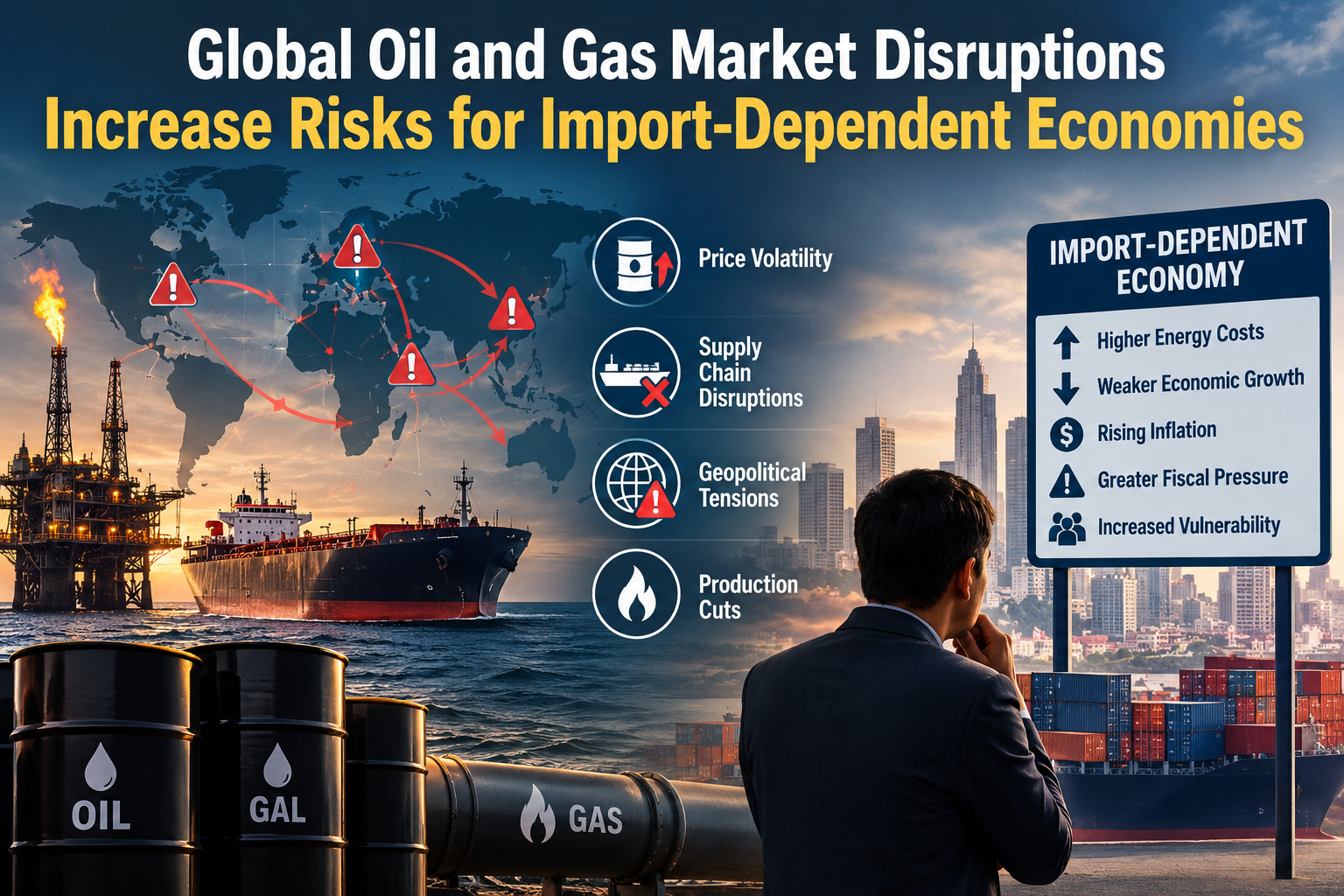
Escalating tensions in the Middle East are increasing uncertainty across the global economy, threatening energy security, disrupting international trade routes and intensifying inflationary pressures for businesses and consumers worldwide.
The ongoing conflict and geopolitical instability in the Middle East are emerging as major challenges for the global economy. Beyond their humanitarian and political consequences, regional tensions are creating significant economic uncertainty by disrupting energy supplies, increasing transportation costs and affecting international investment decisions.
The Middle East occupies a strategically important position in the global economic system because of its substantial oil and natural gas resources and its location along some of the world’s most important shipping routes. Any prolonged disruption in the region can influence international commodity markets, supply chains, financial markets and economic growth across both developed and developing countries.
As governments and businesses assess the potential consequences of continued instability, concerns are increasing over rising energy prices, inflation and the possibility of a broader slowdown in global economic activity.
Energy Markets Face Growing Uncertainty
One of the most immediate economic consequences of Middle East instability is its impact on global energy markets.
The region is home to several major oil and gas producers, making it essential to international energy security. Military tensions, attacks on energy infrastructure and disruptions to shipping routes can reduce supply availability and increase uncertainty surrounding future deliveries.
The Strait of Hormuz is particularly important because it serves as a major international route for oil and liquefied natural gas transportation. Any prolonged disruption to shipping through this strategic passage could have significant consequences for global energy markets.
Higher crude oil prices increase costs for transportation, manufacturing, electricity generation and agriculture. Countries dependent on imported petroleum products are especially vulnerable because rising import bills can weaken trade balances and place pressure on domestic currencies.
Natural gas markets may also experience volatility, particularly in regions dependent on Middle Eastern supplies.
Global Inflation Faces Additional Pressure
Rising energy prices can create inflationary pressures throughout the global economy.
When crude oil and natural gas become more expensive, businesses face higher production and transportation expenses. These increases are frequently passed on to consumers through higher prices for goods and services.
The effects extend beyond fuel and electricity. Agricultural production can become more expensive because of higher fertiliser, irrigation and transportation costs. Food distribution networks may also experience additional financial pressure.
For households, this can mean increased fuel expenses, electricity bills and grocery costs, reducing disposable income and purchasing power.
Central banks face an additional challenge because energy-driven inflation is often caused by supply disruptions rather than excessive consumer demand.
Increasing interest rates may help prevent broader inflation from becoming persistent, but monetary policy cannot directly resolve geopolitical conflicts or restore disrupted energy supplies.
International Trade and Shipping Routes Under Pressure
The Middle East is also an important connecting point for international trade between Asia, Europe and Africa.
Geopolitical instability can force shipping companies to change routes, avoid high-risk maritime areas or introduce additional security measures.
Such disruptions can increase transportation distances, insurance premiums, fuel consumption and delivery times.
Businesses relying on international supply chains may experience delays in receiving raw materials, industrial components and finished products.
The impact can be particularly significant for manufacturing industries that depend on just-in-time inventory systems.
Higher logistics costs can eventually increase product prices, weaken profit margins and reduce the competitiveness of businesses operating in international markets.
For exporters and importers, uncertainty surrounding delivery schedules and shipping expenses makes long-term commercial planning increasingly difficult.
Financial Markets React to Geopolitical Risks
International financial markets are highly sensitive to geopolitical developments.
During periods of uncertainty, investors frequently reconsider their exposure to equities, currencies, commodities and government bonds.
Rising oil prices can benefit some energy-exporting economies while placing pressure on energy-importing countries.
Currency markets may also experience volatility as investors move capital towards assets perceived as relatively safe.
Stock markets can face additional uncertainty because higher energy costs may reduce corporate profitability, increase inflation expectations and complicate central bank decisions.
Industries such as aviation, transportation, tourism and manufacturing are particularly exposed to rising fuel and operating costs.
However, the overall financial impact depends on the duration of the conflict, the scale of supply disruptions and the ability of governments to maintain international trade flows.
Emerging Economies Face Greater Economic Pressure
Developing economies are among the most vulnerable to prolonged energy market disruptions.
Many emerging markets depend heavily on imported crude oil, natural gas and essential industrial commodities. Higher international prices can increase import expenditure, weaken domestic currencies and place additional pressure on government finances.
India is particularly sensitive to fluctuations in international crude oil prices because of its substantial dependence on imported petroleum.
A prolonged increase in oil prices could influence domestic inflation, transportation expenses, manufacturing costs and the country’s current account balance.
Other developing economies may face similar difficulties, especially those with limited foreign exchange reserves and high external borrowing requirements.
At the same time, energy-exporting countries may benefit from higher commodity revenues, although prolonged regional instability can also create risks for their production capacity and infrastructure.
Businesses Reassess Investment and Supply Chain Strategies
The growing uncertainty is encouraging multinational corporations to reassess their international business strategies.
Companies are increasingly considering supplier diversification, alternative shipping routes, larger inventory reserves and stronger risk-management systems.
Energy-intensive industries may also accelerate investment in renewable energy and energy-efficient technologies to reduce their exposure to international fuel price volatility.
For investors, geopolitical risk is becoming an increasingly important factor in evaluating business opportunities and long-term capital allocation.
The situation reinforces the importance of resilient supply chains, diversified energy sources and reliable international partnerships.
The Worldonomics Times View
The economic consequences of Middle East instability demonstrate how closely connected geopolitics, energy security and global economic growth have become.
In our view, the greatest concern is the possibility that a regional conflict could develop into a prolonged global economic challenge through higher energy prices, disrupted trade routes and persistent inflation.
Governments and businesses cannot afford to treat energy security as a secondary economic priority. Reliable access to affordable energy is fundamental to industrial production, transportation, employment and international trade.
For India and other emerging economies, reducing excessive dependence on imported fossil fuels should become an important long-term strategic objective. Investments in renewable energy, domestic energy infrastructure, alternative fuel technologies and diversified import arrangements can strengthen economic resilience.
We also believe that international cooperation is essential. Governments should prioritise diplomatic engagement, protect critical trade routes and work towards preventing further disruptions to global energy supplies.
Businesses, meanwhile, must strengthen their risk-management strategies and avoid excessive dependence on individual suppliers or vulnerable transportation routes.
Our position is clear: geopolitical stability is not only a matter of international security; it is also a fundamental requirement for global economic stability.
The future direction of the global economy will depend partly on how effectively governments manage geopolitical risks while protecting international trade and energy supplies.
Ultimately, sustainable economic growth requires more than investment and technological progress. It also requires peace, predictable international relations and resilient economic partnerships.