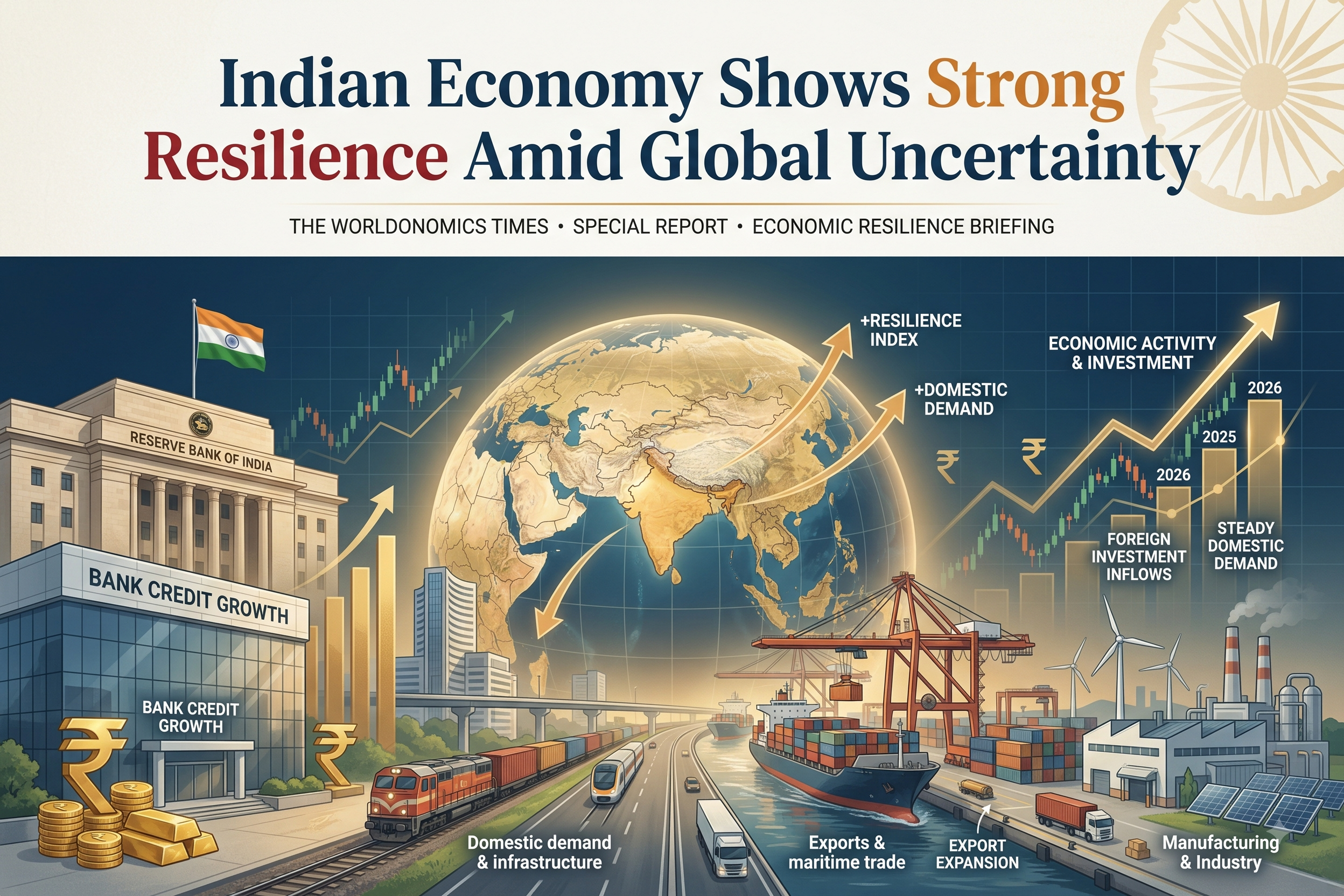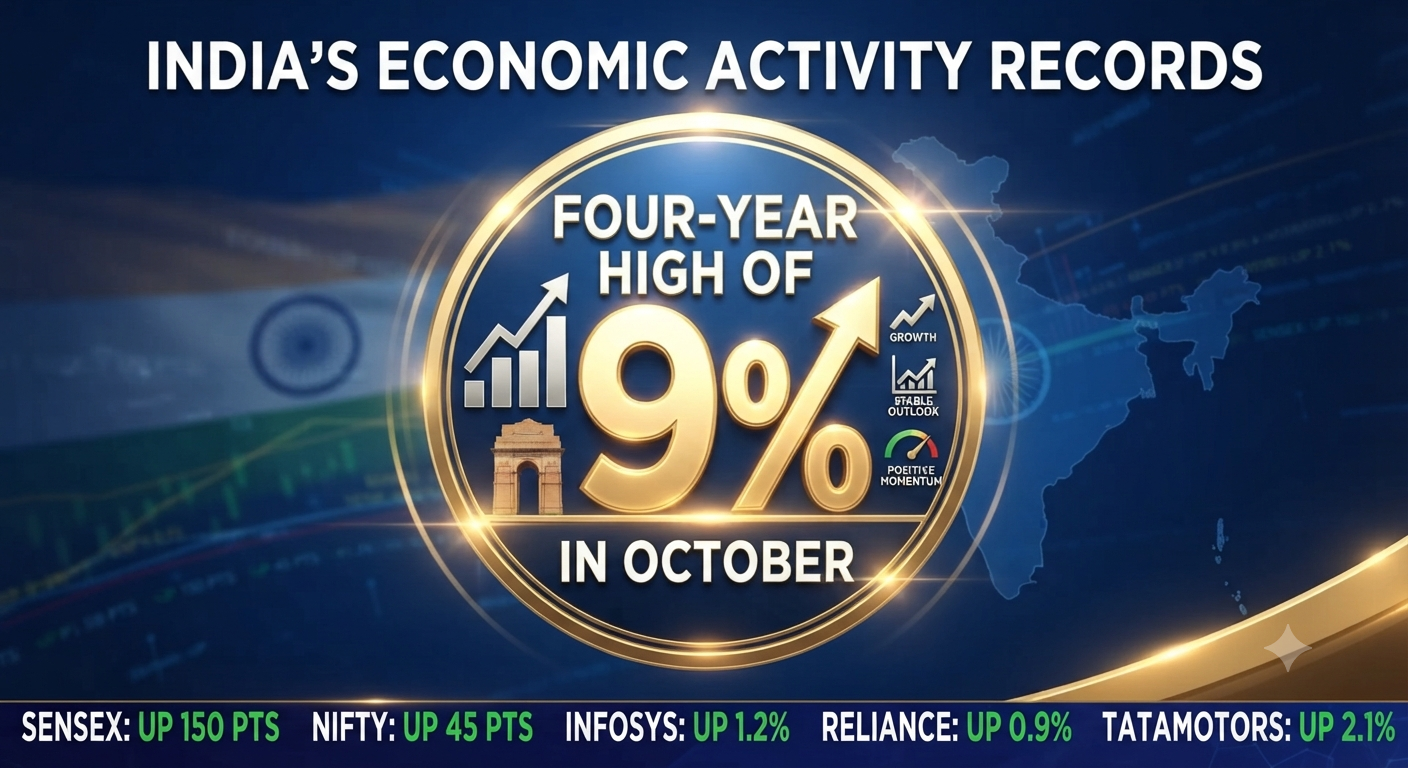
India’s economic activity recorded a four-year high growth rate of 9% year-on-year in October 2026, reflecting strong industrial performance, infrastructure development and increased economic activity during the festive season. The improvement highlights the resilience of the Indian economy despite global uncertainty, higher energy prices and inflationary pressures.
According to a report by global brokerage firm Jefferies, the Jefferies Economic Indicator (JEI), which tracks 35 monthly indicators, improved by 2.2 percentage points month-on-month in October. Several industrial and transportation-related indicators reached multi-year highs, suggesting stronger momentum across important segments of the economy.
The latest figures provide an encouraging picture of India’s economic performance. However, the report also highlights certain weaknesses, particularly in rural consumption and household purchasing power. Economists have cautioned that some of October’s improvement may reflect the timing of the festive season rather than a permanent acceleration in underlying demand.
Industrial Activity Drives Economic Growth
Industrial activity was one of the strongest contributors to India’s economic performance in October.
Electricity demand increased by 22% year-on-year, marking its highest growth in approximately 15 years, excluding the exceptional post-pandemic surge in April 2021. Higher electricity consumption reflects increased requirements from factories, commercial establishments and other economic activities.
Diesel demand also recorded a strong performance, growing by 12% year-on-year. This represented its highest growth in approximately three-and-a-half years. Diesel consumption is closely connected with transportation, logistics, construction, agriculture and manufacturing, making it an important indicator of economic momentum.
Port traffic growth reached 19%, its strongest increase in approximately three years. Higher port activity indicates increased movement of goods and provides evidence of stronger activity across India’s trade and logistics networks.
Together, these indicators suggest that industrial production and transportation activity contributed significantly to October’s economic expansion. <Cite refs={[“turn492232search0″,”turn492232search6”]}/>
Infrastructure Investment Supports Expansion
Infrastructure and capital expenditure continued to provide important support to economic activity.
Cement production increased by 15% year-on-year in October, while steel consumption grew by 7%. These developments indicate continued demand from construction, infrastructure projects and industrial development.
Government spending on roads, railways, power facilities and logistics infrastructure has helped strengthen the investment environment. Improved transportation networks and industrial facilities can also encourage private companies to expand production capacity.
The latest infrastructure figures provide further evidence of this momentum. India’s nine core industries recorded growth of 10.9% year-on-year in October, supported by strong performances in electricity, coal, cement, steel and iron ore.
However, performance remained uneven. Fertiliser, natural gas and crude oil production recorded contractions, highlighting differences across individual industries. <Cite refs={[“turn492232news22″,”turn492232news25”]}/>
Festive-Season Demand Boosts Consumer Activity
The festive season provided an additional boost to India’s economic performance.
The delayed arrival of the festive period shifted some Diwali-related commercial activity and industrial shutdowns into November. As a result, October benefited from stronger production and business activity that might otherwise have occurred later.
Digital transactions also indicated continued consumer participation. The value of Unified Payments Interface (UPI) transactions during the festive period increased by approximately 18% year-on-year, reflecting resilient spending activity.
However, consumer demand was not equally strong across all categories. Two-wheeler retail sales increased by 4%, while passenger vehicle retail sales declined by 7%. Some consumer electronics categories, particularly smartphones, also experienced pressure on sales volumes because of higher prices.
These differences suggest that while overall festive activity remained encouraging, households continued to make selective spending decisions. <Cite refs={[“turn492232search0″,”turn492232search5”]}/>
Banking and Credit Growth Reflect Economic Momentum
The banking sector provided another positive indication of economic activity.
Bank credit growth reached approximately 19.5% year-on-year, its highest level in nearly 12 years, according to the Jefferies report. Stronger lending reflects financing requirements from businesses and households and may support investment and consumption.
However, deposit growth moderated to around 17%, indicating a difference between the pace of lending and deposit mobilisation.
Banking system liquidity also moved into a deficit of approximately ₹10,000 crore, compared with an average surplus of ₹2.4 lakh crore during October. This development followed the Reserve Bank of India’s shift towards a calibrated tightening stance.
The combination of strong credit growth and tighter liquidity conditions will remain important for banks, borrowers and businesses in the coming months. <Cite refs={[“turn492232search0″,”turn492232search5”]}/>
Rural Demand Remains a Concern
Despite strong industrial indicators, rural demand continued to present challenges.
A subdued monsoon affected agricultural prospects and rural purchasing power in several areas. Demand for work under the employment guarantee scheme increased by approximately 82% year-on-year, indicating pressure in parts of the rural labour market.
Rural wage growth stood at around 3.3% year-on-year in September, close to a five-year low, according to the Jefferies assessment. Rising rural inflation has also affected real purchasing power.
Weakness in rural consumption could influence demand for two-wheelers, agricultural equipment, affordable housing and everyday consumer products.
Strengthening rural incomes and agricultural activity will therefore be important for ensuring that economic growth remains broad-based rather than concentrated in industrial and urban segments.
Inflation Creates Additional Economic Challenges
Inflationary pressures remain another important concern for policymakers and investors.
The Jefferies report indicated that wholesale inflation reached approximately 12.2%, close to a four-year high, while retail inflation increased to 6.1%, a two-year high.
Higher prices can reduce household purchasing power and increase operating expenses for businesses. If inflation remains elevated, the Reserve Bank of India may face challenges in balancing economic growth with price stability.
Rising international crude oil prices could add further pressure because India imports a substantial share of its energy requirements. Higher energy costs can influence transportation, manufacturing and distribution expenses across the economy.
Maintaining stable inflation will therefore be essential for protecting consumer demand and supporting sustainable economic expansion.
Outlook for India’s Economic Growth
The October performance provides an encouraging indication of India’s economic momentum heading into the final months of 2026.
Strong industrial activity, infrastructure investment, credit growth and festive-season spending are supporting the broader economy. These factors could help maintain growth during the third quarter of FY27.
Nevertheless, the impact of festive-calendar shifts means that some indicators could moderate in November. Weak rural demand, rising inflation and tighter banking liquidity also require attention.
Investors and policymakers will monitor upcoming industrial production figures, consumer spending data, inflation readings and bank credit trends to assess whether October’s improvement can be sustained.
India’s long-term economic prospects remain supported by infrastructure development, domestic consumption, manufacturing expansion and a growing services sector. The challenge will be to translate strong headline indicators into consistent improvements in employment, income and productivity.
The Worldonomics Times View
India’s 9% economic activity growth in October is an encouraging sign of resilience and expanding industrial momentum. Strong electricity demand, higher diesel consumption, infrastructure investment and festive-season activity demonstrate the strength of several important economic sectors.
However, the figures also highlight the difference between headline economic momentum and the experience of individual households and businesses. Weak rural demand, rising inflation and uneven consumer spending indicate that the benefits of growth are not yet equally distributed.
Policymakers must focus on strengthening rural incomes, maintaining price stability and encouraging private investment. Continued infrastructure development and manufacturing expansion will also be essential for creating employment and improving productivity.
The October performance offers a positive foundation for India’s economic outlook, but the sustainability of this momentum will depend on whether industrial strength is accompanied by stronger household demand and balanced economic development.