Singapore | November 25, 2026
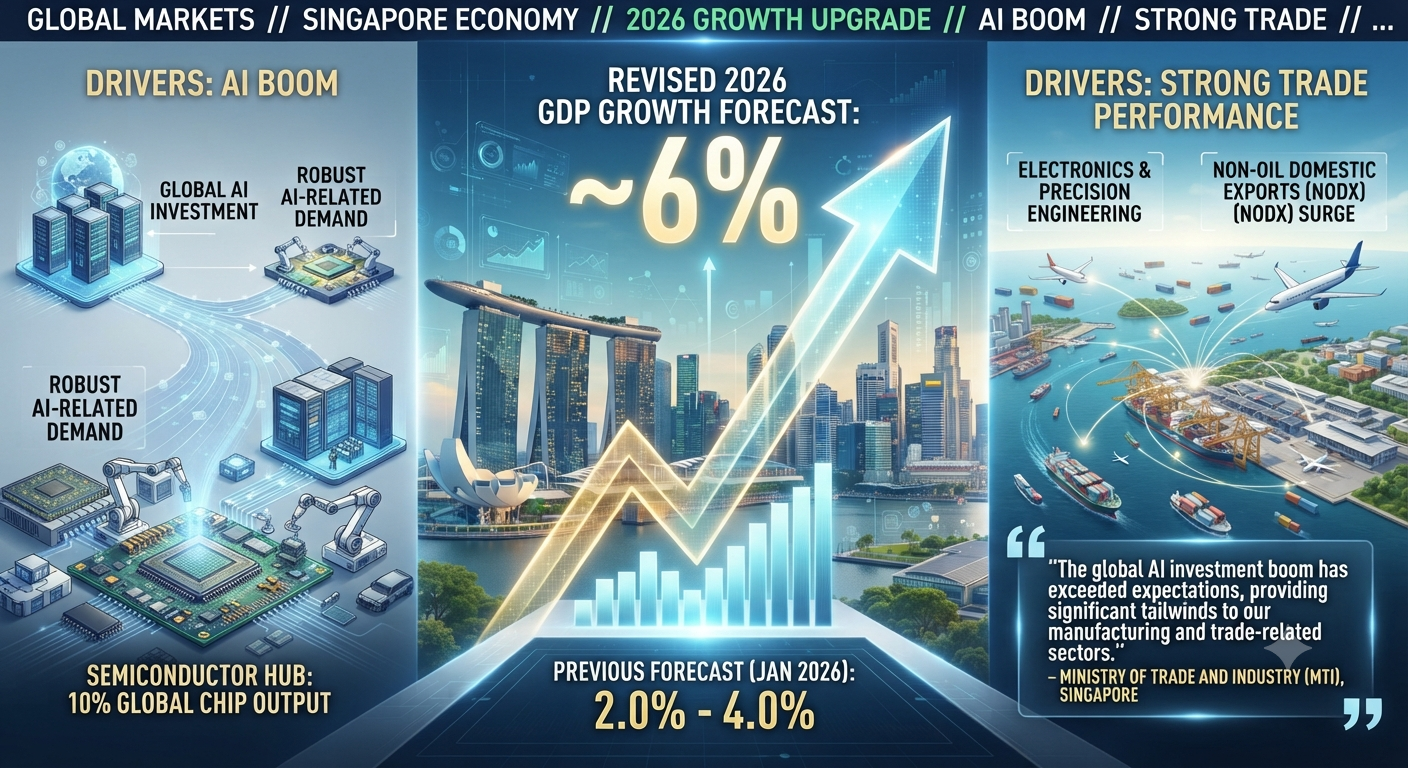
Singapore has raised its economic growth forecast for 2026 to approximately 6%, reflecting stronger-than-expected economic performance, rising global demand for artificial intelligence (AI)-related products and continued momentum in manufacturing and wholesale trade. The upward revision follows an impressive 6.1% year-on-year expansion in gross domestic product (GDP) during the third quarter, reinforcing Singapore’s position as one of Asia’s most resilient and globally connected economies.
The Ministry of Energy and Trade and Industry (METI) announced the revised forecast on November 24, raising its earlier projection of 4.5% to 5.5%. The decision reflects improved external demand conditions and the accelerating contribution of technology-driven industries to the country’s economic activity.
The latest figures indicate that Singapore’s economy has maintained considerable momentum throughout 2026. During the first nine months of the year, GDP expanded by 6.2% year-on-year, demonstrating the strength of its manufacturing base, international trade networks and services sector.
AI Investments Become a Major Growth Engine
One of the most significant factors behind Singapore’s improved economic outlook is the global surge in artificial intelligence investments. Increasing demand for AI infrastructure, semiconductor components, advanced electronics and specialised machinery has created substantial opportunities for Singapore’s technology-oriented industries.
The rapid expansion of data centres worldwide has further strengthened demand for electronic components, telecommunications equipment and precision-engineered products. As businesses and governments accelerate investments in digital infrastructure, Singapore has benefited from its established position as a regional technology and manufacturing hub.
The electronics and precision engineering segments have particularly benefited from this trend. Companies involved in semiconductor-related activities, advanced manufacturing and specialised equipment production are experiencing stronger international demand.
The growing importance of AI is also encouraging businesses to invest in automation, digital transformation and advanced production technologies. These developments are expected to strengthen industrial productivity and support Singapore’s longer-term competitiveness.
Manufacturing and Wholesale Trade Drive Economic Expansion
Manufacturing and wholesale trade have emerged as important contributors to Singapore’s economic performance.
The manufacturing sector recorded 8.5% year-on-year growth in the third quarter, supported by expansion in electronics, precision engineering, transport engineering and general manufacturing. Strong international demand for AI-related hardware and advanced technological equipment has provided considerable support to industrial output.
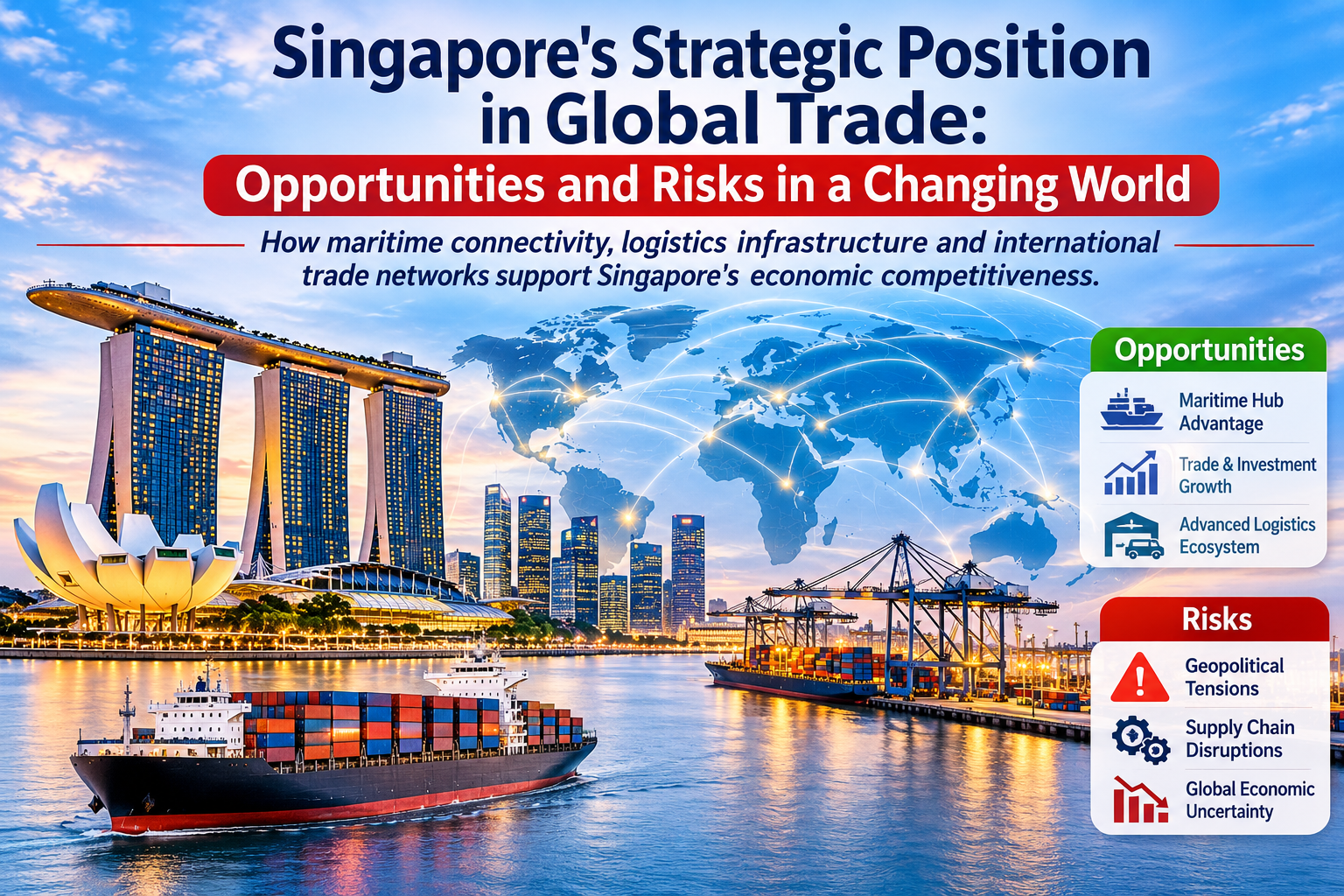
Wholesale trade also recorded robust growth of 14.5% during the quarter, reflecting higher trading volumes in telecommunications equipment, computers and electronic components. Singapore’s strategic location, developed logistics infrastructure and extensive international trade relationships continue to strengthen its role as a major global trading centre.
Beyond manufacturing and trade, the finance and insurance sector contributed to economic expansion through credit growth and fee-generating activities. The information and communications industry also benefited from increasing demand for data centre operations and digital services.
These developments highlight the diversified nature of Singapore’s economy, where technology, manufacturing, financial services and international commerce collectively support economic growth.
Export Performance Strengthens Economic Confidence
Singapore’s export outlook has also improved considerably. Enterprise Singapore has upgraded its forecast for non-oil domestic exports (NODX) to growth of 30% to 32% in 2026, reflecting exceptionally strong performance and sustained demand for AI-related electronics and specialised machinery.
The stronger export outlook is particularly important for Singapore because of its dependence on international trade. As a small and highly open economy, the country remains closely connected to global supply chains and developments in major trading markets.
The improved export performance demonstrates how Singapore is benefiting from changing global investment priorities, particularly the expansion of semiconductor production, digital infrastructure and advanced technological industries.
Challenges Remain Despite Strong Growth
Despite the encouraging economic outlook, certain sectors continue to experience difficulties. Retail trade and food and beverage services contracted during the third quarter, partly reflecting increased overseas spending by Singapore residents and changing consumer behaviour.
There are also concerns about the sustainability of the global AI investment cycle. Any slowdown in technology spending, disruptions to semiconductor supply chains or corrections in financial markets could affect Singapore’s export-oriented industries.
Geopolitical tensions, elevated energy prices and uncertainty surrounding international trade policies present additional risks. As a major trading economy, Singapore remains particularly sensitive to fluctuations in global demand and supply-chain disruptions.
Looking ahead, METI expects economic growth to moderate to between 2.5% and 4.5% in 2027. The projected slowdown reflects expectations of a more moderate pace of AI investment and softer economic growth among several of Singapore’s major trading partners.
Nevertheless, the country’s strong institutions, skilled workforce, advanced infrastructure and business-friendly environment are expected to provide important support for future economic activity.
The Worldonomics Times View
Singapore’s decision to upgrade its 2026 economic growth forecast to around 6% represents more than a positive revision of economic numbers. It reflects the country’s ability to position itself strategically within the rapidly evolving global technology and trade landscape.
The growing influence of artificial intelligence is reshaping international investment patterns, and Singapore is emerging as an important beneficiary of this transformation. Its established semiconductor ecosystem, advanced manufacturing capabilities, financial infrastructure and international connectivity provide a strong foundation for attracting technology-related investments.
However, the country must ensure that its economic expansion extends beyond a temporary AI-driven investment cycle. Strengthening domestic innovation, supporting small and medium-sized enterprises, developing workforce capabilities and improving productivity will be essential to maintaining long-term competitiveness.
Equally important is the need to ensure that economic growth benefits businesses, workers and households across different sectors. The continued weakness in consumer-facing industries highlights the importance of balanced and inclusive economic development.
The Worldonomics Times believes that Singapore’s 2026 performance demonstrates the economic opportunities created by technological transformation and strategic global integration. While the 6% growth forecast is an encouraging milestone, the real measure of success will be Singapore’s ability to convert this momentum into sustainable, diversified and productivity-driven growth in the years ahead.
As the global economy moves further into the AI era, Singapore’s experience offers an important example of how innovation, trade connectivity and forward-looking economic policies can help a nation navigate changing international economic conditions.