Introduction:
Artificial intelligence (AI) is transforming accounting from a traditional record-keeping profession into a dynamic, strategic partner for businesses. AI tools use Machine Learning to learn patterns from data, Natural Language Processing (NLP) to read and understand documents like invoices, Generative AI to create reports and suggestions, and Agentic AI to handle complex, multi-step tasks with minimal human input.
These technologies process huge amounts of financial data quickly, detect problems early, support forecasting and deliver actionable insights.
The global AI in accounting market is growing rapidly. It was valued at USD 4.87 billion in 2024 and is projected to reach USD 6.71 billion in 2025, expanding at a 39.6% CAGR. Further forecasts show the market could hit USD 96.69 billion by 2033.
Additionally, spending is expected to reach USD 10.87 billion in 2026 and USD 68.75 billion by 2031, with SMEs accounting for 68% of spending.
Adoption is increasing steadily. About 46% of accountants now use AI tools daily, reflecting a 155% rise since 2023. Around 63% of finance teams are exploring AI, though full integration into daily workflows stands at about 16%.
Evolution of Accounting with Technology:
Accounting has improved with each wave of technology. In the past, accountants used handwritten ledgers and manual calculations, which were slow and error-prone.
Computers in the 1950s and 1960s automated basic calculations.
The 1990s introduced enterprise resource planning (ERP) systems that connected different business functions.
Cloud platforms in the 2010s made financial data accessible from anywhere, improving teamwork and flexibility.
Artificial Intelligence (AI) marks the biggest advancement yet. It adds “smart” abilities such as automatically reading invoices, learning spending habits, spotting unusual patterns, and suggesting forecasts.
Cloud systems now dominate with over 60% market share, due to their scalability and easy to integrate with existing software. Today, up to 80% of routine bookkeeping tasks can be automated.
This shift transforms accounting from simply recording past transactions to providing forward-looking advice. However, success requires high-quality data and strong human oversight to ensure reliable results.
Current Applications of AI in Accounting:
AI is already delivering practical help in four key areas;
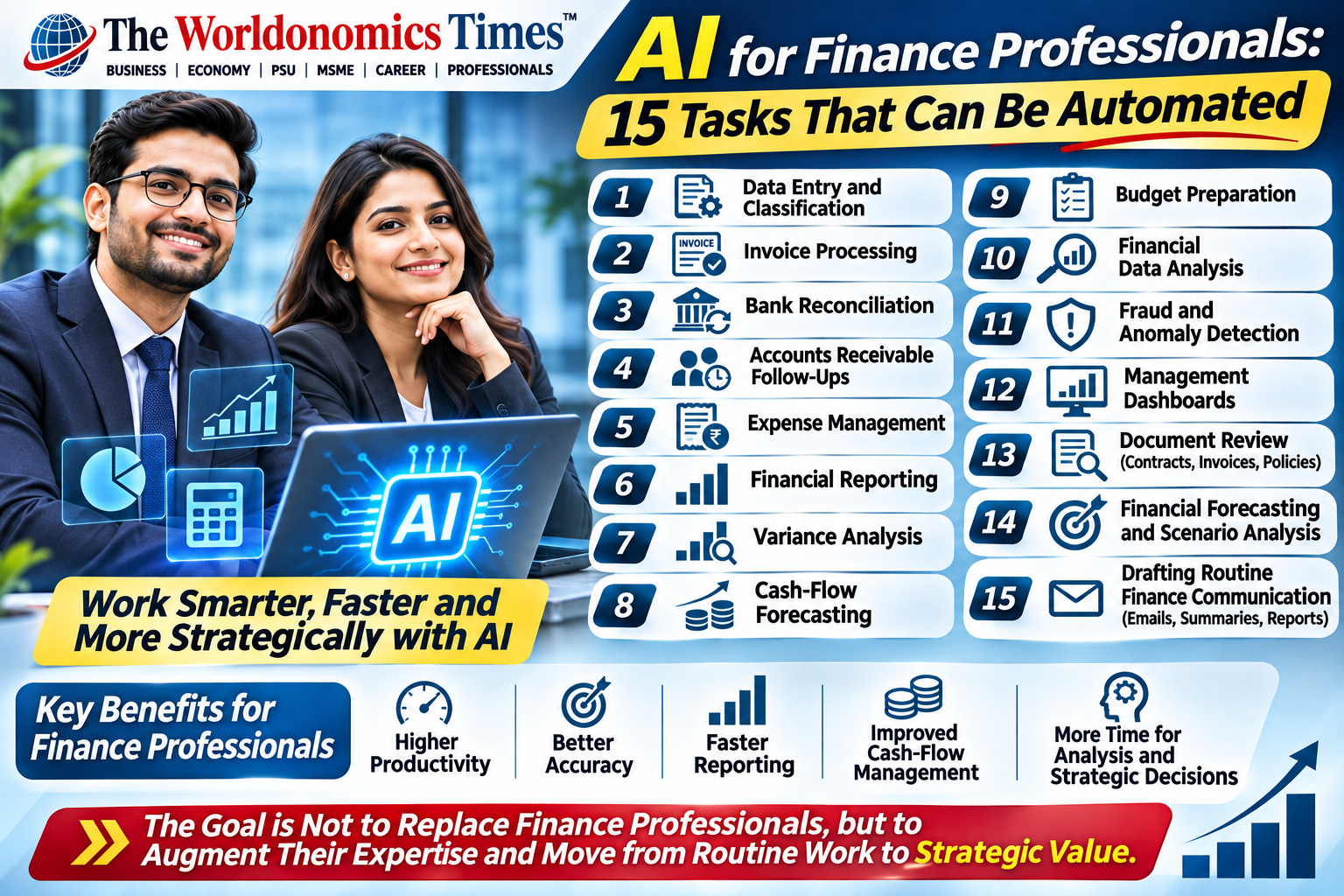
- Automation of Routine Tasks: AI manages repetitive work such as data entry, invoice processing, transaction coding, and bank reconciliations. Tools like Intuit Assist in QuickBooks and Xero’s conversational AI (“Just Ask Xero”) let users ask questions in plain language. These features can reduce month-end closing time by 30–70%.
- Auditing and Assurance: Traditional audits check only a sample of transactions. Whereas AI can review nearly 100% of them. Platforms like MindBridge AI Auditor automatically assign risk scores, while tools from large firms speed up document reviews and improve consistency.
- Fraud Detection and Risk Management: AI detects unusual patterns in real time. For example, duplicate invoices, sudden spending changes, or suspicious vendors more effectively than old rule-based systems. This continuous monitoring helps prevent losses and supports better compliance.
- Predictive Analytics and Forecasting: AI combine past financial data with external factors (such as market trends) to predict cash flow, budgets, and business scenarios. It often delivers 20–30% better accuracy than traditional methods.
Popular tools include Vic.ai for accounts payable automation and Trullion for revenue recognition. These tools integrate well with existing systems, allowing accountants to spend less time on paperwork and more on analysis and client advisory services.
Impact of AI on Accounting Jobs and Skills:
- AI transforming accounting jobs by reducing routine tasks like basic data entry while increasing demand for strategic thinking, client advisory work, and complex problem solving.
- The U.S. Bureau of Labour Statistics projects about 5.8% growth in accounting and auditing occupations through 2033, adding roughly 91,000 positions.
- Studies show that accountants using AI reallocate around 8.5% of their time from routine work to higher-value tasks like client communication and analysis. They can also close monthly books up to 7.5 days faster on average.
- Job postings requiring AI or data skills have increased significantly.
- Essential skills today include AI fluency (writing good effective prompts and evaluating outputs), data analysis, critical thinking, and ethical reasoning.
- Students should build a strong foundation in accounting while learning technology and communication skills.
- Working professionals benefit from regular training to stay adaptable.
Benefits of AI in Accounting:
AI provides clear, measurable advantages:
- Time Savings: Finance professionals gain an average of 5.4 hours per week. Manual tasks can drop by up to 70%.
- Higher Accuracy: Error rates in automated processes can fall by 80–85%.
- Greater Scalability: Firms can handle 2–3 times more clients or transactions without adding staff proportionally.
- Better Insights: Real-time fraud alerts and accurate forecasts help businesses make proactive decisions.
- Improved Job Satisfaction: Less repetitive work allows focus on meaningful advisory roles.
When humans carefully review AI results, the partnership creates powerful “collaborative intelligence”; machines handle speed and volume, while humans provide judgment, context, and ethics.
Challenges and Risks:
AI also comes with important challenges:
- Data Security and Privacy: Sensitive financial data requires strong protection under GDPR and other regulations.
- Errors and Bias: AI can produce incorrect outputs or reflect biases from training data. Many models are “black boxes” that are difficult to explain.
- Skills Gap: Routine roles may decline while new skills become essential. Full implementation still lags behind interest.
- Over-Reliance: Excessive dependence without human review can weaken critical thinking.
- Ethical and Regulatory Issues: Clear accountability and updated laws are needed as technology advances rapidly.
Responsible adoption with governance, training, and human oversight is essential to manage these risks.
Comparison Table: Traditional vs. AI-Enhanced Accounting
| Aspect | Traditional Accounting | AI-Enhanced Accounting | Key Benefit of AI |
| Task Handling | Manual entry, sample audits | Full automation, near 100% review | Faster coverage |
| Month-End Close | Days or weeks | Hours (30–70% faster) | Major time savings |
| Error Rate | Higher due to human factors | Up to 85% lower | Greater reliability |
| Fraud Detection | Periodic checks | Real-time pattern recognition | Proactive protection |
| Work Focus | Compliance and recording | Strategic analysis and advice | Higher-value work |
| Skills Needed | Bookkeeping, basic tools | AI literacy, critical thinking, and ethics | Future-ready skills |
| Capacity | Limited by manual effort | 2–3 times higher | Better scalability |
| Main Risks | Human error, delays | Bias, security, integration | Needs active management |
Future Trends (Next 5–10 Years):
From 2026 to 2035, “Agentic AI” systems will autonomously manage entire workflows such as variance analysis and compliance checks. By 2028, around 15% of daily accounting decisions may be AI-driven.
Other trends include multimodal AI (text, images, and voice), continuous real-time reporting, custom industry-specific models, and AI-native platforms that offer prescriptive recommendations.
Success will depend on building hybrid human-AI teams with strong governance and ethical practices.
Case Studies and Real-World Examples:
- PwC is developing end-to-end AI-driven audits by 2026 using GL.ai, reporting 20–50% productivity gains.
- EY’s Helix platform automates reporting and tax compliance, reducing preparation time by about 60%.
- Deloitte’s Omnia and KPMG’s Ignite platforms demonstrate strong results in document review and predictive insights.
- Smaller firms using Vic.ai and MindBridge report significant time savings and increased client capacity. One major bank reduced fraud loss by 30% through real-time AI monitoring.
Conclusion:
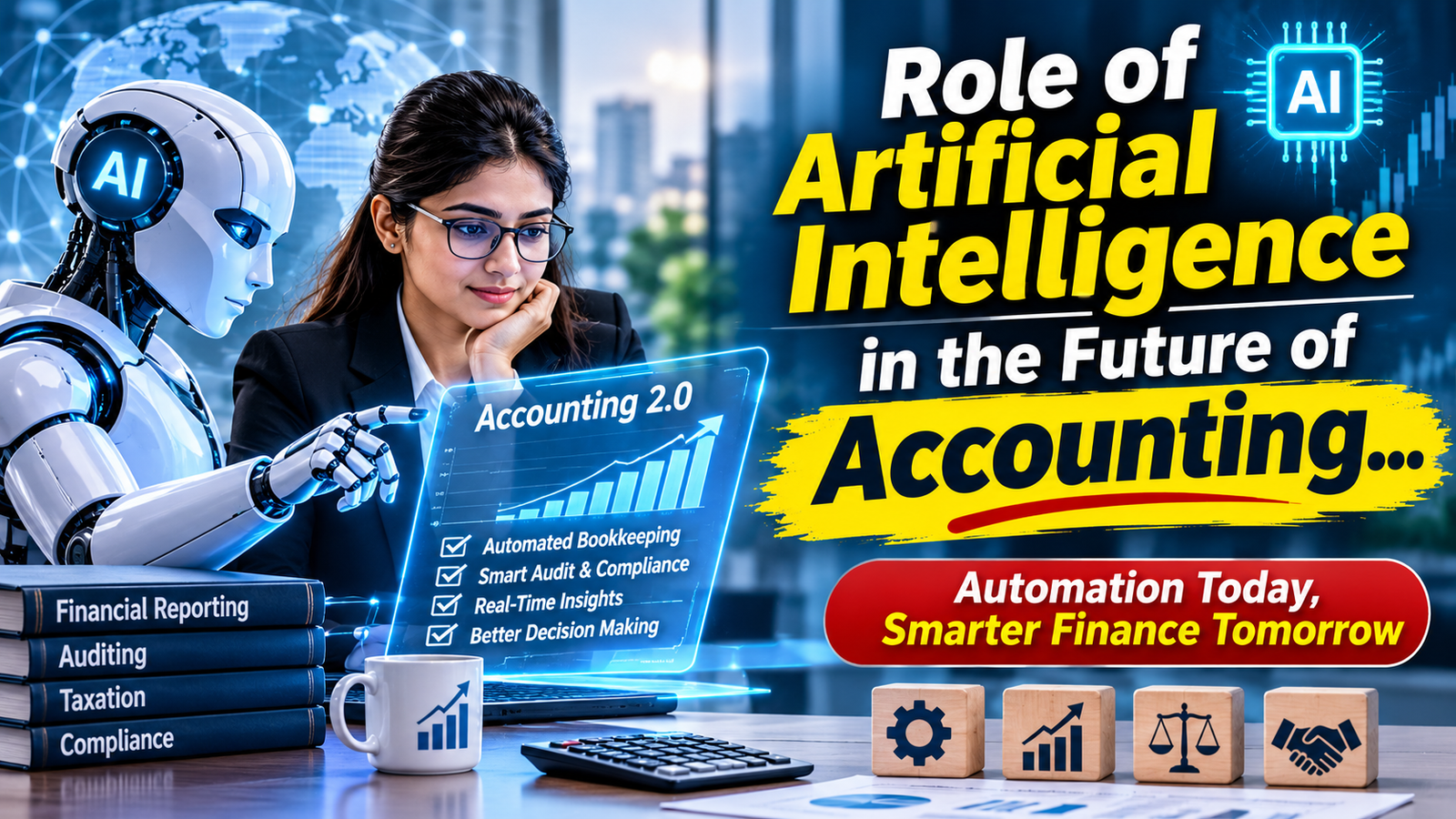
Artificial intelligence (AI) is redefining accounting as a strategic, insight-driven profession. It automates routine tasks, improves accuracy, saves time, and enables better business advice.
While the benefits are substantial, challenges around data security, bias, skills, and ethics must be managed carefully.
Students and professionals who build AI literacy and critical thinking skills today will be well prepared for the future. Organizations that combine AI with human judgment and responsible governance will gain a strong competitive advantage.
The future of accounting lies in successful collaboration between humans and intelligent machines, delivering greater value, trust, and strategic insight to businesses.
Short Summary:
- AI is rapidly reshaping accounting through automation, comprehensive auditing, real-time fraud detection, and smarter forecasting.
- The market is growing at a CAGR of 39.6–44.6%, with potential to reach USD 68–96 billion by 2031–2033.
- Daily AI use among accountants stands at 46%, delivering 5.4 hours of weekly time savings and up to 85% error reduction, while shifting roles toward advisory work (with 5.8% projected job growth).
- Benefits are strong, but challenges like data security, bias, and new skill requirements need careful attention.
- Agentic AI will drive more autonomous processes in the next decade.
- Real examples from PwC, EY, Deloitte, and KPMG show that responsible use of AI alongside human expertise creates lasting value.
- Accountants who learn to partner with AI will become indispensable strategic advisors.