Strong Passenger and Cargo Demand Supports Revenue Growth, While Middle East Conflict Pushes Up Aviation Fuel Expenses
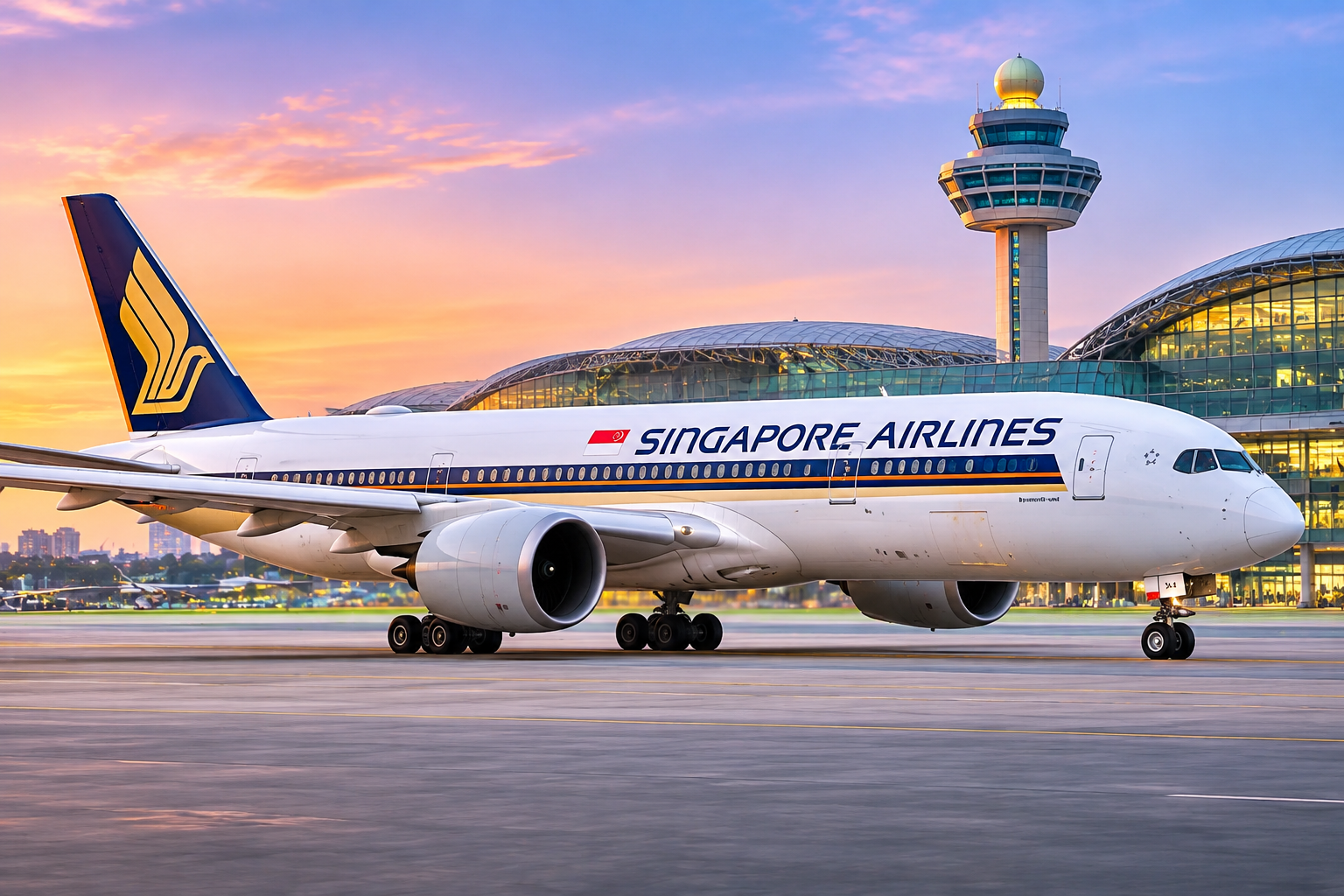
Singapore Airlines (SIA), one of Asia’s leading international airline groups, has reported record half-year revenue of S$11.3 billion for the first half of financial year 2026/27. The performance reflects strong demand for international travel, higher passenger fares and robust air-cargo operations.
However, the company’s profitability remained under pressure because of a substantial increase in aviation fuel costs, partly linked to geopolitical tensions and the Middle East conflict.
According to the financial results announced on November 11, 2026, the Singapore Airlines Group recorded revenue of S$11.297 billion for the six months ended September 30, 2026, representing growth of 16.8% compared with S$9.675 billion in the corresponding period of the previous financial year.
Despite achieving record revenue, net profit declined by 43.9% to S$134 million from S$239 million a year earlier.
The results highlight the challenges facing international airlines as higher travel demand and improved pricing power are accompanied by rising operating costs.
Record Revenue Driven by Passenger and Cargo Demand
Singapore Airlines’ first-half financial performance demonstrated strong demand across both passenger and cargo operations.
The group’s total revenue increased by S$1.622 billion to S$11.297 billion, supported by higher passenger carriage, improved passenger yields and strong cargo demand.
The airline group carried a record 21.8 million passengers during the first half of FY2026/27, representing a 5% increase compared with the previous year.
Passenger flown revenue increased by 16.8% to S$9.095 billion.
The improvement was supported by a 12.1% increase in passenger yields to 11.1 Singapore cents per revenue passenger-kilometre.
Passenger yields measure the average revenue generated from each passenger for every kilometre travelled. Higher yields generally indicate improved pricing performance.
The group’s passenger load factor stood at 86.8%, down 0.9 percentage points from the previous year. This reflected capacity expansion of 4.9%, which exceeded traffic growth of 3.8%.
Although the load factor moderated slightly, the airline maintained strong passenger demand across its international network.
Cargo Business Records 30.2% Revenue Growth
Cargo operations emerged as another important contributor to the company’s financial performance.
Singapore Airlines recorded a 30.2% increase in cargo revenue to S$1.394 billion during the first half of FY2026/27.
The improvement was supported by a 25.4% increase in cargo yields and a 2-percentage-point improvement in cargo load factor to 58.5%.
The strong performance reflects continued demand for international air freight, particularly for high-value goods, electronics and time-sensitive shipments.
Singapore’s strategic geographical position and Changi Airport’s international connectivity provide important advantages for the group’s cargo operations.
The growth in cargo revenue also demonstrates the importance of diversified revenue streams for international airlines, particularly during periods of volatility in passenger operations and fuel prices.
Rising Fuel Costs Put Pressure on Profitability
Despite strong revenue growth, higher expenditure remained the biggest challenge for Singapore Airlines.
Total expenditure increased to S$10.728 billion during the first half of FY2026/27, compared with S$8.872 billion in the corresponding period last year.
Net fuel costs increased by 56% to S$3.974 billion from S$2.547 billion.
Fuel costs before hedging increased by approximately 90.3%, reaching S$4.705 billion.
The increase was largely associated with higher international aviation fuel prices amid geopolitical tensions and the Middle East conflict.
The company benefited from fuel hedging gains of approximately S$731 million during the first half, compared with a hedging loss of S$75 million in the previous corresponding period.
However, these gains were insufficient to offset the overall increase in fuel expenses.
The development illustrates the vulnerability of airline profitability to international energy prices.
Aviation fuel is one of the largest operating expenses for airlines, and sudden increases can significantly affect operating margins, particularly when higher costs cannot immediately be transferred to passengers through ticket prices.
Operating Profit Declines 29.1%
Singapore Airlines recorded operating profit of S$569 million during the first half of FY2026/27, compared with S$803 million in the previous corresponding period.
This represents a decline of 29.1%.
The weaker first-quarter performance was the primary reason for the reduction in half-year operating profit.
However, the second quarter showed a significant recovery.
For the quarter ended September 30, 2026, operating profit increased by 16.3% to S$463 million from S$398 million a year earlier.
This improvement was supported by higher passenger and cargo revenue, improved yields and stronger operating performance.
The second-quarter performance indicates that the airline was able to improve its operating profitability despite continued pressure from higher fuel expenses.
Second-Quarter Net Profit Jumps to S$210 Million
One of the important highlights of the results was the substantial improvement in second-quarter profitability.
Singapore Airlines recorded net profit of approximately S$210 million in the second quarter of FY2026/27, compared with S$52 million in the corresponding quarter last year.
Second-quarter revenue increased by 14.3% to S$5.583 billion, while operating profit increased by 16.3% to S$463 million.
Passenger flown revenue rose 15%, supported by a 12.2% improvement in passenger yields and higher passenger carriage.
Cargo revenue increased 26.9% to S$686 million, reflecting strong demand and higher cargo yields.
The second-quarter improvement demonstrates the group’s ability to generate stronger earnings when passenger pricing, cargo performance and operating efficiency improve.
However, higher fuel expenses remain a key risk to the sustainability of future profitability.
Air India Losses Continue to Affect Group Earnings
Another important factor influencing Singapore Airlines’ consolidated financial performance is its investment in Air India.
Following the merger of Vistara with Air India in November 2024, Singapore Airlines holds an approximately 25.1% stake in the enlarged Air India group.
Singapore Airlines continues to recognise its share of the financial results of associated companies, including Air India.
During the first half of FY2026/27, the group’s share of losses from associated companies, primarily Air India, remained a significant factor affecting consolidated earnings.
Reuters reported that SIA’s share of Air India’s losses narrowed to approximately S$361.7 million, compared with S$429.5 million in the corresponding previous period.
The reduction in associated-company losses provided some relief to the airline’s overall financial performance.
Nevertheless, Air India’s financial turnaround remains an important factor for Singapore Airlines because of the scale of its investment and the potential impact on future consolidated earnings.
Dividend Announcement: S$0.07 Per Share
Alongside its financial results, Singapore Airlines announced interim dividends totalling S$0.07 per share.
The dividend comprises:
| Dividend category | Amount per share |
|---|---|
| Interim ordinary dividend | S$0.02 |
| Interim special dividend | S$0.05 |
| Total | S$0.07 |
The dividend is scheduled to be paid on December 11, 2026.
The announcement reflects the company’s intention to maintain shareholder distributions while continuing to invest in its operations and customer experience.
Expanding International Network and Improving Passenger Experience
Singapore Airlines and its low-cost subsidiary Scoot continued to strengthen their international networks.
As of September 30, 2026, the group’s passenger network covered 136 destinations across 35 countries and territories.
Singapore Airlines served 78 destinations, while Scoot served 84 destinations, including several markets where Scoot operated independently.
The group’s cargo network covered 139 destinations in 36 countries and territories.
During October 2026, Scoot expanded its mainland China network with the launch of three-times-weekly services to Guiyang.
The airline group is also increasing capacity on selected Asia-Pacific routes to meet higher demand during the year-end holiday season.
In another major development, Singapore Airlines unveiled its next-generation travel experience in November 2026.
The investment includes redesigned First Class, Business Class, Premium Economy and Economy Class cabins, an upgraded KrisWorld entertainment system, improved dining options, enhanced amenities and high-speed connectivity.
The initiative is intended to strengthen the airline’s premium positioning and improve customer experience across its international network.
Business Outlook: Demand Remains Strong but Cost Risks Continue
Singapore Airlines expects passenger and cargo demand to remain healthy, supported by international connectivity, travel demand and global trade.
However, the company has highlighted uncertainties arising from geopolitical developments, elevated fuel prices and the potential impact of higher operating costs on global economic activity.
A prolonged Middle East conflict could further increase energy prices, contribute to inflation and weaken demand for international travel and air freight.
The airline industry will therefore need to balance capacity expansion, pricing strategies, fuel management and operational efficiency.
For Singapore Airlines, maintaining strong passenger yields, improving cargo performance and controlling operating expenses will be critical to protecting profitability.
What the Results Mean for Singapore’s Economy
Singapore Airlines plays an important role in the country’s aviation, tourism, logistics and international business ecosystem.
Its performance has implications beyond the airline itself.
Tourism: Strong passenger carriage supports Singapore’s hospitality, retail, tourism and travel-related industries.
International trade: Higher cargo revenue highlights the importance of air freight in supporting global supply chains.
Employment: Aviation growth creates demand across airport operations, engineering, maintenance, logistics and customer services.
Financial markets: The company’s revenue, profitability and dividend performance remain important indicators for investors assessing Singapore’s corporate sector.
Global connectivity: The expansion of international routes strengthens Singapore’s position as a major aviation and business hub in Asia.
Conclusion
Singapore Airlines’ first-half FY2026/27 results demonstrate the strength of international passenger and cargo demand, with record revenue of S$11.3 billion and passenger carriage reaching 21.8 million.
However, the 43.9% decline in half-year net profit highlights the pressure that rising aviation fuel costs and associated-company losses can place on airline profitability.
The second-quarter recovery, strong cargo performance, expanding international network and investment in customer experience provide positive indicators for the group’s future business development.
Going forward, the key challenge for Singapore Airlines will be to convert its strong revenue growth into sustainable earnings while navigating geopolitical uncertainty, volatile fuel prices and an increasingly competitive global aviation market.
The Worldonomics Times – Tracking Global Business, Economics, Finance and Corporate Developments.