Singapore–US Dialogue Highlights Growing Global Scrutiny of AI Chip Supply Chains
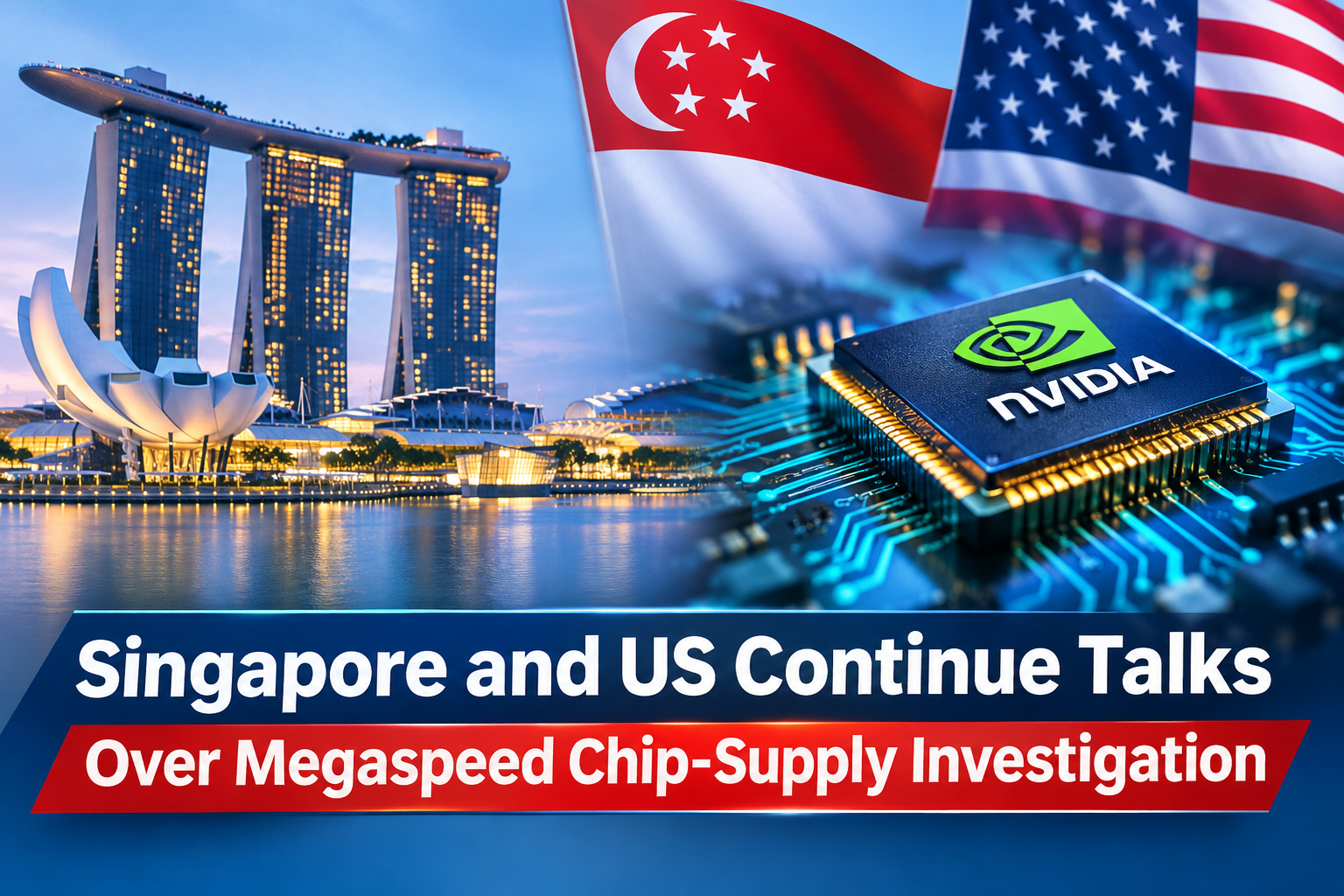
Singapore and the United States have agreed to continue discussions concerning Megaspeed International, a Singapore-based cloud computing and artificial intelligence infrastructure company that has come under scrutiny over suspected links to the diversion of advanced Nvidia artificial intelligence (AI) chips to Chinese customers.
The discussions took place during Singapore’s Minister for Digital Development and Information, Josephine Teo’s visit to Washington, DC, on November 12–13, 2026. During the visit, Teo met senior US officials, including Deputy Secretary of State Christopher Landau. Both governments confirmed their commitment to maintaining communication on matters relating to Megaspeed and other issues of mutual interest.
Although neither side disclosed specific details about the discussions or any agreed investigative steps, the development reflects the growing importance of international cooperation in regulating advanced semiconductor technologies and cross-border digital infrastructure.
What Is the Megaspeed Investigation About?
Megaspeed International has attracted attention from authorities amid concerns that advanced Nvidia AI chips purchased through international supply chains may have been made accessible to Chinese customers in ways that could circumvent US export restrictions.
The company operates in the cloud computing sector, providing access to computing infrastructure that can be used for artificial intelligence development and other high-performance computing applications.
The investigation centres on questions surrounding server purchases, export declarations and the ultimate destination or use of advanced computing equipment. Singaporean authorities have been examining potential offences involving allegedly inaccurate declarations and suspected irregularities in server transactions.
Singapore’s Ministry of Home Affairs previously stated that its investigation began in February 2025. Authorities have also examined the activities of individuals and other companies connected with the wider transactions.
Importantly, allegations remain under investigation, and the discussions between Singapore and the United States do not establish that Megaspeed has violated export-control laws.
US Export Controls and the Growing AI Chip Competition
Advanced AI chips have become strategically important assets in the global technology industry. Companies such as Nvidia supply high-performance processors used in generative AI, cloud computing, data centres, autonomous systems and scientific research.
The United States has introduced export restrictions to limit China’s access to certain advanced semiconductor technologies, citing national security and strategic technology concerns.
However, the rapid expansion of international data centres and cloud computing services has created new regulatory challenges. Even when advanced chips are physically located outside China, companies in restricted markets may potentially access their computing capabilities remotely through cloud infrastructure.
This has raised questions about whether existing export-control frameworks are sufficient to monitor the movement, ownership and end-use of advanced computing resources.
On November 16, 2026, the US Commerce Department announced additional measures requiring licensing for certain advanced AI chip shipments to Singapore, Indonesia, Malaysia, Thailand and Brazil. The measures also seek to strengthen oversight of overseas data centres supplying significant computing capacity to companies headquartered in countries of concern.
These developments could have implications for semiconductor distributors, cloud infrastructure providers, technology investors and international data-centre operators.
Implications for Singapore’s Technology and Investment Sector
Singapore has established itself as a major international business and financial centre, with a strong presence in semiconductor manufacturing, electronics, data centres, financial technology and digital services.
The Megaspeed investigation presents a significant challenge for Singapore’s position as a trusted regional technology hub.
The country maintains important economic and strategic relationships with both the United States and China. It must therefore balance its role as an international investment destination with the need to comply with global export-control requirements.
Increased scrutiny could result in more stringent compliance procedures for companies operating data centres and handling advanced computing equipment.
Technology businesses may need to strengthen customer verification, end-user documentation, server tracking and transaction monitoring systems. Investors may also pay greater attention to regulatory exposure and supply-chain transparency when assessing technology infrastructure projects.
At the same time, Singapore’s cooperation with international authorities could reinforce confidence in its regulatory institutions and business environment.
Business and Economic Implications
The case has broader implications beyond the companies directly involved.
First, international technology companies may face higher compliance costs as governments strengthen controls over advanced semiconductor exports.
Second, cloud computing and data-centre businesses could experience additional regulatory requirements, particularly when providing services to customers operating across multiple jurisdictions.
Third, semiconductor manufacturers and distributors may be required to improve end-user verification and supply-chain monitoring.
Finally, countries seeking to attract investments in AI infrastructure may need to establish clearer regulatory frameworks covering cross-border access to computing resources.
For Southeast Asia, the developments could influence future investment decisions in data centres, cloud computing and AI-related infrastructure.
The Road Ahead
Singapore and the United States are expected to maintain communication on the Megaspeed matter as investigations and regulatory discussions continue.
The outcome could influence how governments approach the regulation of advanced AI chips, international cloud computing and cross-border access to sensitive technologies.
For businesses, the central lesson is clear: technology investment opportunities must increasingly be supported by strong regulatory compliance, transparent supply chains and effective corporate governance.
As artificial intelligence becomes a critical driver of global economic growth, control over semiconductor technology and computing infrastructure is likely to remain a major issue in international trade and economic policy.
The Worldonomics Times – Business, Economics, Finance and Global Developments.