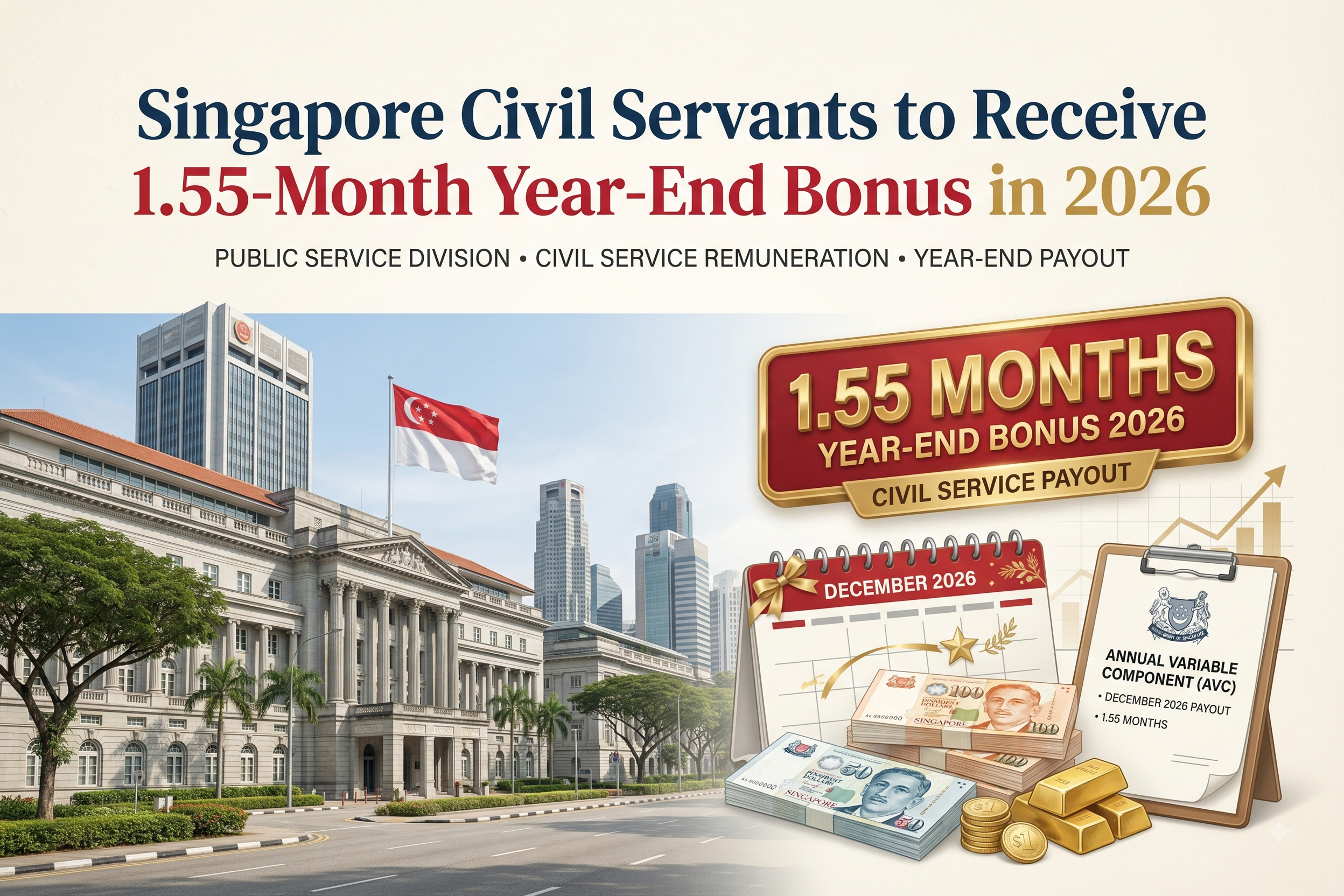
Singapore’s Government has announced a 1.55-month year-end bonus for civil servants in 2026, alongside additional payments of up to S$600 for eligible junior officers. The announcement provides a financial boost to public-sector employees ahead of the year-end holiday season and reflects the Government’s approach to recognising employees’ contributions while supporting their financial well-being.
The year-end payment is expected to provide additional income to thousands of civil servants, helping them manage household expenses, savings and seasonal spending. The additional support for eligible junior officers also highlights the importance of recognising employees at different stages of their public-service careers.
Singapore Announces Year-End Bonus for 2026
The Singapore Government’s decision to provide a 1.55-month year-end bonus represents an important component of its annual compensation arrangements for public-sector employees. Such payments are closely watched by civil servants because they contribute to annual earnings and provide additional financial support towards the end of the year.
The bonus comes at a time when households continue to balance everyday expenses, savings commitments and longer-term financial goals. For public-sector employees, an additional payment can offer greater flexibility in managing household budgets, particularly during a period when spending on travel, education, family activities and celebrations may increase.
The announcement also reflects the role of public-sector compensation in maintaining an experienced and motivated workforce. Government employees are responsible for delivering essential services, implementing policies and supporting the country’s economic and social development.
A structured annual bonus arrangement can form part of a broader strategy to recognise these responsibilities and maintain the attractiveness of public-sector employment.
Additional Payments for Junior Officers
Alongside the 1.55-month year-end bonus, eligible junior officers will receive additional payments of up to S$600. This additional support is particularly relevant for employees who are at the beginning of their careers and may have comparatively limited financial flexibility.
Junior officers often face several financial commitments, including housing expenses, transportation, education-related costs, savings and family responsibilities. An additional payment can help ease some of these pressures and provide greater room for managing monthly expenses.
The targeted component also recognises that employees at different salary levels may experience changes in living costs differently. While a standard bonus provides a common benefit, additional payments for eligible junior officers can offer further support to those who may need it.
Such arrangements can contribute to a more balanced compensation structure within the public sector. They also demonstrate how employee reward policies can combine broad-based benefits with targeted assistance.
Importance of Bonuses for Public-Sector Employees
Annual bonuses play an important role in employee compensation across many economies. In the public sector, they can serve as a mechanism for recognising service, supporting employee retention and maintaining workforce morale.
Singapore’s public administration depends on skilled professionals working across a wide range of departments and agencies. These employees contribute to areas such as education, healthcare administration, infrastructure, public safety, economic development and government services.
Attracting and retaining capable employees is important for maintaining the quality and continuity of public services. Compensation policies, including bonuses and other employee benefits, can influence how public-sector careers compare with opportunities in the private sector.
However, employee satisfaction depends on more than annual payments. Career development, workplace conditions, professional recognition, job security and opportunities for advancement also play important roles in building a committed workforce.
The 2026 bonus announcement should therefore be viewed as one part of the wider public-sector employment framework.
Potential Impact on Household Spending
The year-end bonus could provide a modest boost to household spending and financial planning. Employees receiving additional income may use it to meet outstanding expenses, repay debts, increase savings or make purchases that were postponed during the year.
Some households may also allocate a portion of the payment towards holiday travel, dining, shopping and family activities. This could contribute to seasonal consumer demand, particularly in retail, hospitality, tourism and other service-related industries.
The additional payments to eligible junior officers may also support spending among younger working households. When employees have more disposable income, they may increase expenditure on essential goods and services or strengthen their personal savings.
Nevertheless, the broader economic impact will depend on how recipients use the additional income. If a significant proportion is saved or used to repay debt, the immediate effect on consumption may be more limited.
The bonus should therefore be understood primarily as an employee compensation measure rather than a major economic stimulus programme.
Singapore’s Approach to Workforce Recognition
Singapore has developed a public-sector employment system that places importance on professional standards, workforce capability and effective public administration. Competitive compensation is one element of this approach.
The Government must balance the need to attract skilled professionals with responsible management of public expenditure. Decisions concerning bonuses and employee benefits therefore form part of broader considerations involving economic conditions, workforce requirements and fiscal planning.
The additional payment for eligible junior officers is also significant from a workforce-development perspective. Younger employees are an important part of the future public administration system. Supporting them through compensation and career opportunities can help strengthen long-term institutional capacity.
At the same time, transparent eligibility conditions and clear communication are important to ensure employees understand how payments are determined and what benefits they can expect.
The Worldonomics Times View
The Worldonomics Times believes that Singapore’s 2026 year-end bonus announcement highlights the importance of recognising public-sector employees while maintaining a balanced approach to compensation.
A 1.55-month bonus provides meaningful additional income for civil servants, while payments of up to S$600 for eligible junior officers introduce a targeted element of support. Together, these measures underline the importance of considering both workforce-wide recognition and the financial circumstances of employees at different career stages.
However, sustainable employee welfare requires more than periodic bonuses. Governments must also consider long-term wage progression, professional development, workplace flexibility and the rising cost of essential services.
For Singapore, maintaining an effective public workforce is closely connected to the quality of governance and public service delivery. A compensation framework that recognises performance, supports employee development and remains fiscally responsible can contribute to institutional stability.
The announcement also offers a wider lesson for employers: employee recognition is most effective when financial rewards form part of a consistent and transparent employment strategy.
Conclusion
Singapore’s decision to provide civil servants with a 1.55-month year-end bonus in 2026, together with additional payments of up to S$600 for eligible junior officers, offers financial support and recognition to public-sector employees.
The payments are expected to help recipients manage year-end expenses, strengthen savings and plan their household finances. They also highlight the Government’s continuing focus on workforce recognition and the importance of maintaining an effective public administration system.
As Singapore moves towards the end of 2026, the announcement places employee welfare and compensation firmly within the broader discussion about economic conditions, household finances and public-sector performance.