By The Worldonomics Times
Inflation in the United States has once again become a major concern for households, businesses and financial markets. The latest consumer price data indicate that price pressures remain persistent, raising questions about the direction of monetary policy and the Federal Reserve’s next interest-rate decision.
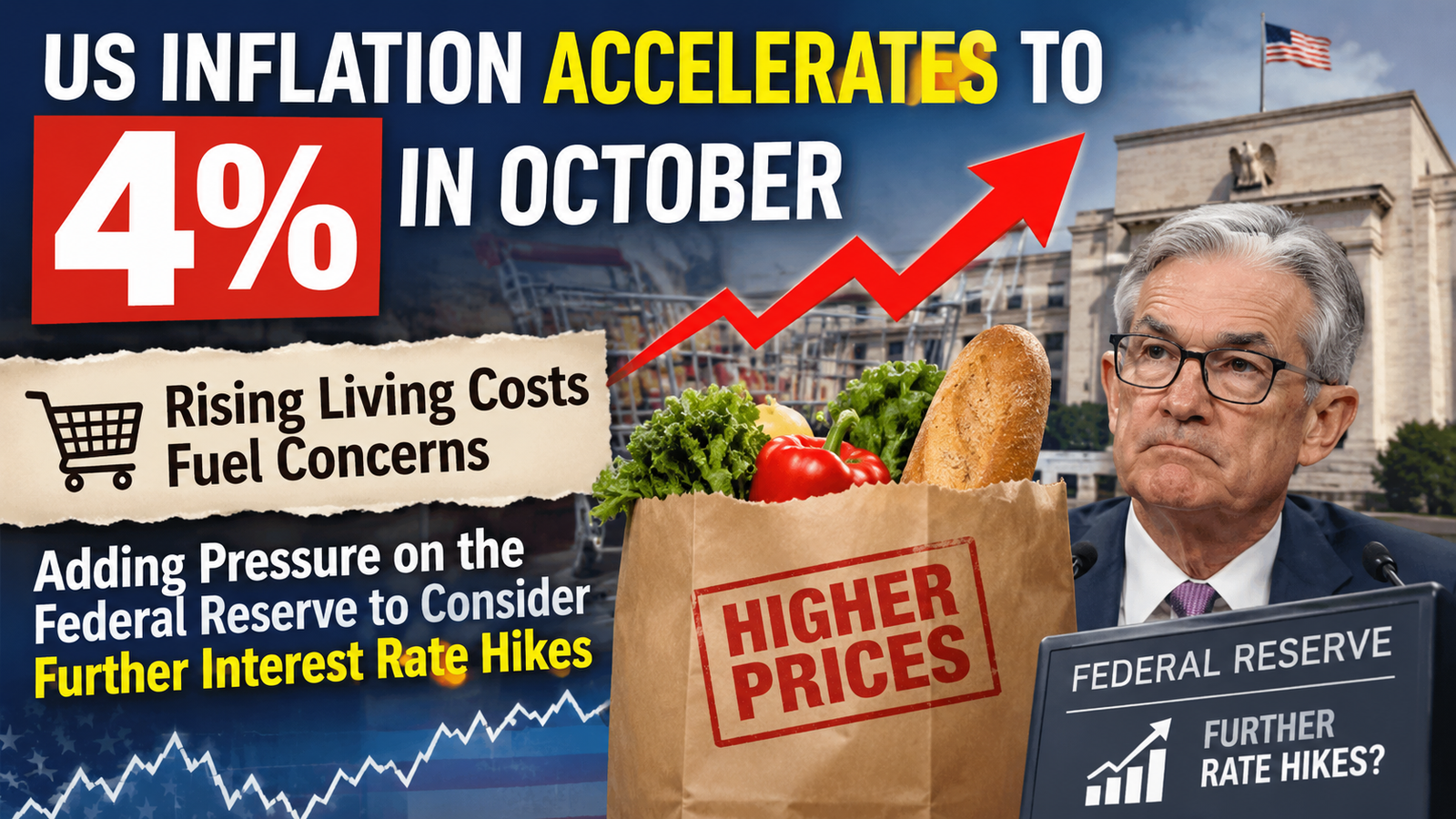
The October 2026 Consumer Price Index (CPI) increased by 0.4% compared with September, following a 0.6% rise in the previous month. The increase was higher than economists had expected and marked another month of relatively strong price growth. Although some estimates placed annual inflation close to 4%, the US Bureau of Labor Statistics (BLS) could not publish an official year-on-year CPI rate for October because the federal government shutdown in October 2025 had prevented the collection of comparable price data.
This distinction is important, but the latest figures nevertheless suggest that inflation remains above the Federal Reserve’s 2% target.
Food, Energy and Housing Costs Remain Important
The October inflation report showed that price increases were spread across several major household expenditure categories.
Food prices increased by 0.5% during the month, while food purchased for consumption at home rose by 0.4%. The energy index increased by 0.7%, following a much larger 5.2% increase in September. Gasoline prices rose by 1% during October, while electricity prices increased by 0.9%.
Housing costs also contributed to the overall increase. The shelter index rose by 0.3%, accounting for more than 30% of the monthly increase in the overall CPI.
Core CPI, which excludes food and energy because these prices can be particularly volatile, increased by 0.3% in October. This matched the increase recorded in September and was higher than market expectations of 0.2%.
The figures suggest that inflationary pressure is not limited to fuel prices. Housing, food, medical care and other services continue to influence the cost of living.
Federal Reserve Faces a Difficult Policy Decision
The latest inflation figures have increased pressure on the Federal Reserve to consider further monetary tightening. The central bank must balance two important objectives: maintaining price stability and supporting sustainable employment.
At its October 28 meeting, the Federal Open Market Committee maintained the federal funds target range at 3.75%–4%. However, policymakers acknowledged that inflation remained elevated and that further information would be required to determine the appropriate policy direction.
Following the October CPI release, financial markets increased their expectations of another interest-rate increase at the Federal Reserve’s December meeting. A 25-basis-point increase was widely anticipated, while Federal Reserve Governor Christopher Waller indicated that a larger increase could also be considered if inflation remained sufficiently strong.
Higher interest rates can help control inflation by increasing borrowing costs and moderating consumer spending and business investment. However, they can also make mortgages, credit-card balances, vehicle loans and corporate financing more expensive.
The Federal Reserve therefore faces a difficult decision: controlling inflation without unnecessarily weakening economic activity.
Impact on American Households and Businesses
Persistent inflation affects households by reducing the purchasing power of income. When the prices of groceries, housing, transport and utilities rise faster than wages, consumers have less money available for savings and discretionary spending.
Lower-income households can be particularly exposed because essential expenses account for a larger share of their budgets. Even when inflation slows, the higher price level accumulated over previous years does not automatically return to its earlier level.
Businesses also face challenges. Higher costs for energy, transportation, raw materials and labour can reduce profit margins. Companies may respond by increasing prices, adjusting production plans or delaying investment.
Small businesses can face additional pressure because they often have less financial flexibility and weaker bargaining power when negotiating supplier contracts or borrowing arrangements.
Persistent inflation can therefore influence both consumer confidence and business investment, making it an important consideration for the wider US economic outlook.
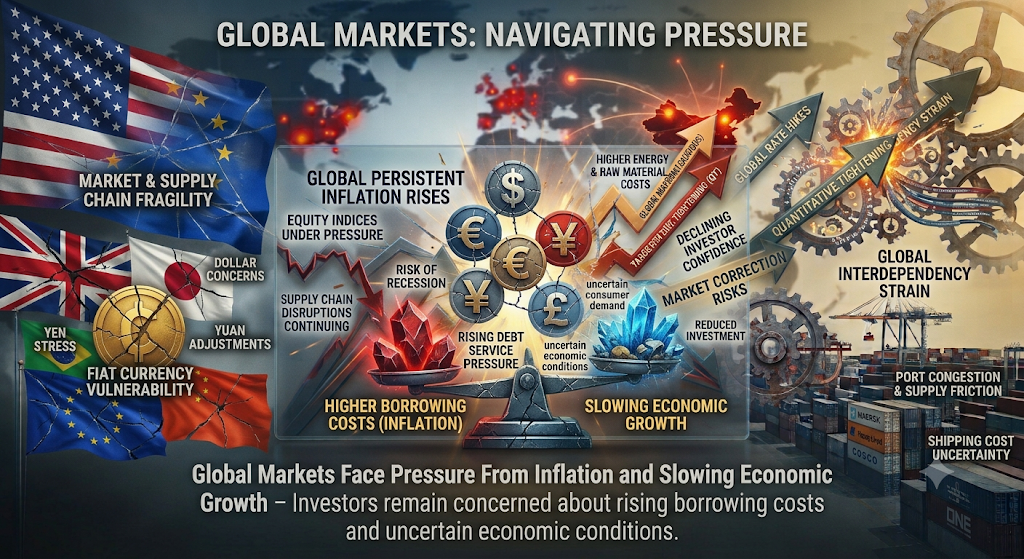
Global Markets Watch US Inflation Closely
The United States plays a central role in the international financial system, and changes in its inflation outlook can influence economies worldwide.
If the Federal Reserve raises interest rates, US financial assets may become more attractive to international investors. This can encourage capital flows towards dollar-denominated investments and put pressure on currencies in emerging markets.
A stronger US dollar can also increase the cost of imported commodities and foreign-currency debt repayments for countries whose currencies weaken against it.
Global equity markets may experience volatility as investors reassess company valuations and borrowing costs. Higher interest rates can particularly affect technology companies and other businesses whose valuations depend heavily on expected future earnings.
Consequently, US inflation is not simply a domestic economic issue. It has implications for international trade, investment and financial stability.
Implications for India
Developments in the US economy are important for India because of the close relationship between global financial markets, international trade and investment flows.
Higher US interest rates can encourage some foreign investors to move capital towards dollar-denominated assets. This may create pressure on the Indian rupee and influence domestic financial-market conditions.
A stronger dollar can also make imported crude oil, machinery and other commodities more expensive in rupee terms. This can increase production costs for Indian businesses and potentially contribute to domestic inflation.
The Reserve Bank of India must therefore monitor international interest-rate developments while considering India’s own inflation, economic growth and currency conditions.
For Indian businesses, maintaining financial discipline, managing foreign-exchange exposure and improving operational efficiency will remain important in an uncertain global environment.
The Worldonomics Times View
The latest US inflation figures highlight the difficulty of bringing price pressures under control while maintaining economic growth. Although the monthly CPI increase slowed from September’s 0.6% to 0.4% in October, the result exceeded expectations. Continued increases in food, housing and energy costs demonstrate that households and businesses remain exposed to inflationary pressures.
The Worldonomics Times believes that the Federal Reserve’s next decisions will be closely watched by global financial markets. Monetary tightening may help contain inflation, but policymakers must carefully consider its effects on employment, borrowing costs and business investment.
For the wider global economy, stable prices in the United States are important because of the country’s influence on international finance and trade. Governments, businesses and investors will need to monitor inflation trends and prepare for possible changes in monetary policy.
Ultimately, sustainable economic growth depends on maintaining a balance between price stability, employment and investment. The coming months will be important in determining whether inflation moves towards the Federal Reserve’s target or requires further policy intervention.