By The Worldonomics Times
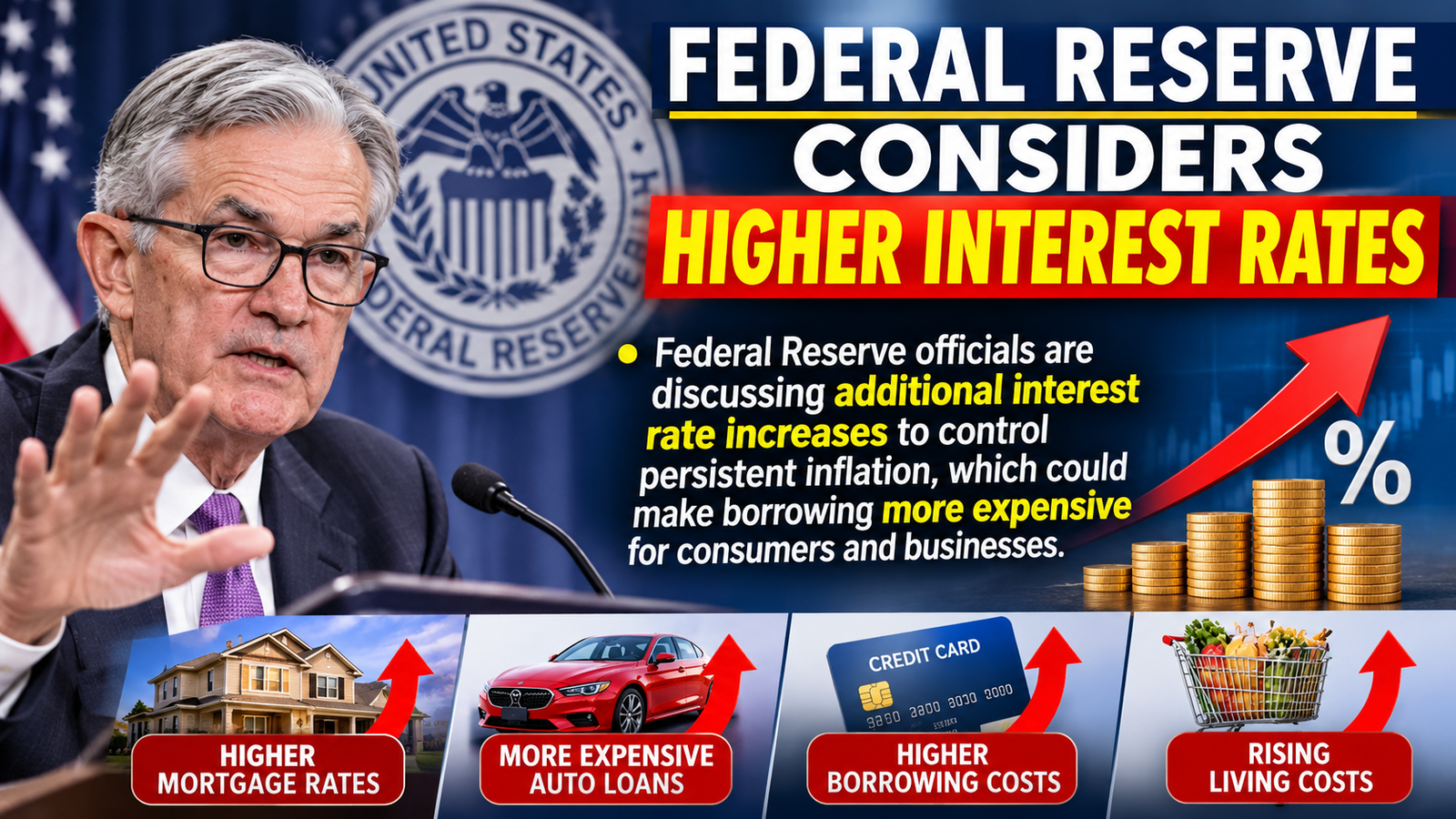
Federal Reserve officials are increasingly discussing additional interest rate increases as persistent inflation continues to challenge the US economy. The latest consumer price figures have renewed concerns that price pressures are spreading beyond energy and other volatile categories, making it more difficult for policymakers to bring inflation back towards the central bank’s 2% target.
The debate has intensified ahead of the Federal Open Market Committee’s December meeting. While some officials believe further monetary tightening is necessary, others are emphasising the importance of assessing economic conditions carefully before making additional policy changes.
The outcome will influence not only American households and businesses but also international financial markets, investment flows and borrowing conditions across the global economy.
Persistent Inflation Increases Pressure on Policymakers
The latest US inflation data have strengthened the argument for maintaining a restrictive monetary policy. Consumer prices increased by 0.4% month-on-month in October, while core CPI, which excludes food and energy, rose by 0.3% for the third consecutive month.
The annual inflation rate was reported at 4% in October, compared with 3.7% in September. Price increases across services, food, insurance and other consumer categories have raised concerns that inflation is becoming more widespread.
The Federal Reserve targets 2% inflation over the longer term, measured using the Personal Consumption Expenditures price index. Although CPI and PCE measure inflation differently, persistent increases in consumer prices indicate that achieving the target may require further policy action.
Policymakers are particularly concerned that businesses and households could begin adjusting their expectations around continued price increases. If inflation becomes embedded in wage negotiations, pricing decisions and consumer behaviour, bringing it under control could become more difficult.
Federal Reserve Officials Consider Further Rate Increases
Several Federal Reserve officials have publicly supported additional interest rate increases.
Dallas Federal Reserve President Lorie Logan said on November 10 that the central bank needed at least two more quarter-percentage-point increases to address persistent inflation. She also suggested that policymakers might need to act more quickly if broader price pressures continued.
Federal Reserve Governor Christopher Waller also indicated that a larger increase should be considered if core inflation remained elevated. Before the October CPI report, he had suggested that a 0.5-percentage-point increase could be appropriate if core inflation reached 0.3% or higher. The latest figures met that condition.
However, not all policymakers favour the same pace of tightening. Federal Reserve Vice Chair Philip Jefferson has emphasised the importance of monitoring inflation and economic conditions before determining the appropriate policy response.
These differences reflect the difficult balance facing the central bank: controlling inflation without unnecessarily weakening employment, consumer spending and business investment.
Borrowing Costs Could Increase for Consumers
Higher interest rates directly affect the cost of borrowing throughout the economy.
Mortgage rates, credit-card interest, vehicle loans and other forms of consumer credit can become more expensive when monetary policy tightens. Households may respond by delaying major purchases, reducing discretionary spending or increasing savings.
For families already dealing with higher food, housing and transportation expenses, additional borrowing costs could create further financial pressure.
The housing market is particularly sensitive to interest-rate changes. Higher mortgage rates can reduce affordability, discourage potential homebuyers and slow housing-related economic activity.
Consumers with variable-rate loans may also experience changes in repayment costs more quickly than borrowers with fixed-rate agreements.
Businesses Face Higher Financing and Investment Costs
Companies also face challenges when interest rates rise. Businesses that depend on loans to finance expansion, purchase equipment or manage working capital may encounter higher financing expenses.
Smaller companies can be especially vulnerable because they often have fewer funding alternatives than large corporations. Higher borrowing costs may encourage businesses to postpone expansion plans, reduce inventories or reconsider recruitment.
Technology companies and start-ups may also face pressure because their valuations often depend on expected future earnings and access to affordable investment capital.
However, tighter monetary policy can also help businesses over time by reducing inflation uncertainty and supporting more stable operating conditions. The challenge is ensuring that inflation control does not create excessive pressure on productive economic activity.
Global Financial Markets Closely Monitor the Fed
The Federal Reserve’s decisions influence financial conditions far beyond the United States.
Higher US interest rates can attract international investment towards dollar-denominated assets, potentially strengthening the US dollar. This may put pressure on emerging-market currencies and increase the cost of servicing debt denominated in foreign currencies.
Bond markets are also sensitive to changes in monetary policy expectations. Investors may demand higher yields on government securities when they anticipate further rate increases, raising borrowing costs for governments and companies.
Equity markets can experience volatility as investors reassess corporate earnings, discount rates and future economic growth. Gold and other non-interest-bearing assets may also face pressure when higher interest rates increase the attractiveness of interest-bearing investments.
The Federal Reserve’s December decision will therefore be closely watched by international investors, central banks and businesses.
Implications for India
The possibility of further US interest rate increases has important implications for India.
Higher American interest rates can encourage international investors to shift some capital towards US financial assets. This may reduce foreign investment flows into emerging markets and create pressure on the Indian rupee.
A weaker rupee can increase the domestic cost of imported crude oil, machinery, electronics and other essential products. This may contribute to inflationary pressure and raise operating expenses for Indian businesses.
The Reserve Bank of India must consider these external developments alongside domestic inflation, economic growth and liquidity conditions when determining its own monetary policy.
Indian exporters may benefit from currency depreciation in certain circumstances, but businesses with substantial imported inputs or foreign-currency borrowing could face additional costs.
The Worldonomics Times View
The Federal Reserve’s consideration of additional interest rate increases highlights the continuing difficulty of managing inflation in a changing economic environment. Persistent price pressures require careful attention, but monetary tightening also carries consequences for employment, investment and household finances.
The Worldonomics Times believes that policymakers must balance the need for price stability with the importance of maintaining sustainable economic growth. Clear communication, careful assessment of economic data and a measured policy approach will be important in managing market expectations.
For businesses and households, the possibility of higher borrowing costs reinforces the importance of prudent financial planning and effective debt management.
The Federal Reserve’s next decisions will have consequences beyond the United States. As global financial markets remain closely connected, the direction of American monetary policy will continue to influence currencies, investment flows and economic conditions across the world.