Introduction
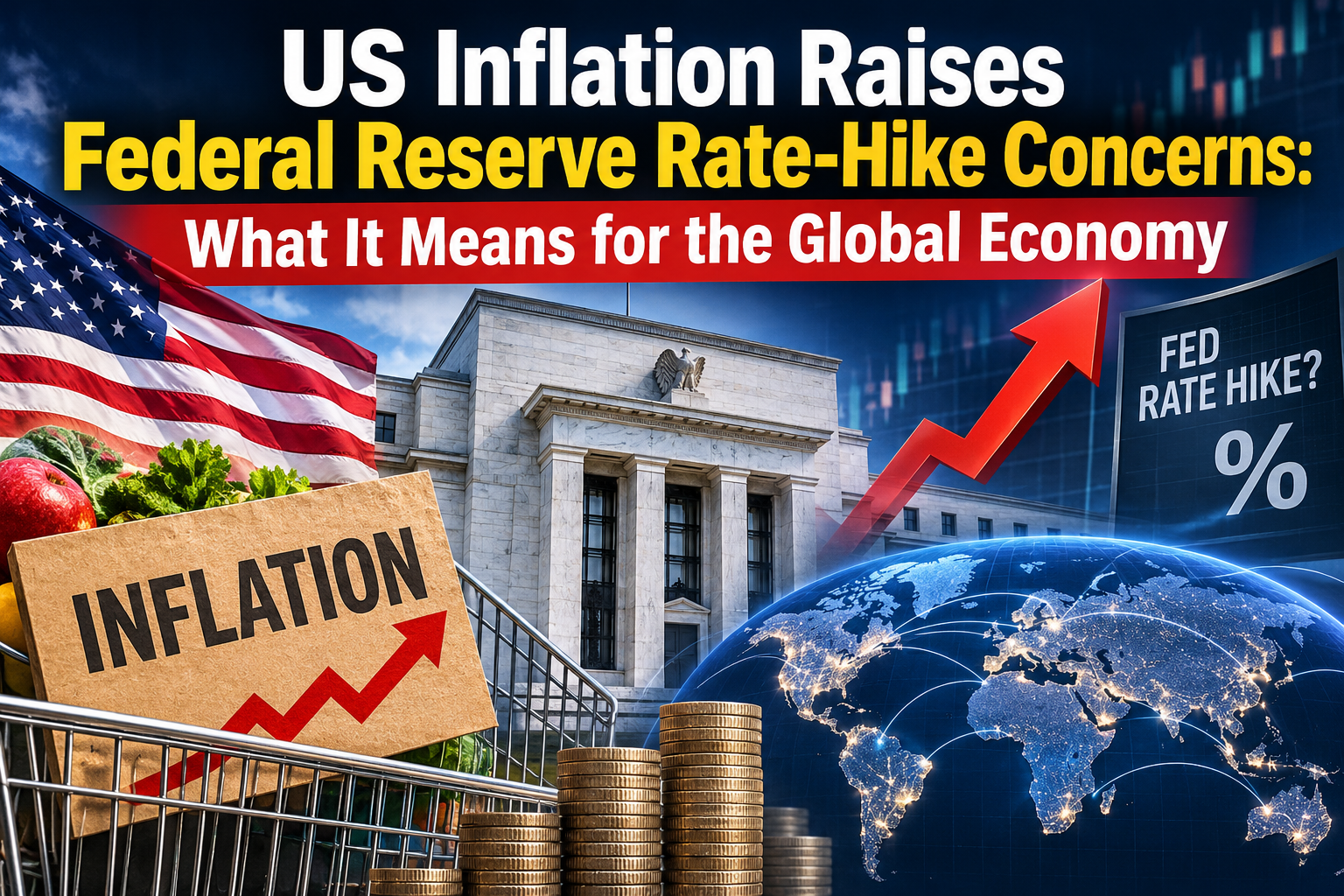
The United States economy is once again facing a critical monetary policy challenge as higher-than-expected inflation strengthens expectations of another interest-rate increase by the Federal Reserve in December 2026. Persistent price pressures, rising energy costs and uncertainty surrounding international trade have raised concerns among policymakers, investors and businesses. The latest inflation figures suggest that the battle against rising prices is far from over, putting the Federal Reserve under renewed pressure to take further action.
The possibility of another rate hike has also attracted global attention, as decisions made by the US central bank have significant consequences for international financial markets, emerging economies and global trade.
Inflation Remains a Major Economic Challenge
Inflation continues to remain above the Federal Reserve’s long-term target of 2%, creating difficulties for American households and businesses. According to recent economic data, the US Consumer Price Index (CPI) increased by 0.4% in October 2026 compared with the previous month, exceeding economists’ expectations of 0.3%. Core inflation, which excludes volatile food and energy prices, also increased by 0.3%, marking another month of persistent underlying price pressures.
Rising energy costs, international geopolitical tensions, trade tariffs and supply-chain disruptions have contributed to the inflationary environment. Although some categories have experienced improvements, the broader price situation remains concerning.
The persistence of inflation creates a difficult situation for the Federal Reserve. While policymakers want to control rising prices, they must also ensure that higher borrowing costs do not unnecessarily weaken economic growth or employment.
Federal Reserve Considers Further Interest-Rate Increases
The Federal Reserve has a challenging decision ahead of its December 2026 policy meeting. Following its October meeting, the central bank maintained the federal funds rate within the range of 3.75% to 4.00%, reflecting the need to evaluate additional economic data before taking further action.
However, the latest inflation figures have strengthened expectations of another increase. A Reuters survey of 101 economists conducted between November 6 and 10 found that all respondents expected the Federal Reserve to raise its benchmark interest rate by 25 basis points in December, potentially taking the range to 4.00%–4.25%.
Federal Reserve Governor Christopher Waller has also indicated support for another increase, suggesting that a larger half-percentage-point hike could be considered if inflation conditions worsen.
Nevertheless, the final decision will depend on incoming economic indicators, including inflation, employment and consumer spending. A rate increase remains an expected policy outcome rather than a confirmed decision.
Impact on American Businesses and Consumers
Higher interest rates directly influence the financial decisions of businesses and households. When borrowing becomes more expensive, companies may postpone expansion plans, reduce investments and reconsider hiring strategies.
Small and medium-sized businesses could face particular difficulties because they often depend on loans and credit facilities to finance daily operations, purchase equipment and expand their activities. Increased financing costs may reduce profitability and slow business development.
Consumers are also likely to experience the effects. Higher interest rates can increase the cost of mortgages, vehicle loans, personal loans and credit-card borrowing. Families may consequently reduce discretionary spending, delay major purchases and focus more on essential expenses.
The housing market could experience additional pressure as mortgage affordability becomes more challenging. Similarly, businesses operating in interest-sensitive industries, including construction, automobiles and real estate, may face weaker demand.
Global Financial Markets Under Pressure
The Federal Reserve’s monetary policy decisions extend far beyond the United States. Since the US dollar plays a central role in international trade and finance, changes in American interest rates can influence currencies, investment flows and borrowing costs worldwide.
Higher US interest rates generally make dollar-denominated assets more attractive to international investors. This can encourage capital to move towards the United States, placing pressure on emerging-market currencies.
Countries with significant dollar-denominated debt may face increased repayment burdens when their domestic currencies weaken against the dollar. Governments and businesses could also encounter higher costs when raising funds in international markets.
Stock markets may experience volatility as investors reassess corporate valuations, borrowing expenses and future earnings expectations. Bond yields could also rise as markets adjust to expectations of tighter monetary policy.
Implications for Emerging Economies Like India
Emerging economies, including India, must closely monitor changes in US monetary policy. A stronger US dollar and shifting international capital flows can create challenges for countries dependent on foreign investment and imported commodities.
If the dollar strengthens, emerging-market currencies may come under pressure, potentially increasing the domestic cost of imported crude oil, machinery and other essential goods.
For India, higher global borrowing costs and currency fluctuations could influence inflation management, investment decisions and the Reserve Bank of India’s monetary policy considerations.
However, the overall impact will depend on domestic economic fundamentals, foreign exchange reserves, inflation trends and the country’s ability to attract stable long-term investment.
The Road Ahead: Balancing Inflation and Economic Growth
The Federal Reserve faces the difficult task of balancing price stability with sustainable economic growth. Raising interest rates may help control inflation by reducing borrowing, investment and consumer demand. However, excessive monetary tightening could slow economic activity, weaken employment opportunities and increase financial pressure on households and businesses.
Policymakers must therefore carefully evaluate whether inflation is being driven by strong domestic demand or external supply-side factors. Monetary policy can influence demand, but it cannot directly resolve geopolitical conflicts, international supply disruptions or rising energy production costs.
Clear communication and a data-driven approach will be essential to maintaining confidence in the financial system.
The Worldonomics Times Views
The renewed possibility of a December rate hike highlights the continuing uncertainty surrounding the global economic outlook. While controlling inflation remains essential, policymakers must avoid measures that unnecessarily weaken economic activity or create additional financial stress.
The Federal Reserve should adopt a balanced and transparent approach, carefully considering the long-term consequences of every policy decision. Businesses should strengthen financial planning, manage debt responsibly and prepare for continued market volatility. Governments and central banks worldwide should also remain attentive to currency movements and international capital flows.
Ultimately, the challenge is not simply to bring inflation under control but to achieve price stability without sacrificing economic growth. The Federal Reserve’s December decision could become an important turning point for the US economy and global financial markets as the world navigates an increasingly uncertain economic environment.