The Worldonomics Times
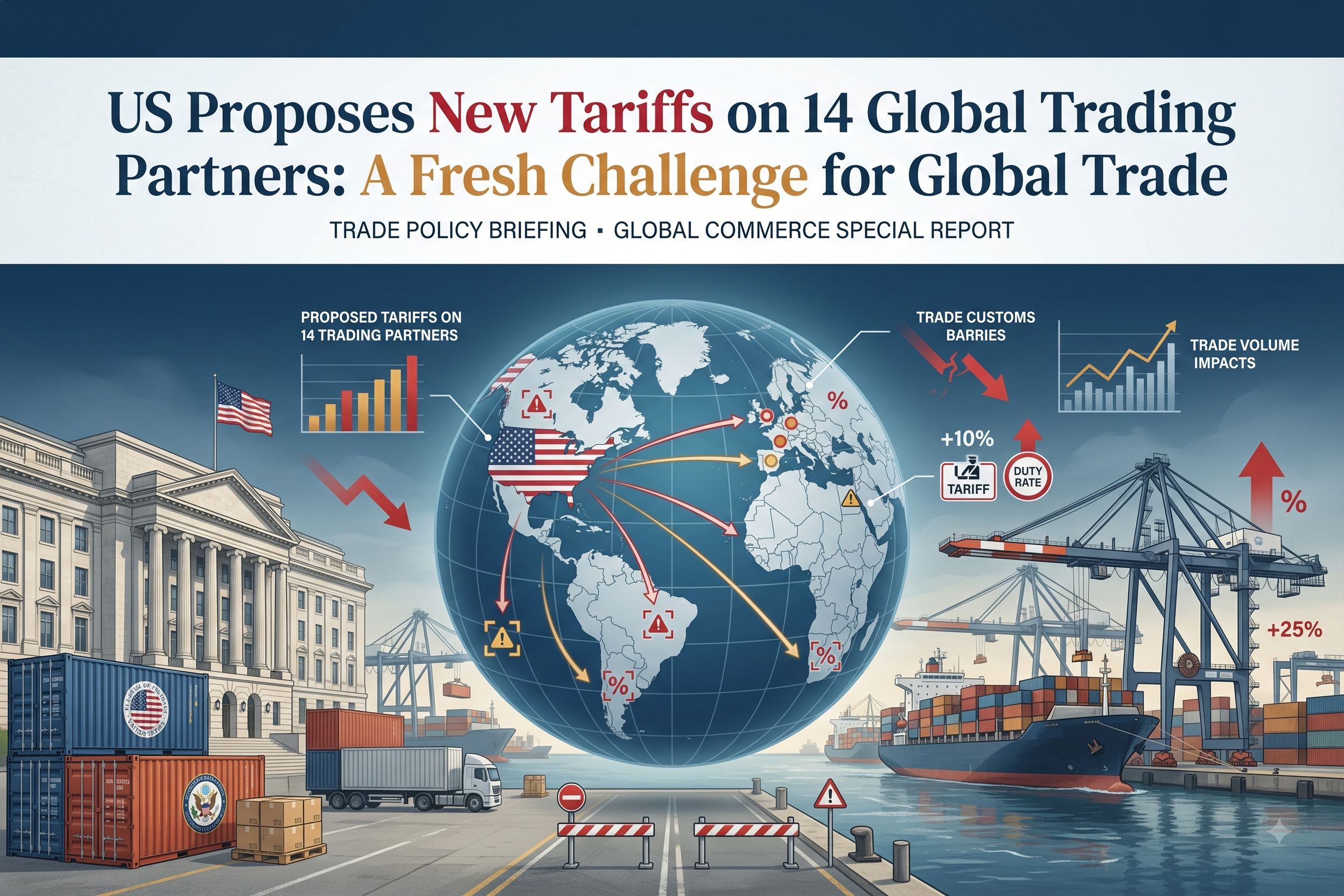
The United States has proposed new trade tariffs targeting 14 global trading partners, including China, Japan, India and the European Union. The proposal signals another potential shift in international trade policy, raising concerns about higher manufacturing costs, disrupted supply chains and uncertainty across global markets.
The move could have far-reaching consequences for businesses, exporters, manufacturers and consumers. As the world’s largest economies remain closely connected through international trade, changes in US tariff policy may influence the cost and movement of goods across multiple industries.
A New Chapter in US Trade Policy
Tariffs are taxes imposed on imported goods. Governments generally use them to protect domestic industries, encourage local manufacturing, address trade imbalances or strengthen their negotiating position with other countries.
By proposing tariffs on 14 trading partners, the United States is indicating a tougher approach to certain international trade relationships. The targeted economies include several of the world’s most influential manufacturing and trading centres.
China remains a major participant in global manufacturing and exports a wide range of products to the US market. Japan is an important supplier of automobiles, machinery and advanced technology. India has growing trade links with the United States across sectors such as pharmaceuticals, textiles, engineering goods and information technology-related services. The European Union, meanwhile, represents a significant trading bloc with strong industrial, automotive and consumer goods sectors.
Any additional duties on imports from these economies could change the competitive position of businesses operating in the American market.
Potential Impact on Global Supply Chains
One of the most immediate concerns surrounding new tariffs is their potential effect on global supply chains. Modern manufacturing depends on international networks in which raw materials, components and finished products often cross several borders before reaching consumers.
For example, an electronic product may be designed in one country, assembled in another and depend on components manufactured across multiple economies. Tariffs imposed at any stage can increase costs and create uncertainty for companies.
Businesses may respond by finding alternative suppliers, shifting production locations or adjusting their distribution strategies. Although such changes can reduce exposure to tariffs over time, relocating manufacturing facilities and establishing new supplier relationships can be expensive and complicated.
Industries that rely heavily on international sourcing—including electronics, automobiles, machinery, chemicals and consumer goods—could face particular challenges.
Higher Costs for Businesses and Consumers
Import tariffs can increase the cost of products entering a country. Depending on market conditions and the ability of businesses to absorb additional expenses, these costs may eventually be passed on to consumers.
American manufacturers that depend on imported components could also face higher production expenses. This may affect their ability to compete, particularly if alternative domestic suppliers cannot provide the required materials at comparable prices.
Small and medium-sized businesses may be especially vulnerable because they often have fewer resources to manage sudden changes in trade regulations. Larger companies may have more flexibility to diversify suppliers, negotiate prices or relocate production.
If tariffs remain in place for an extended period, businesses may need to reconsider investment plans, pricing strategies and long-term supply agreements.
China, India, Japan and the European Union in Focus
The inclusion of major economies highlights the international importance of the proposed measures.
For China, additional US tariffs could create further pressure on manufacturers and exporters already operating in a challenging global trade environment. Companies may explore alternative markets and strengthen trade relationships with other economies.
India could face both risks and opportunities. Export-oriented industries may encounter higher costs or reduced competitiveness in the US market. However, changes in global sourcing strategies could also create opportunities for Indian manufacturers as international companies consider diversifying their production networks.
Japan’s automotive, machinery and technology sectors could be affected by changes in the cost of accessing the American market. Similarly, European exporters may need to reassess their pricing and market strategies if additional duties are introduced.
The actual impact on each economy will depend on the products covered, tariff rates, implementation timelines and any exemptions or negotiated arrangements.
Possible Responses and Trade Negotiations
Countries affected by new US tariffs may consider several responses, including diplomatic negotiations, trade consultations and measures to protect domestic industries.
Some governments could seek exemptions or revised terms through bilateral discussions. Others may examine alternative export markets or consider countermeasures if they believe the tariffs unfairly restrict their businesses.
However, escalating trade restrictions can create a cycle of retaliation. When one country introduces tariffs and another responds with similar measures, businesses on both sides may face higher costs and reduced market access.
For this reason, negotiations and predictable trade policies remain important for maintaining confidence in international commerce.
Implications for the Global Economy
The proposed tariffs come at a time when businesses are already navigating geopolitical uncertainty, changing production patterns and fluctuations in global demand.
Greater trade barriers could discourage investment, complicate long-term business planning and affect the movement of goods between major economies. Financial markets may also respond to uncertainty about future trade relations, particularly when companies with significant international operations are involved.
At the same time, governments may view trade policy as a tool to strengthen domestic industries and reduce dependence on foreign suppliers. The challenge is to balance these objectives without creating unnecessary disruption to international trade.
The Worldonomics Times View
The proposed US tariffs on 14 trading partners represent more than a change in import duties. They highlight the growing importance of trade policy in shaping international economic relationships.
While protecting domestic industries and strengthening local manufacturing can be legitimate policy objectives, tariffs also carry economic costs. Higher import prices, supply-chain disruptions and retaliatory trade measures can affect businesses and consumers far beyond the countries directly involved.
For emerging economies such as India, the changing trade environment presents a combination of challenges and opportunities. Businesses that improve productivity, diversify export markets and strengthen domestic supply chains may be better positioned to respond to global uncertainty.
The Worldonomics Times believes that stable and transparent trade relations are essential for sustainable economic growth. Governments should prioritise constructive negotiations and avoid unnecessary escalation. In an interconnected global economy, cooperation and predictable trade rules are often more beneficial than prolonged tariff disputes.
Conclusion
The US proposal to introduce new tariffs on 14 global trading partners could reshape important aspects of international trade. Its consequences will depend on the final policy details and how affected economies respond.
For businesses, the immediate priority will be to monitor developments, evaluate potential cost increases and prepare for possible changes in supply chains. For governments, the challenge will be to protect national economic interests while maintaining productive international partnerships.
As global trade continues to evolve, the decisions made by major economies will play a significant role in determining the direction of international commerce and economic growth.