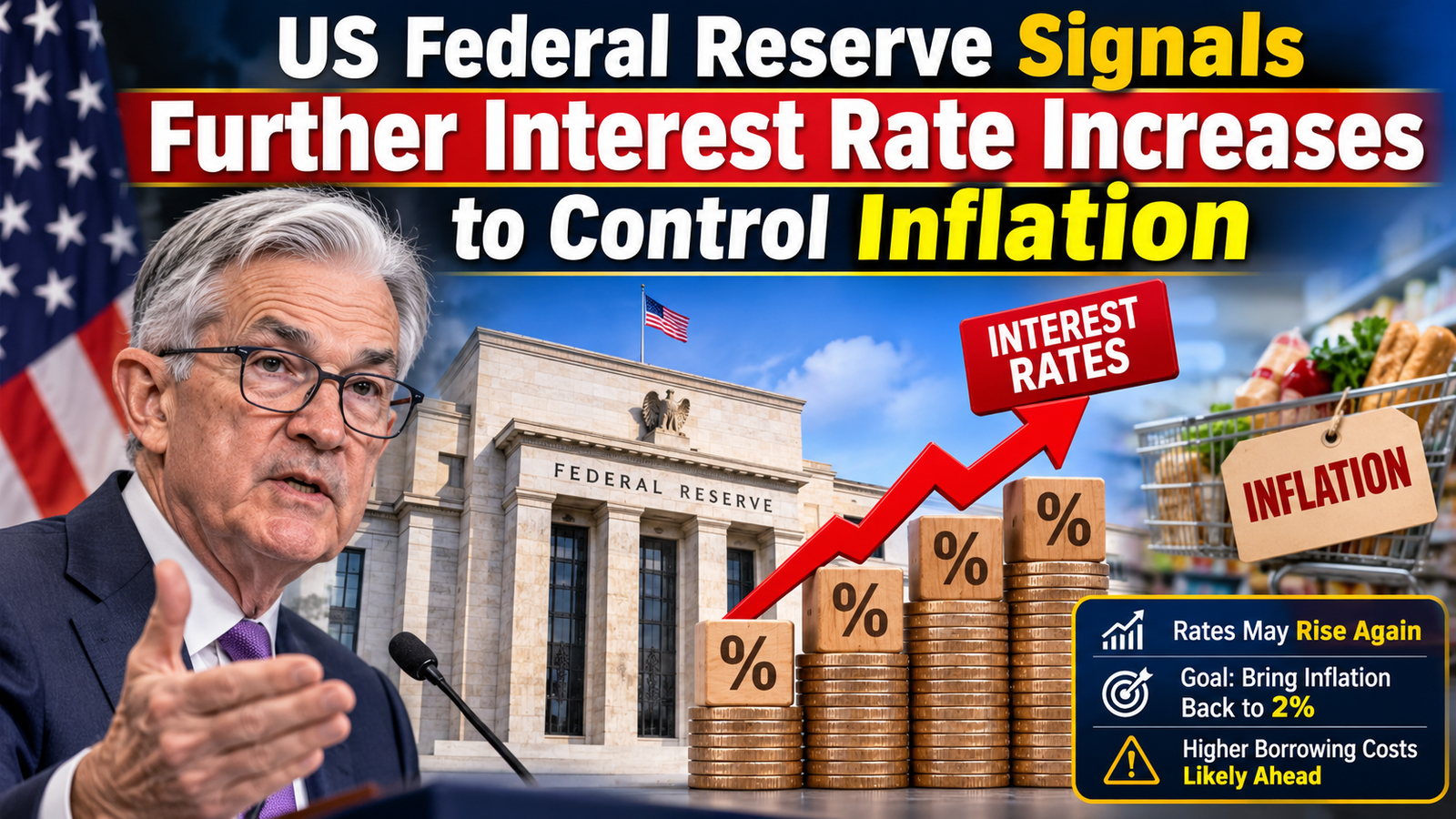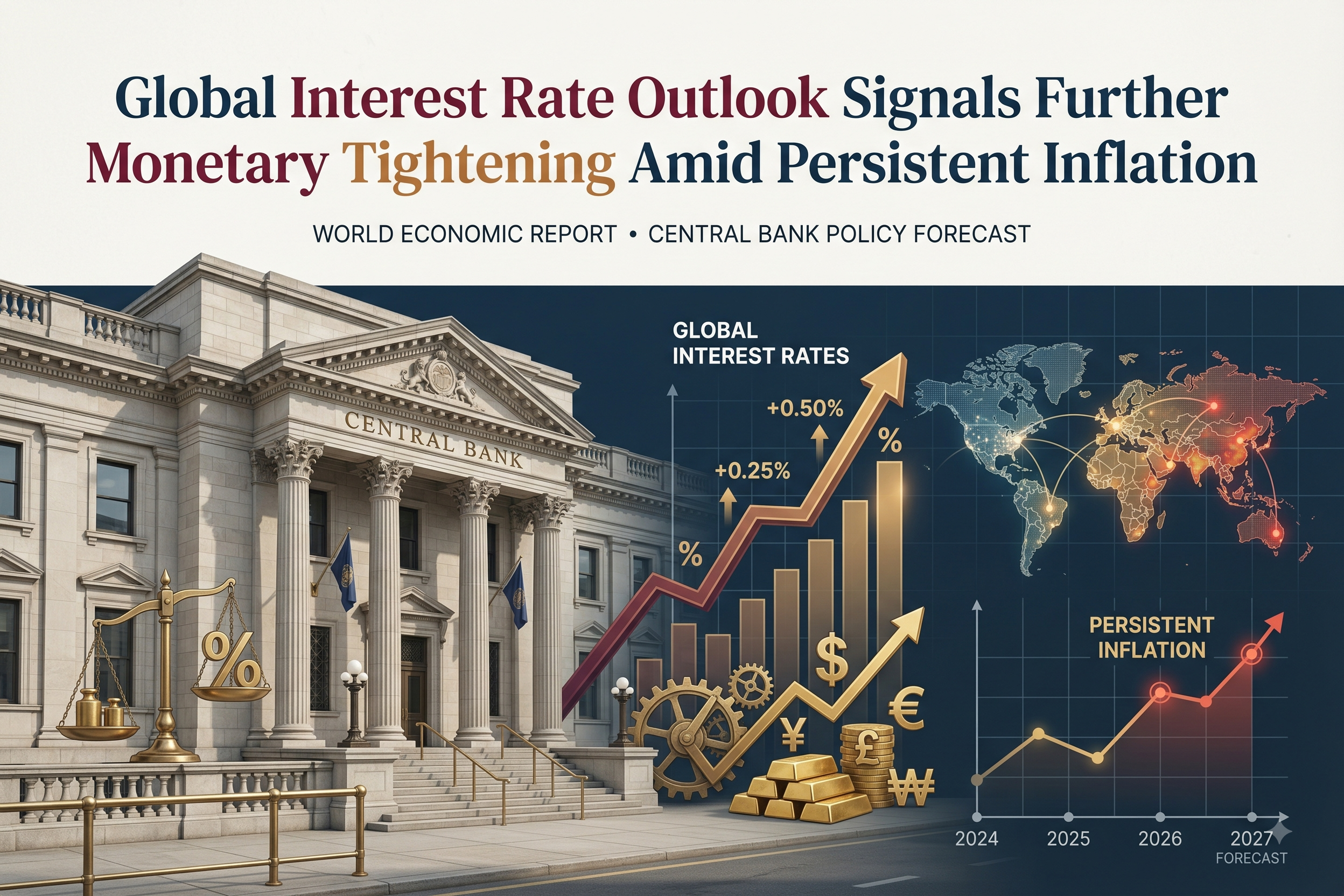
S&P Global expects further interest rate increases from major central banks, including the US Federal Reserve, European Central Bank and Bank of Japan, as persistent inflation concerns continue to influence global monetary policy.
The global financial landscape could face another period of monetary tightening as major central banks remain focused on controlling persistent inflation. According to the outlook highlighted by S&P Global, the US Federal Reserve, European Central Bank (ECB) and Bank of Japan (BOJ) may consider further interest rate increases as policymakers attempt to maintain price stability.
The prospect of additional rate hikes signals that the fight against inflation remains a major priority for the world’s leading economies. Although monetary tightening can help control rising prices, it also creates challenges for businesses, consumers, investors and governments.
Higher borrowing costs could influence investment decisions, consumer spending, currency movements and international capital flows, making central bank policies particularly important for global economic stability.
Major Central Banks Face Inflation Challenges
Inflation continues to influence monetary policy decisions across major economies. Rising energy prices, labour costs, supply-chain pressures and geopolitical uncertainty can make it difficult for central banks to achieve their inflation targets.
When inflation remains elevated, policymakers may increase interest rates to discourage excessive borrowing and spending. Higher borrowing costs generally reduce demand for credit, helping moderate economic activity and price pressures.
However, monetary tightening is a delicate process. Excessively high interest rates can slow economic growth, discourage business investment and increase financial pressure on households.
The Federal Reserve, ECB and BOJ therefore face the challenge of balancing inflation control with economic stability.
US Federal Reserve: Inflation Remains a Key Priority
The US Federal Reserve plays a central role in determining global financial conditions because the US dollar is the world’s primary international reserve currency.
Changes in Federal Reserve interest rate policy influence global borrowing costs, currency valuations, investment flows and financial market sentiment.
If inflation remains persistent in the United States, policymakers may maintain restrictive monetary conditions or consider additional rate increases.
Higher US interest rates can make dollar-denominated investments more attractive, potentially encouraging international capital flows towards American financial markets.
However, increased borrowing costs can also affect American households and businesses through more expensive mortgages, credit facilities and corporate financing.
For emerging economies, tighter US monetary policy may create additional pressure through currency depreciation, higher external borrowing costs and changes in international investment flows.
European Central Bank: Balancing Inflation and Economic Growth
The European Central Bank faces its own monetary policy challenges as European economies navigate inflation, energy market uncertainty and changing economic conditions.
Higher energy and transportation expenses can influence consumer prices and increase operating costs for businesses across the eurozone.
If inflation remains above desired levels, the ECB may need to maintain a restrictive policy stance to prevent prolonged price pressures.
However, higher interest rates could also weaken economic activity by making borrowing more expensive for companies and households.
European manufacturers, property markets and smaller businesses are particularly sensitive to changes in financing conditions.
The central bank must therefore carefully assess inflation trends, employment conditions and economic growth before making further policy adjustments.
Bank of Japan: Monetary Policy Enters a New Phase
The Bank of Japan has traditionally maintained an accommodative monetary policy compared with several other major central banks.
However, changing inflation dynamics, wage developments and domestic economic conditions have increased attention on the future direction of Japanese interest rates.
Any further tightening by the BOJ could influence the Japanese yen, domestic borrowing costs and international investment strategies.
Japan’s role in global financial markets makes its monetary policy decisions particularly significant.
Changes in Japanese interest rates may also affect international capital flows, especially when investors reconsider strategies involving differences between borrowing costs in Japan and returns available in other markets.
A gradual policy adjustment could reshape investment decisions across Asia and beyond.
How Higher Interest Rates Could Affect Global Markets
Further monetary tightening by major central banks could create several important consequences for international financial markets.
Stock markets: Higher interest rates can put pressure on equity valuations because future corporate earnings become less attractive when discounted at higher rates. Companies with substantial borrowing requirements may experience additional pressure.
Bond markets: Rising interest rates can influence government and corporate bond yields. Existing bonds with lower fixed interest payments may become less attractive when newly issued securities offer higher returns.
Currency markets: Differences in interest rates between countries can influence currency demand and international capital movements.
Real estate: Higher mortgage rates can reduce property affordability and weaken housing demand.
Business investment: Companies may delay expansion plans as financing becomes more expensive, potentially affecting employment and industrial production.
These developments demonstrate how central bank decisions can influence economic activity far beyond national borders.
Emerging Economies Could Face Additional Pressure
Developing economies may be particularly vulnerable to further monetary tightening in advanced markets.
Higher US interest rates can strengthen the dollar and increase the cost of servicing dollar-denominated debt.
Countries dependent on international capital flows may experience currency volatility and increased financing expenses.
India and other emerging Asian economies will need to monitor global interest rate developments alongside domestic inflation, currency stability and economic growth.
At the same time, countries with strong domestic demand, stable financial institutions and sound economic policies may be better positioned to manage external monetary pressures.
What Investors Should Watch Next
The direction of global monetary policy will depend on several important economic indicators.
Investors should closely monitor inflation reports, employment figures, wage growth, energy prices and central bank policy announcements.
Corporate earnings and government bond yields will also provide useful signals about how financial markets are responding to changing monetary conditions.
A continued increase in interest rates could create opportunities in selected fixed-income investments while increasing risks for highly valued equities and heavily indebted businesses.
However, investment decisions should be based on individual financial objectives, risk tolerance and broader economic conditions rather than expectations of interest rate movements alone.
The Worldonomics Times View
The possibility of further interest rate increases by major central banks highlights how challenging the global fight against inflation has become.
The Federal Reserve, European Central Bank and Bank of Japan operate under different economic conditions, but all face the broader challenge of maintaining price stability without unnecessarily weakening economic growth.
In our view, monetary tightening should remain data-dependent and carefully calibrated. Central banks must avoid reacting only to short-term inflation movements while remaining prepared to address persistent price pressures.
For businesses, higher borrowing costs underline the importance of financial discipline, efficient operations and responsible debt management.
For investors, the coming period requires greater attention to central bank communication, currency movements, bond yields and corporate fundamentals.
Ultimately, stable inflation and sustainable economic growth must remain the shared objectives of global policymakers. The effectiveness of their monetary decisions will play a significant role in shaping international financial markets and the global economy in the years ahead.