Introduction
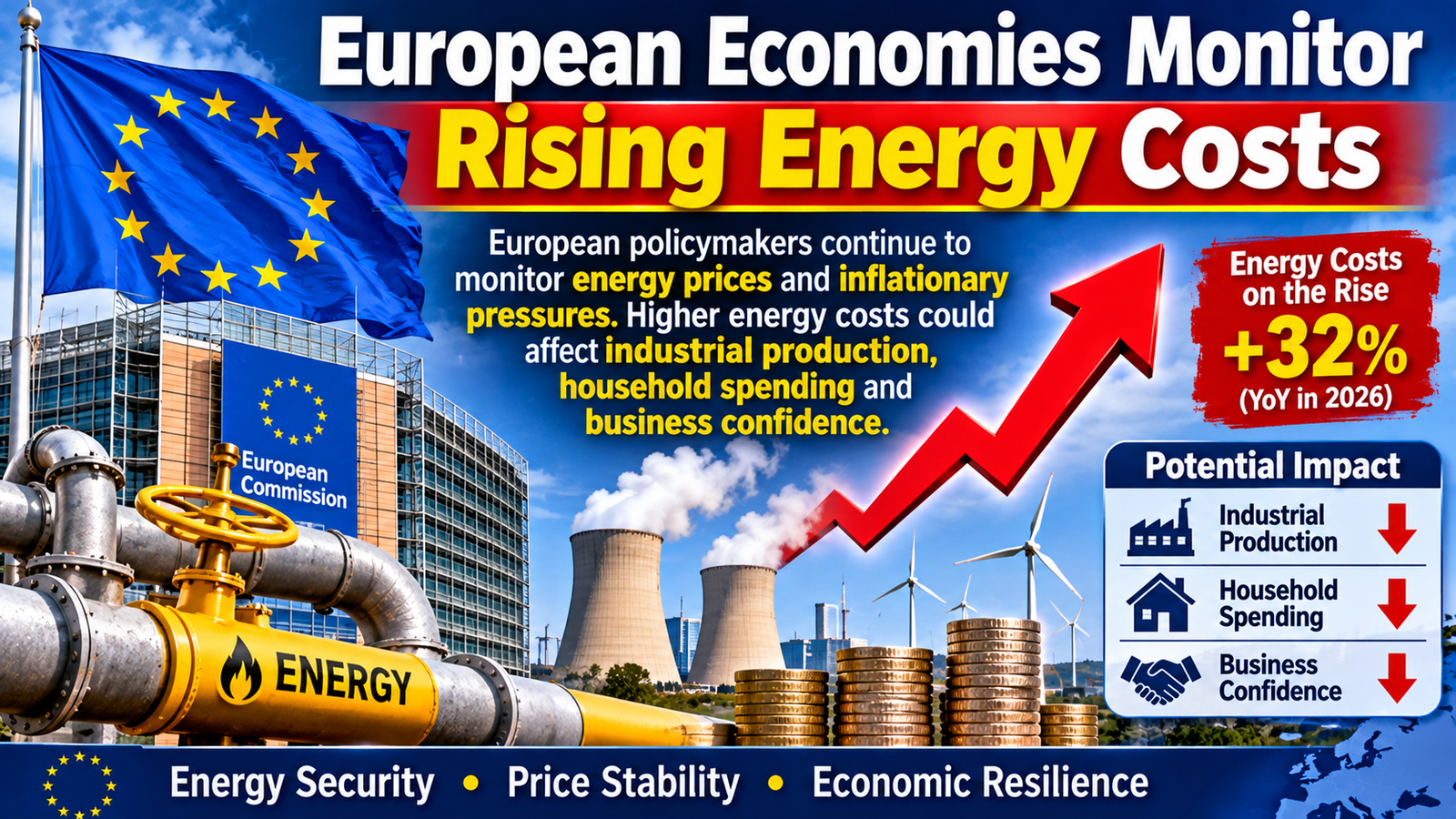
European economies are facing renewed pressure from rising energy costs, creating challenges for policymakers seeking to balance inflation control with economic growth. Higher oil, natural gas and electricity prices are increasing operating expenses for businesses while placing additional pressure on household budgets. The situation is particularly important for energy-intensive industries, where higher production costs can weaken competitiveness, reduce investment and affect employment.
The latest economic indicators underline the scale of the challenge. Eurostat’s flash estimate shows that annual inflation in the euro area increased to 4.0% in October 2026, compared with 3.8% in September. Energy prices were the largest contributor to this increase, with energy inflation reaching 20.8%, up from 18.9% a month earlier. These figures have renewed concerns about the direction of inflation and the outlook for European economic activity.
Energy Prices Become a Major Inflation Driver
Energy has once again emerged as a significant source of inflationary pressure across Europe. Higher international fuel prices, geopolitical uncertainty and disruptions to energy supply routes have contributed to increased costs for European consumers and businesses.
The European Union remains exposed to international energy markets because of its dependence on imported fossil fuels. Disruptions in major producing regions can therefore affect the cost and availability of energy across the continent. The European Commission has highlighted the economic vulnerability created by dependence on imported fossil fuels, particularly during periods of geopolitical instability.
The impact extends beyond household electricity and gas bills. Higher fuel and transportation expenses can increase the cost of manufacturing, agriculture, logistics and distribution. Businesses may eventually pass some of these additional expenses on to consumers, creating broader inflationary pressure across the economy.
Industrial Production Faces Cost Challenges
European manufacturers are particularly sensitive to changes in energy prices. Industries such as chemicals, steel, aluminium, cement, glass and automotive manufacturing require substantial amounts of electricity and natural gas. When energy costs rise, production becomes more expensive and profit margins can narrow.
The pressure comes at a time when parts of Europe’s industrial sector are already experiencing weak production trends. Eurostat reported that industrial production in the euro area declined by 0.5% in August 2026 compared with July, while output was 1.1% lower than in August 2025.
If energy prices remain elevated, manufacturers could respond by reducing operating hours, delaying expansion plans or shifting some production to regions with lower energy costs. Smaller businesses may face particular difficulties because they often have fewer resources to absorb sudden increases in operating expenses.
The challenge is not limited to short-term profitability. Persistently high energy costs could affect Europe’s long-term industrial competitiveness, investment decisions and ability to attract new manufacturing projects.
Household Spending and Consumer Confidence Under Pressure
Rising energy bills can reduce the amount of money households have available for other purchases. When families spend more on heating, electricity, transport and essential goods, they may cut back on discretionary expenses such as dining, travel, entertainment and consumer electronics.
This can create a wider economic effect because household consumption is an important driver of economic activity. Lower consumer spending may affect retailers, restaurants, tourism operators and service-sector businesses.
The pressure can be particularly severe for lower-income households, which generally spend a larger proportion of their income on essential expenses. Governments may therefore face growing demands for targeted assistance, especially if energy prices remain high through the winter months.
However, broad subsidies and price controls can place additional pressure on public finances. Policymakers must balance immediate household protection with the need to maintain sustainable government spending.
Central Banks Face Difficult Policy Decisions
Higher energy prices also complicate monetary policy. Central banks must determine whether rising fuel and electricity costs represent a temporary inflation shock or the beginning of broader price increases across the economy.
The European Central Bank is monitoring whether energy-related inflation spreads into wages, services and other consumer prices. On 10 November, ECB Chief Economist Philip Lane indicated that future interest-rate decisions would depend partly on how much the recent increase in fuel costs feeds through to wages and other prices.
The Bank of England has also highlighted the risks. In its November 2026 Monetary Policy Report, it said UK inflation had reached 3.5% in September and could rise to around 5% by the middle of 2027, largely reflecting higher global energy prices. The Bank raised its policy rate to 4% in November, while emphasising that future decisions would depend on how inflationary pressures develop.
For European policymakers, the challenge is to prevent energy-driven price increases from becoming embedded in inflation expectations without imposing excessive pressure on already fragile economic activity.
Europe’s Energy Security and Long-Term Transition
The latest price pressures have renewed attention on Europe’s energy security. Greater diversification of energy supplies, investment in renewable electricity, improved grid infrastructure and expanded energy storage could reduce the region’s exposure to international fuel-market disruptions.
The transition towards cleaner energy sources is also an industrial opportunity. Investment in solar, wind, nuclear power, battery storage and hydrogen technologies could strengthen long-term energy independence while supporting employment and technological development.
However, these investments require substantial capital, regulatory coordination and time. Renewable energy expansion alone cannot immediately eliminate the need for reliable electricity and backup supplies. Policymakers must therefore combine the energy transition with practical measures to maintain affordability and supply stability.
Implications for India and the Global Economy
Developments in European energy markets matter beyond the continent. Europe is a major trading partner for several economies, including India, and sustained inflationary pressure could influence demand for manufactured goods, engineering products, pharmaceuticals, textiles and services.
If European businesses and households reduce spending, exporters could face weaker demand. Indian companies with significant exposure to European customers may need to prepare for slower orders, tighter pricing conditions and greater uncertainty in trade.
Higher global energy prices could also affect India through increased import costs. As a major importer of crude oil and other energy resources, India remains sensitive to international price movements. A prolonged energy shock could raise transportation and manufacturing expenses, complicate inflation management and place pressure on the country’s trade balance.
At the same time, Europe’s efforts to diversify energy supplies and invest in clean technologies could create opportunities for Indian businesses involved in renewable energy, engineering, infrastructure, batteries and related manufacturing.
The Worldonomics Times Views
Rising energy costs represent more than a temporary challenge for European consumers. They create a wider economic problem involving inflation, industrial competitiveness, household purchasing power and financial stability.
The latest inflation figures demonstrate how quickly energy prices can influence the broader economic outlook. If costs remain elevated, European manufacturers may face additional pressure, households could reduce discretionary spending and central banks may have less room to ease monetary policy.
European governments should focus on strengthening energy security, diversifying supply sources and accelerating investment in reliable, affordable energy infrastructure. At the same time, targeted support for vulnerable households and energy-intensive businesses can help limit the immediate economic damage without creating unsustainable fiscal commitments.
For the global economy, the direction of European energy prices will remain an important factor influencing inflation, trade and investment. Europe’s ability to manage this challenge will help determine not only its own economic resilience but also the strength of its commercial relationships with major trading partners, including India.