Inflation, employment conditions and consumer spending remain critical indicators shaping the United States’ economic outlook as policymakers navigate the balance between price stability and sustainable growth.
The United States economy continues to experience changing economic conditions as inflation trends, employment developments and consumer spending influence the country’s overall growth prospects. As one of the world’s largest economies, the performance of the US has significant implications for international trade, financial markets, investment flows and global economic stability.
Policymakers, businesses and investors are closely monitoring key economic indicators to understand the direction of economic activity. While consumer spending and a resilient labour market can support growth, persistent inflationary pressures, borrowing costs and uncertainty surrounding business investment may create challenges for future expansion.
The Federal Reserve faces the important task of maintaining price stability while supporting maximum employment, making monetary policy decisions particularly significant for the broader economy.
Inflation Remains a Key Economic Concern
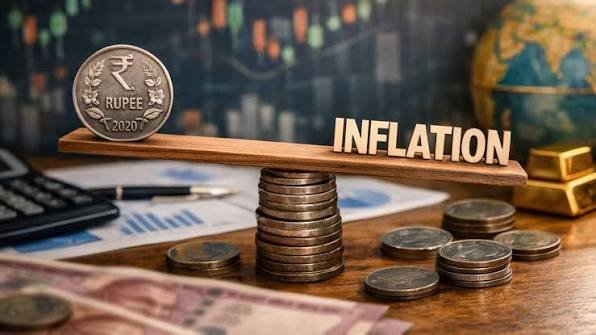
Inflation continues to be one of the most important factors influencing the US economic outlook. Changes in the prices of housing, food, transportation, healthcare and other essential services directly affect household purchasing power and consumer confidence.
Although monetary tightening can help moderate inflation by reducing excessive demand, price stability remains challenging when supply-side factors contribute to rising costs. Energy price fluctuations, international trade disruptions, labour expenses and housing market conditions can all influence inflation.
For American households, higher living costs can reduce disposable income and limit spending on non-essential goods and services. Lower-income households may face greater pressure because a larger proportion of their income is generally allocated to essential expenses.
The Federal Reserve must therefore carefully evaluate inflation trends and underlying price pressures before adjusting its monetary policy.
Employment Trends and Labour Market Conditions
Employment remains another major indicator of economic strength. A stable labour market supports household income, consumer confidence and overall economic activity.
The US labour market has experienced structural changes driven by technological advancement, demographic developments and evolving business requirements. Industries such as healthcare, technology, manufacturing, logistics and professional services continue to influence employment opportunities.
However, changes in hiring patterns, unemployment levels, wage growth and job vacancies can provide important signals about the strength of the economy.
If employment growth slows significantly, consumer spending may weaken and businesses could become more cautious about expansion. On the other hand, excessively strong wage growth in certain sectors may contribute to inflationary pressures if productivity does not increase at a similar pace.
Policymakers must therefore consider both employment creation and wage developments when assessing economic conditions.
Consumer Spending Drives Economic Activity
Consumer spending is a major contributor to US economic growth. Household expenditure on housing, automobiles, groceries, travel, entertainment and other services supports businesses across multiple industries.
When consumers have stable employment, rising incomes and confidence in future economic conditions, spending generally remains stronger. This encourages businesses to increase production, invest in new facilities and create additional employment opportunities.
However, higher borrowing costs and inflation can influence consumer behaviour. Expensive credit card balances, automobile loans and mortgage payments may reduce the amount of income available for discretionary spending.
Retailers and service providers closely monitor consumer confidence and purchasing patterns to understand changing market conditions. Any sustained weakness in household spending could affect business revenues and overall economic momentum.
Federal Reserve and Interest Rate Decisions
The Federal Reserve plays a central role in managing US monetary policy. Its decisions regarding interest rates influence borrowing costs, financial market conditions, business investment and household spending.
When inflation remains elevated, the central bank may maintain restrictive monetary conditions to moderate demand and control price increases. However, keeping interest rates high for an extended period can increase financing costs and potentially slow economic activity.
Conversely, reducing interest rates can encourage borrowing and investment, but premature easing may create renewed inflationary pressures.
The challenge lies in identifying the appropriate timing and pace of monetary policy adjustments. Economic indicators such as inflation, employment, wage growth and consumer expenditure help policymakers evaluate whether the economy requires tighter or more supportive financial conditions.
Technology, Business Investment and Productivity
Technological innovation is creating new opportunities for the US economy. Artificial intelligence, automation, advanced manufacturing, cloud computing and digital infrastructure are transforming business operations and productivity.
Companies are increasingly investing in technology to improve efficiency, reduce operating expenses and develop new products and services.
The expansion of artificial intelligence-related infrastructure and semiconductor manufacturing is also encouraging investment across several industries. However, the economic benefits will depend on how effectively these technologies improve productivity, create employment opportunities and support long-term competitiveness.
Businesses must also address challenges associated with workforce training, technological adaptation and changing skill requirements.
Global Implications of the US Economic Outlook
Developments in the US economy extend beyond its domestic borders. Changes in Federal Reserve interest rates can influence international capital flows, currency markets and borrowing costs in emerging economies.
A stronger US economy can support global demand through increased imports and international investment. Conversely, slower growth may affect exporters and countries that depend heavily on American consumer markets.
The direction of US inflation and monetary policy is particularly important for emerging markets, including India, as changes in global financial conditions can influence foreign investment, exchange rates and commodity prices.
The Worldonomics Times View
The Worldonomics Times believes that the US economy is entering a period in which maintaining a balance between inflation control, employment stability and consumer confidence will be essential for sustainable growth.
Inflation cannot be evaluated independently of household income and employment conditions. Similarly, strong employment figures must be supported by sustainable productivity improvements and healthy business investment.
The Federal Reserve must continue to adopt a careful, data-driven approach while avoiding unnecessary policy uncertainty. At the same time, government initiatives supporting infrastructure, workforce development, technological innovation and responsible fiscal management can strengthen the economy’s long-term foundations.
Businesses must remain adaptable to changing consumer preferences, financing conditions and technological developments, while households will continue to play a central role in determining the strength of domestic demand.