Singapore | November 25, 2026
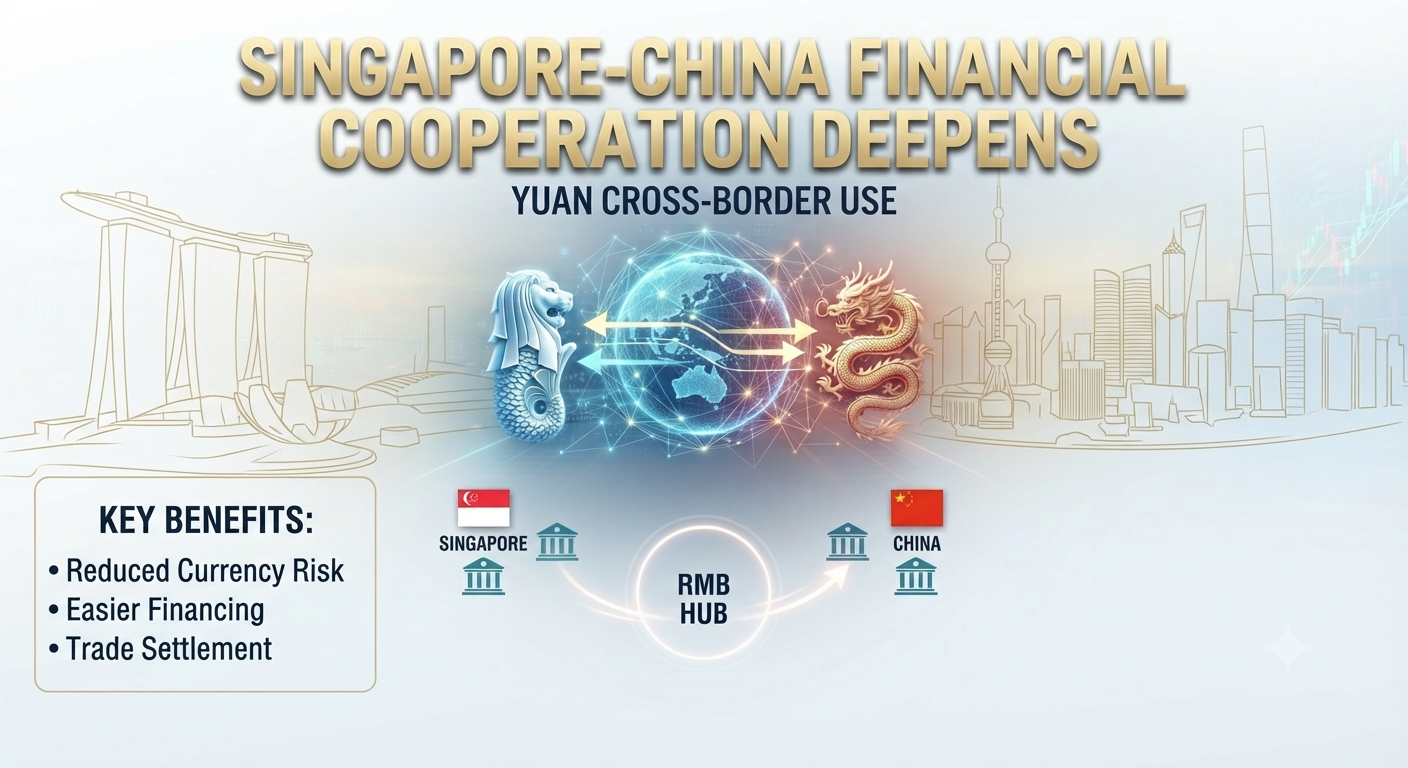
Singapore and China are taking another significant step towards strengthening their economic and financial partnership by expanding yuan-based financing options for businesses. The initiative is expected to improve access to renminbi (RMB) funding, facilitate cross-border trade and investment, and strengthen financial connectivity between the two economies.
Announced on November 23, 2026, during the 22nd Joint Council for Bilateral Cooperation (JCBC) meeting in Singapore, the new measures reflect the growing importance of local-currency financing in international commerce. The initiative involves cooperation between the Monetary Authority of Singapore (MAS) and the People’s Bank of China (PBOC), with the objective of meeting increasing demand for yuan financing across the region.
The development comes amid evolving global trade relationships, currency diversification efforts and growing demand for alternative international payment and financing channels. Singapore’s established position as a global financial centre makes it an important platform for facilitating yuan-based transactions beyond mainland China.
New Financing Facilities to Support Businesses
At the centre of the initiative is the enhancement of the existing MAS RMB Facility, which is supported by the bilateral currency swap arrangement between MAS and the PBOC.
The existing arrangement will be restructured into two separate facilities: the RMB Corporate Facility and the RMB Liquidity Facility.
The RMB Corporate Facility will enable eligible financial institutions to access yuan funding for a broader range of corporate activities. These include trade financing involving third countries, working capital requirements, capital expenditure and eligible intra-group funding.
The expanded facility will offer financing tenures of one, three and six months, giving financial institutions greater flexibility to support businesses with different funding requirements.
Meanwhile, the RMB Liquidity Facility will continue providing backstop yuan funding to eligible financial institutions in Singapore. This arrangement is intended to support financial stability and maintain liquidity in Singapore’s offshore renminbi market.
An important improvement involves the expansion of eligible collateral. In addition to Singapore dollar cash, Singapore Government Securities and MAS Bills will be accepted under both facilities. The two central banks are also exploring the possibility of accepting China Government Bonds as eligible collateral.
These changes are expected to improve financing flexibility and strengthen the overall availability of yuan liquidity.
Boosting Cross-Border Trade and Investment
The expansion of yuan financing could create new opportunities for businesses involved in international trade.
Companies operating between Singapore, China and other regional markets often require financing for imports, exports, inventory management and business expansion. Access to yuan-based funding could help businesses manage their currency requirements more efficiently, particularly when their commercial activities involve Chinese suppliers, customers or investments.
The inclusion of third-country trade financing is particularly significant. It means eligible financial institutions can use the corporate facility to support qualifying trade transactions that extend beyond direct Singapore-China commerce.
This could strengthen Singapore’s role as a regional financial intermediary, helping companies use the city-state as a base for managing international trade and investment activities.
Small and medium-sized enterprises may also benefit from improved access to alternative financing channels, although the actual availability and pricing of funding will depend on participating financial institutions and their lending arrangements.
Strengthening Payment Connectivity
Beyond financing, Singapore and China are exploring a potential connection between their respective fast-payment systems to facilitate small-value cross-border transfers.
If implemented, the linkage could make payments between the two countries faster and more convenient for individuals and businesses.
The initiative would complement existing local-currency payment and settlement channels, potentially reducing friction in everyday transactions, tourism-related payments and smaller commercial transfers.
Improved payment connectivity could also encourage greater participation by businesses that regularly conduct transactions across both markets.
Expanding Capital Market Cooperation
The financial cooperation programme also includes measures to strengthen capital market connectivity.
MAS and the China Securities Regulatory Commission have agreed to support enterprises seeking access to each other’s capital markets for listings and fundraising, according to their individual business requirements.
Cooperation will also extend to the development of new financial indices and additional exchange-traded fund products through collaboration involving the Singapore Exchange, Shanghai Stock Exchange and Shenzhen Stock Exchange.
Furthermore, Singapore and China are strengthening regulatory exchanges in banking, insurance, securities and futures markets.
These initiatives are expected to improve institutional cooperation, encourage investment flows and create additional opportunities for businesses seeking international capital.
Singapore Strengthens Its Position as an Offshore Yuan Hub
Singapore has steadily developed its position as an important offshore renminbi centre, supported by its strong banking sector, international investor base and extensive connections with Asian markets.
The latest measures further strengthen this position by improving the availability of yuan financing and expanding access to Chinese financial products.
Financial institutions are also increasing their participation. DBS Bank has commenced yuan clearing services as Singapore’s second RMB clearing bank, supporting regional economic and investment activities.
Meanwhile, Bank of China’s Singapore branch has been included as a primary dealer by MAS, strengthening its role in Singapore’s government securities market.
These developments demonstrate that financial cooperation is moving beyond policy announcements towards deeper institutional and commercial participation.
A New Phase in Singapore-China Economic Relations
The expansion of yuan financing is part of a broader effort to deepen economic relations between Singapore and China. The 22nd JCBC meeting also highlighted cooperation in digital trade, artificial intelligence, innovation, healthcare and infrastructure.
Both countries are exploring opportunities to modernise their economic partnership and strengthen their ability to respond to changing global business requirements.
For Singapore, stronger yuan financing channels could attract additional financial activity, support regional businesses and reinforce its position as a gateway connecting China with Southeast Asia.
For China, closer financial cooperation provides another opportunity to expand the international use of its currency and strengthen its participation in global trade and investment networks.
As international businesses increasingly seek flexible financing arrangements and diversified payment channels, the Singapore-China initiative could become an important development in the evolution of regional financial cooperation.
The Worldonomics Times View
The expansion of yuan-based financing between Singapore and China represents an important development in the changing structure of international finance. At a time when businesses are increasingly looking for diversified financing options, stronger local-currency arrangements can help reduce dependence on traditional financing channels and create additional opportunities for cross-border commerce.
The Worldonomics Times believes that Singapore is strategically positioned to benefit from this development. Its established financial infrastructure, international banking network and geographical connections with Southeast Asia make it an attractive centre for facilitating yuan-denominated trade and investment.
For China, expanding the international use of the renminbi is an important part of its broader financial ambitions. Stronger cooperation with Singapore could help increase the currency’s accessibility in regional markets and encourage more businesses to consider yuan-based transactions.
However, the long-term success of this initiative will depend on practical implementation. Businesses will need competitive financing rates, transparent regulations, reliable payment infrastructure and sufficient currency liquidity. Small and medium-sized enterprises should also be able to benefit from these opportunities rather than leaving the advantages concentrated among large corporations.
The Worldonomics Times believes that this initiative is more than a financial cooperation agreement; it is a strategic investment in the future of Asian trade and financial connectivity. If effectively implemented, it could strengthen Singapore’s position as a leading offshore yuan hub while creating new opportunities for businesses operating across Asia.
Ultimately, greater currency cooperation between Singapore and China could contribute to a more diversified regional financial ecosystem, supporting international trade, investment and sustainable economic growth.