When one of the world’s most recognised beverage brands moves its Indian bottling business towards the stock market, it is more than an IPO story. It is a lesson in corporate strategy, ownership restructuring and the growing importance of India’s consumer market.
A global brand, an Indian market opportunity
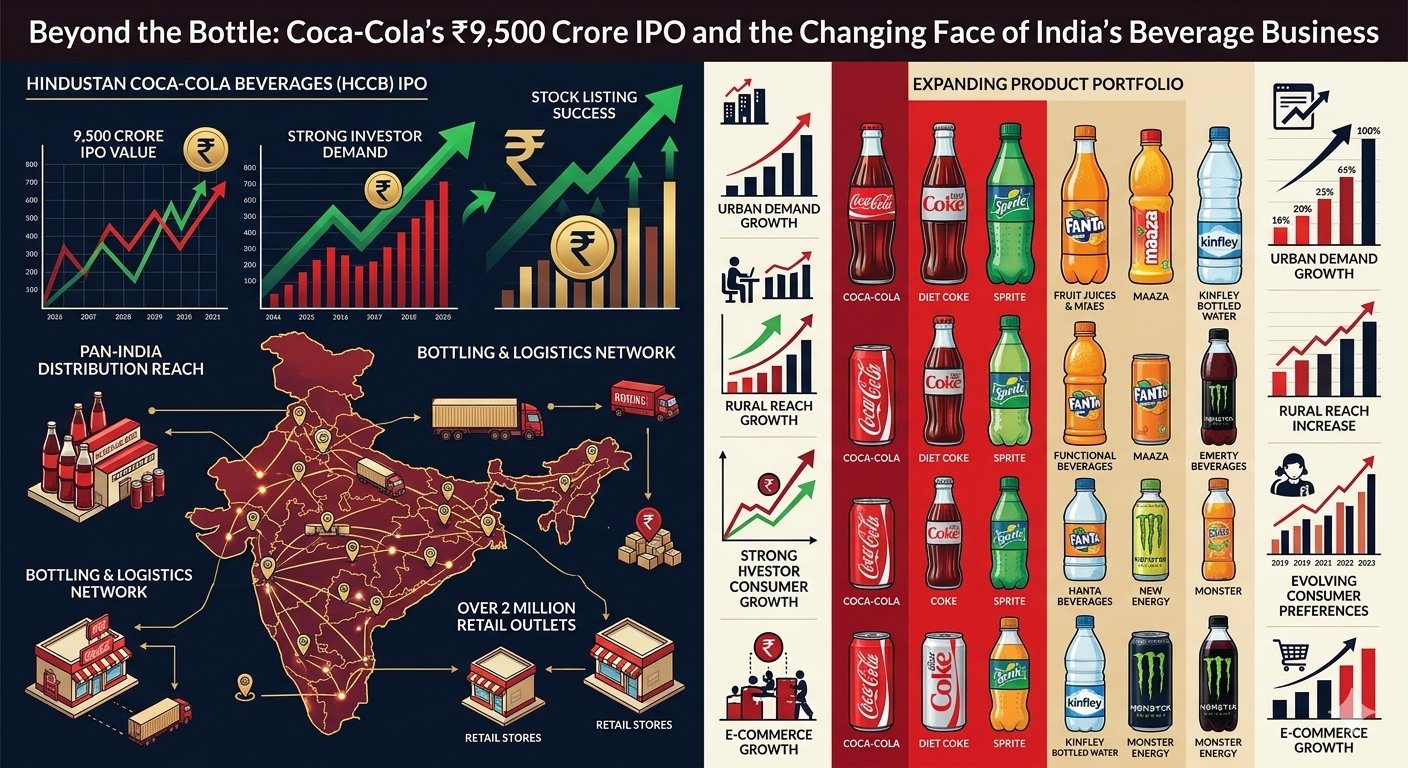
Coca-Cola is preparing for a significant milestone in India. Hindustan Coca-Cola Holdings Limited (HCCH), the parent company of Hindustan Coca-Cola Beverages (HCCB), has filed its Draft Red Herring Prospectus (DRHP) with the Securities and Exchange Board of India (SEBI) for a proposed Initial Public Offering (IPO).
The proposed issue is expected to raise approximately ₹9,500 crore, or around $1 billion, and could place the business at a reported valuation of nearly $10 billion. The proposed listing is expected in 2027, subject to regulatory approvals and market conditions.
This development places Coca-Cola’s Indian bottling operations among the major corporate listings to watch.
What exactly is being listed?
An important distinction: the proposed IPO is not a direct listing of The Coca-Cola Company, the global parent. The entity moving towards the stock market is Hindustan Coca-Cola Holdings Limited, the parent of its Indian bottling business, HCCB.
Coca-Cola currently holds a 60% stake in HCCH, while Jubilant Bhartia Group holds the remaining 40%, following its investment in 2025.
The proposed IPO will consist entirely of an Offer for Sale (OFS) by the existing promoter shareholder, Hindustan Coca-Cola Overseas Holdings Pte. Ltd.
This means the shares being offered are existing shares—not newly issued shares. Consequently, the company itself will not receive the IPO proceeds. The money, after applicable expenses, will go to the selling shareholder.
This is an important distinction for investors: an IPO does not always mean that the company is raising fresh funds for expansion.
Why is Coca-Cola considering this move?
The proposed listing reflects a broader corporate strategy.
1. Unlocking shareholder value
A public listing can provide a market-based valuation for the Indian bottling business and create an opportunity for existing shareholders to monetise part of their investment.
2. Strengthening the asset-light strategy
Global consumer companies increasingly focus on brand development, innovation, marketing and distribution partnerships while working with bottling partners. Coca-Cola’s proposed listing is part of its broader effort to reshape its ownership and operating structure.
3. Capitalising on India’s consumption story
India’s expanding consumer market, changing lifestyles, growing urbanisation and increasing demand for packaged beverages make it strategically important for global brands.
4. Bringing greater market visibility
A stock-market listing can improve transparency, public disclosures and investor scrutiny while giving the business a wider platform to demonstrate its performance.
The business behind the brand
HCCB’s operations extend well beyond the iconic Coca-Cola bottle. Its portfolio includes popular brands such as Thums Up, Sprite, Fanta, Limca and Maaza.
The business operates bottling plants, distribution networks and partnerships that connect manufacturing with millions of consumers.
According to the company’s public disclosures, its operations include 14 bottling plants across 10 states, more than 2,000 distributors and approximately 5,000 employees.
This scale highlights the complexity of the beverage business: manufacturing, procurement, packaging, logistics, marketing and distribution must work together to deliver products efficiently.
What should investors examine?
A recognised brand does not automatically make an IPO an attractive investment. Investors should look beyond brand popularity and evaluate the fundamentals.
Some important areas include:
- Revenue growth: Is the business consistently expanding its sales?
- Profitability: Are operating margins sustainable despite rising input, packaging and distribution costs?
- Cash flow: Does the business generate sufficient cash from operations?
- Debt and capital expenditure: How much investment is required to maintain and expand bottling capacity?
- Valuation: Does the proposed valuation reasonably reflect earnings, growth prospects and industry risks?
- Market competition: How effectively can the business compete in a market with strong domestic and international beverage players?
The final offer price, valuation and complete financial details in the offer documents will be important before investors make any decision.
What does this mean for India’s IPO market?
The proposed Coca-Cola bottling IPO is part of a wider trend of multinational companies exploring India’s capital markets.
For global businesses, India offers access to a large investor base and an active equity market. For Indian investors, such listings can provide opportunities to participate in established consumer businesses.
However, the OFS structure also raises an important question: Is the IPO primarily designed to fund business growth, or to provide an exit and liquidity opportunity for existing shareholders?
In this case, because the proposed issue is entirely an OFS, the proceeds will go to the selling shareholder rather than HCCH.
The bigger picture
Coca-Cola’s proposed Indian listing is not simply about selling shares in a beverage company. It reflects how multinational corporations are rethinking ownership structures, partnerships and capital allocation in one of the world’s most closely watched consumer markets.
For finance professionals, it offers an interesting case study in IPO structuring, offer-for-sale transactions, corporate valuation, shareholder strategy and financial disclosures.
The real story is not just what is inside the bottle—it is the business, capital and strategy behind it.