By The Worldonomics Times
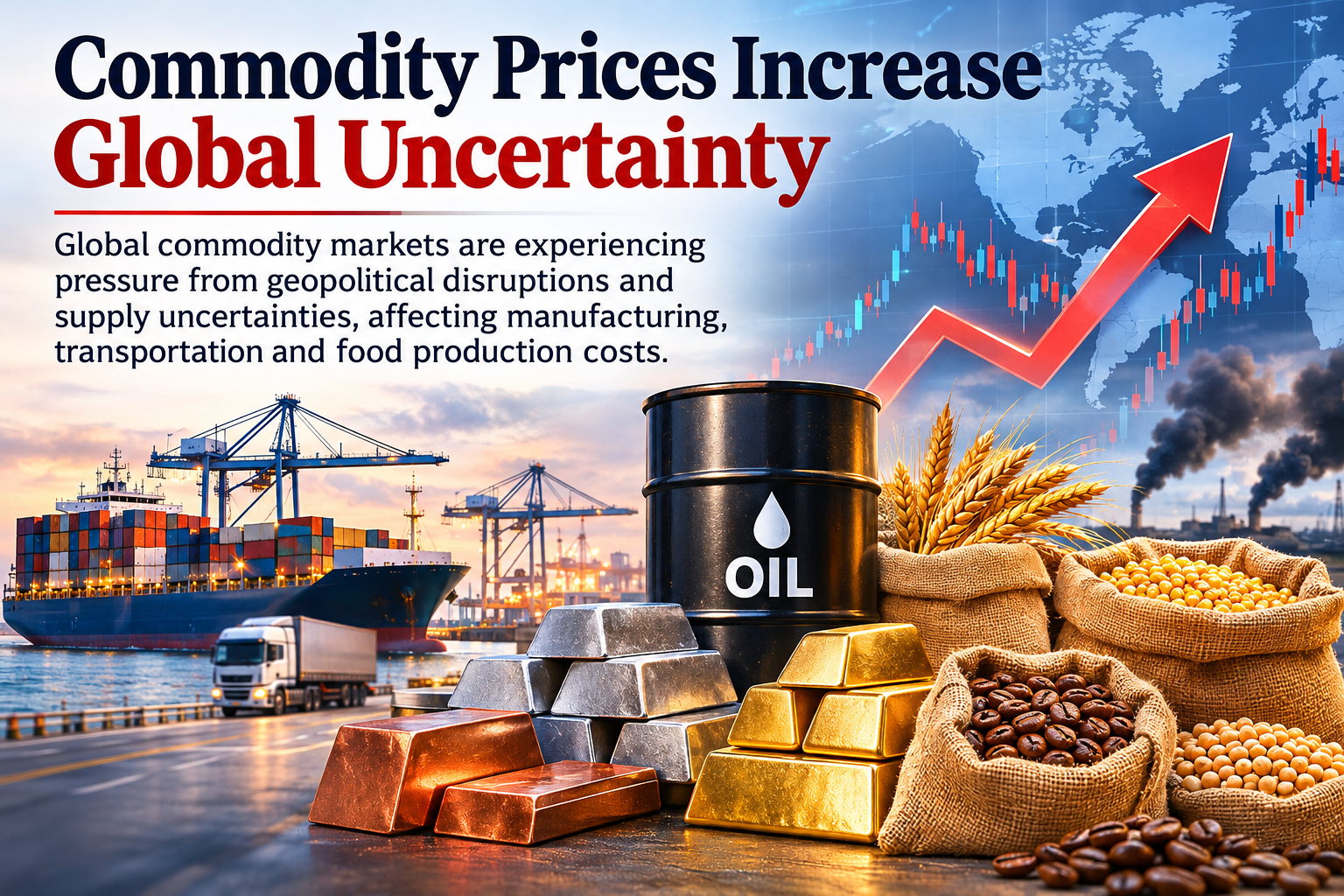
Global commodity markets are experiencing significant uncertainty as geopolitical tensions, supply-chain disruptions and changing weather conditions influence the prices of essential raw materials. Energy products, agricultural commodities, industrial metals and precious metals are all facing varying degrees of pressure, creating challenges for businesses, governments and consumers.
Commodities play a central role in the global economy. Oil and natural gas support transportation and industrial production, metals are essential for manufacturing and infrastructure, while agricultural products and fertilisers are critical to food security. When prices rise or supplies become unpredictable, the effects can spread across international markets, increasing production costs and adding to inflationary pressures.
Global Commodity Prices Face Strong Upward Pressure
The World Bank’s October 2026 Commodity Markets Outlook projects that global commodity prices will increase by 23% during 2026. This follows a year marked by geopolitical disruptions, reduced energy supplies, shipping difficulties and strong demand for several industrial materials.
The report forecasts that energy prices will rise by 32% in 2026, while metal prices are expected to increase by 25%. Food commodity prices are projected to rise by approximately 10%, and fertiliser prices by 14%. Precious metals are also expected to record substantial gains as investors seek assets considered safer during periods of uncertainty.
These developments demonstrate how supply disruptions in one part of the world can influence prices across several industries. Businesses are increasingly required to account for unpredictable input costs when preparing budgets, managing inventories and planning future investments.
Geopolitical Tensions Affect Energy Supplies
Energy markets remain particularly vulnerable to geopolitical developments. Conflicts in major producing regions can disrupt oil and natural gas production, restrict shipping routes and increase transportation and insurance expenses.
The Middle East is especially important because of its position in international energy trade. Uncertainty surrounding the Strait of Hormuz and other shipping routes has affected the movement of crude oil and refined petroleum products.
The Reserve Bank of Australia’s November 2026 economic assessment reported that Brent crude futures had risen to around $115 per barrel. It also noted that gasoline, diesel and jet fuel prices had increased by approximately 20% to 25% since August, reflecting higher oil and shipping costs. Natural gas prices in Asian and European markets had also increased substantially.
Higher energy prices affect almost every part of the economy. Transportation companies face increased fuel expenses, manufacturers pay more for electricity and industrial inputs, and households may experience higher costs for fuel, heating and essential goods.
Rising Food and Fertiliser Costs Create Concerns
Agricultural commodity markets are also facing uncertainty due to weather conditions, shipping disruptions and higher production costs.
Wheat, corn and other essential food commodities are particularly sensitive to disruptions in major exporting regions. Difficulties in transporting grain through the Black Sea, combined with adverse weather conditions, can reduce the availability of supplies in international markets.
Fertiliser prices are another important concern. Natural gas is a major input in the production of nitrogen-based fertilisers, meaning that higher energy prices can increase agricultural production expenses. Shipping disruptions and trade restrictions can further complicate access to essential farm inputs.
The World Bank expects food commodity prices to increase by around 10% in 2026 and a further 7% in 2027. It also identifies the possibility of a strong El Niño weather event as a risk to agricultural output and food affordability.
Higher food and fertiliser costs can create particular difficulties for developing economies, where a large share of household income is spent on essential food products. Farmers may also face pressure on profit margins if input costs rise faster than the prices they receive for their crops.
Industrial Metals Experience Supply and Demand Pressures
Industrial metals such as copper, aluminium and zinc are essential to construction, manufacturing, electricity networks and modern technology. Their prices are influenced by both the availability of raw materials and demand from major industrial sectors.
Investment in renewable energy, electric vehicles, data centres and electricity infrastructure is creating additional demand for several metals. At the same time, mining disruptions, transportation difficulties and limited short-term production capacity can restrict supply.
According to the World Bank, metal prices are projected to rise by 25% in 2026, reaching a new annual high. Strong demand from energy transition projects and digital infrastructure is contributing to this trend.
For manufacturers, higher metal prices can increase the cost of machinery, automobiles, electronics, construction materials and industrial equipment. Companies may respond by negotiating long-term supply agreements, diversifying suppliers or passing some of the additional costs on to customers.
Manufacturing and Transportation Face Higher Costs
Commodity price volatility creates difficulties for businesses that depend on raw materials and energy. Manufacturers must manage changing prices for metals, chemicals, fuel and electricity, while transportation companies face uncertainty over fuel and freight expenses.
According to S&P Global’s October 2026 Commodity Price Watch, geopolitical conflict, supply constraints and weather-related risks are expected to keep manufacturing input costs elevated into 2027. The report also highlights how higher energy and logistics expenses can affect a wide range of industrial products.
Smaller businesses may be particularly vulnerable because they often have less bargaining power and fewer opportunities to secure long-term supply contracts. When costs rise unexpectedly, companies may reduce production, delay expansion plans or increase selling prices.
Implications for India
Commodity price movements have important implications for India because the country imports a substantial share of its crude oil and several industrial raw materials. Higher international energy prices can increase the national import bill, put pressure on the rupee and contribute to domestic inflation.
Rising fuel prices can also increase transportation and logistics expenses, affecting agriculture, manufacturing and retail distribution. Higher fertiliser costs may place additional pressure on government subsidy expenditure and agricultural production costs.
India’s industrial sector is also exposed to international prices of metals, chemicals and other essential inputs. Businesses in construction, automobiles, engineering and infrastructure may face higher production expenses when global commodity prices increase.
However, the situation also creates opportunities. India’s expanding renewable energy sector, domestic manufacturing capabilities and efforts to diversify supply chains can help reduce dependence on imported resources over time.
Strengthening energy security, improving storage facilities, diversifying import sources and investing in domestic production will be important for managing future commodity shocks.
The Worldonomics Times View
Rising commodity prices are creating a challenging environment for the global economy. Geopolitical tensions, supply-chain disruptions, weather-related risks and growing industrial demand are influencing the availability and cost of essential resources.
The impact extends well beyond commodity markets. Higher energy, food and industrial input prices can increase inflation, reduce household purchasing power and affect business investment decisions. Developing economies may face particularly difficult choices when higher import costs coincide with limited fiscal resources.
Governments should prioritise supply-chain diversification, energy efficiency, strategic reserves and targeted assistance for vulnerable households and businesses. Companies must also strengthen procurement strategies and prepare for greater price volatility.
For India, maintaining energy security, improving agricultural productivity and expanding domestic manufacturing will be essential priorities. Ultimately, stable commodity markets depend on reliable supply networks, international cooperation and the ability of economies to adapt to changing global conditions.