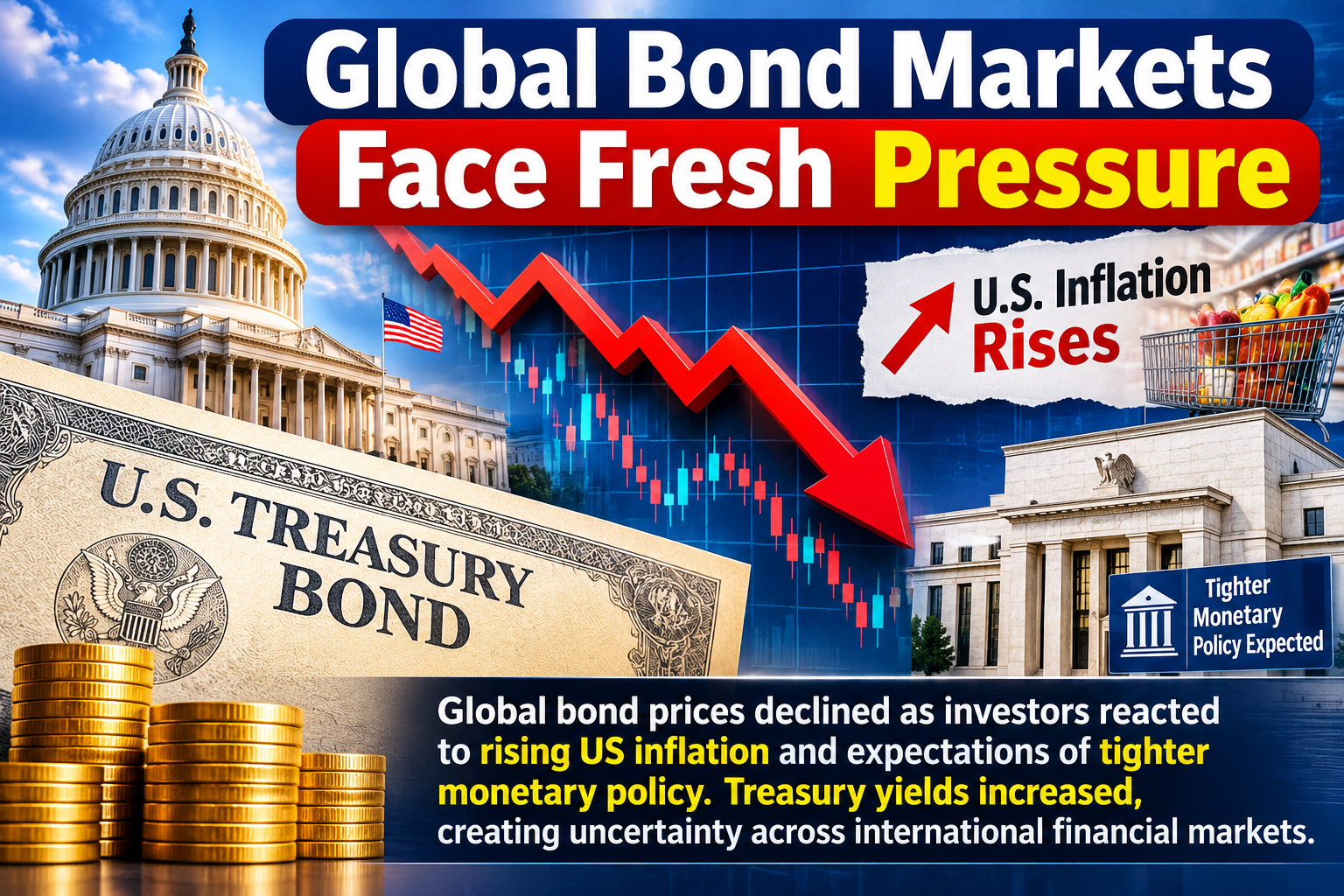
Global Bond Markets Face Fresh Pressure: Rising Treasury Yields Raise Financial Stability Concerns
Introduction
Global financial markets are facing renewed uncertainty as government bond prices decline and Treasury yields rise amid growing concerns about US inflation and the possibility of tighter monetary policy. The latest developments have increased pressure on investors, governments and financial institutions, creating fresh challenges for the international economic environment.
The recent bond market sell-off reflects growing expectations that the US Federal Reserve may continue raising interest rates to control persistent inflation. Higher-than-expected inflation figures, combined with hawkish signals from central bank officials, have encouraged investors to reconsider their bond market positions.
Since US Treasury securities play a central role in international finance, developments in the American bond market are having consequences across Europe, Asia and emerging economies.
Why Are Global Bond Markets Under Pressure?
One of the primary reasons behind the recent decline in global bond prices is the changing outlook for US monetary policy. Higher inflation increases the possibility that the Federal Reserve will maintain tighter financial conditions for longer than previously expected.
According to recent market developments, US core inflation increased by 0.3% in October 2026, exceeding economists’ expectations of 0.2%. The figures strengthened expectations of another interest-rate increase in December.
Following the inflation announcement, investors began selling government bonds, particularly shorter-term Treasury securities that are highly sensitive to expectations about Federal Reserve policy.
Another important factor is the growing concern surrounding government borrowing and public debt. Major economies are issuing substantial amounts of debt to finance public spending, infrastructure projects and economic development. Investors are increasingly demanding higher returns to compensate for inflation risks, borrowing requirements and uncertainty about future economic conditions.
Treasury Yields Rise as Investors Reassess Risks
The US Treasury market has experienced significant movements as investors adjust their expectations for interest rates.
On November 10, 2026, the yield on two-year US Treasury notes increased by approximately 18 basis points to 4.73%, marking its largest single-day rise since April 2025. The benchmark 10-year Treasury yield also climbed by approximately 13 basis points to nearly 4.99%.
These movements demonstrate how quickly financial markets can respond to inflation data and changes in monetary policy expectations.
Bond prices and yields generally move in opposite directions. When investors sell existing bonds, their market prices decline, causing their yields to increase. Higher yields make newly issued bonds more attractive but increase borrowing costs throughout the financial system.
The recent developments have therefore created additional uncertainty for investors managing government securities, corporate debt and other fixed-income investments.
Impact on Businesses, Governments and Consumers
Rising bond yields have consequences that extend well beyond financial markets. Government bond yields serve as important benchmarks for borrowing costs across the economy.
When government borrowing becomes more expensive, businesses may also face higher financing costs. Companies planning expansion, infrastructure development or major capital investments could reconsider their financial strategies.
Small and medium-sized enterprises may experience particular pressure because higher interest rates increase the cost of loans and working capital.
Consumers could also face higher mortgage rates, vehicle financing costs and other borrowing expenses. As monthly repayments increase, households may reduce discretionary spending, potentially affecting retail sales and broader economic activity.
Governments are also vulnerable to rising yields. Countries with substantial public debt may need to allocate a larger share of their budgets towards interest payments, leaving fewer resources available for infrastructure, healthcare, education and other development priorities.
International Markets Feel the Pressure
The impact of rising US Treasury yields is spreading across international financial markets.
In Asia, government bond yields have also moved higher as investors respond to developments in the United States. Japan and Australia have experienced upward pressure on their government borrowing costs.
European bond markets are facing similar challenges. Investors are closely monitoring inflation, government borrowing requirements and the future direction of monetary policy in major European economies.
A stronger US dollar can further complicate the situation for emerging markets. International investors may shift capital towards dollar-denominated assets offering higher returns, placing pressure on emerging-market currencies.
This can increase the cost of servicing foreign-currency debt and make international borrowing more expensive for developing economies.
Implications for India and Emerging Economies
For India, rising global bond yields present both financial challenges and policy considerations.
Higher US Treasury yields can influence foreign investment flows into Indian financial markets. If international investors find American bonds more attractive, some may reduce exposure to emerging-market assets.
Such movements could place pressure on the Indian rupee and influence demand for Indian government and corporate bonds.
Additionally, higher international borrowing costs may affect Indian companies seeking funds from overseas markets. Businesses dependent on foreign financing could face increased expenses.
However, India’s domestic economic conditions, inflation trends, foreign exchange reserves and monetary policy decisions will determine the overall impact.
The Reserve Bank of India will need to monitor global financial developments while maintaining a balance between domestic price stability, economic growth and financial market stability.
What Lies Ahead for Global Bond Markets?
The future direction of bond markets will largely depend on inflation trends, central bank decisions and government borrowing requirements.
If inflation remains persistent, investors may continue expecting higher interest rates, putting further pressure on bond prices. Conversely, signs of declining inflation could reduce expectations of additional monetary tightening and provide some relief to fixed-income markets.
Government fiscal policies will also remain important. Countries with rising debt levels may need to demonstrate stronger budget management to maintain investor confidence.
Market participants will therefore closely monitor upcoming inflation reports, employment figures, central bank announcements and government debt issuance.
The Worldonomics Times Views
The latest pressure on global bond markets highlights the interconnected nature of the modern financial system. A change in US inflation expectations can influence Treasury yields, international capital flows, currency markets and borrowing costs across the world.
While higher interest rates may help central banks control inflation, prolonged financial tightening can create difficulties for businesses, consumers and governments.
Policymakers should adopt a balanced approach that protects price stability without unnecessarily weakening economic growth. Governments must also strengthen fiscal discipline and manage public debt responsibly to maintain investor confidence.
Investors, meanwhile, should pay close attention to inflation developments, interest-rate expectations and debt sustainability when making financial decisions.
Ultimately, stable bond markets are essential for a healthy global economy because they influence the cost of capital and support government and corporate financing. The current bond market volatility is a reminder that inflation control, responsible borrowing and transparent monetary policy remain critical to maintaining long-term financial stability.Introduction
Global financial markets are facing renewed uncertainty as government bond prices decline and Treasury yields rise amid growing concerns about US inflation and the possibility of tighter monetary policy. The latest developments have increased pressure on investors, governments and financial institutions, creating fresh challenges for the international economic environment.
The recent bond market sell-off reflects growing expectations that the US Federal Reserve may continue raising interest rates to control persistent inflation. Higher-than-expected inflation figures, combined with hawkish signals from central bank officials, have encouraged investors to reconsider their bond market positions.
Since US Treasury securities play a central role in international finance, developments in the American bond market are having consequences across Europe, Asia and emerging economies.
Why Are Global Bond Markets Under Pressure?
One of the primary reasons behind the recent decline in global bond prices is the changing outlook for US monetary policy. Higher inflation increases the possibility that the Federal Reserve will maintain tighter financial conditions for longer than previously expected.
According to recent market developments, US core inflation increased by 0.3% in October 2026, exceeding economists’ expectations of 0.2%. The figures strengthened expectations of another interest-rate increase in December.
Following the inflation announcement, investors began selling government bonds, particularly shorter-term Treasury securities that are highly sensitive to expectations about Federal Reserve policy.
Another important factor is the growing concern surrounding government borrowing and public debt. Major economies are issuing substantial amounts of debt to finance public spending, infrastructure projects and economic development. Investors are increasingly demanding higher returns to compensate for inflation risks, borrowing requirements and uncertainty about future economic conditions.
Treasury Yields Rise as Investors Reassess Risks
The US Treasury market has experienced significant movements as investors adjust their expectations for interest rates.
On November 10, 2026, the yield on two-year US Treasury notes increased by approximately 18 basis points to 4.73%, marking its largest single-day rise since April 2025. The benchmark 10-year Treasury yield also climbed by approximately 13 basis points to nearly 4.99%.
These movements demonstrate how quickly financial markets can respond to inflation data and changes in monetary policy expectations.
Bond prices and yields generally move in opposite directions. When investors sell existing bonds, their market prices decline, causing their yields to increase. Higher yields make newly issued bonds more attractive but increase borrowing costs throughout the financial system.
The recent developments have therefore created additional uncertainty for investors managing government securities, corporate debt and other fixed-income investments.
Impact on Businesses, Governments and Consumers
Rising bond yields have consequences that extend well beyond financial markets. Government bond yields serve as important benchmarks for borrowing costs across the economy.
When government borrowing becomes more expensive, businesses may also face higher financing costs. Companies planning expansion, infrastructure development or major capital investments could reconsider their financial strategies.
Small and medium-sized enterprises may experience particular pressure because higher interest rates increase the cost of loans and working capital.
Consumers could also face higher mortgage rates, vehicle financing costs and other borrowing expenses. As monthly repayments increase, households may reduce discretionary spending, potentially affecting retail sales and broader economic activity.
Governments are also vulnerable to rising yields. Countries with substantial public debt may need to allocate a larger share of their budgets towards interest payments, leaving fewer resources available for infrastructure, healthcare, education and other development priorities.
International Markets Feel the Pressure
The impact of rising US Treasury yields is spreading across international financial markets.
In Asia, government bond yields have also moved higher as investors respond to developments in the United States. Japan and Australia have experienced upward pressure on their government borrowing costs.
European bond markets are facing similar challenges. Investors are closely monitoring inflation, government borrowing requirements and the future direction of monetary policy in major European economies.
A stronger US dollar can further complicate the situation for emerging markets. International investors may shift capital towards dollar-denominated assets offering higher returns, placing pressure on emerging-market currencies.
This can increase the cost of servicing foreign-currency debt and make international borrowing more expensive for developing economies.
Implications for India and Emerging Economies
For India, rising global bond yields present both financial challenges and policy considerations.
Higher US Treasury yields can influence foreign investment flows into Indian financial markets. If international investors find American bonds more attractive, some may reduce exposure to emerging-market assets.
Such movements could place pressure on the Indian rupee and influence demand for Indian government and corporate bonds.
Additionally, higher international borrowing costs may affect Indian companies seeking funds from overseas markets. Businesses dependent on foreign financing could face increased expenses.
However, India’s domestic economic conditions, inflation trends, foreign exchange reserves and monetary policy decisions will determine the overall impact.
The Reserve Bank of India will need to monitor global financial developments while maintaining a balance between domestic price stability, economic growth and financial market stability.
What Lies Ahead for Global Bond Markets?
The future direction of bond markets will largely depend on inflation trends, central bank decisions and government borrowing requirements.
If inflation remains persistent, investors may continue expecting higher interest rates, putting further pressure on bond prices. Conversely, signs of declining inflation could reduce expectations of additional monetary tightening and provide some relief to fixed-income markets.
Government fiscal policies will also remain important. Countries with rising debt levels may need to demonstrate stronger budget management to maintain investor confidence.
Market participants will therefore closely monitor upcoming inflation reports, employment figures, central bank announcements and government debt issuance.
The Worldonomics Times Views
The latest pressure on global bond markets highlights the interconnected nature of the modern financial system. A change in US inflation expectations can influence Treasury yields, international capital flows, currency markets and borrowing costs across the world.
While higher interest rates may help central banks control inflation, prolonged financial tightening can create difficulties for businesses, consumers and governments.
Policymakers should adopt a balanced approach that protects price stability without unnecessarily weakening economic growth. Governments must also strengthen fiscal discipline and manage public debt responsibly to maintain investor confidence.
Investors, meanwhile, should pay close attention to inflation developments, interest-rate expectations and debt sustainability when making financial decisions.
Ultimately, stable bond markets are essential for a healthy global economy because they influence the cost of capital and support government and corporate financing. The current bond market volatility is a reminder that inflation control, responsible borrowing and transparent monetary policy remain critical to maintaining long-term financial stability.