AI Investment and Falling Oil Prices May Support Global Growth, but Geopolitical Uncertainty and Financial Market Volatility Remain Major Challenges
By The Worldonomics Times Editorial Desk
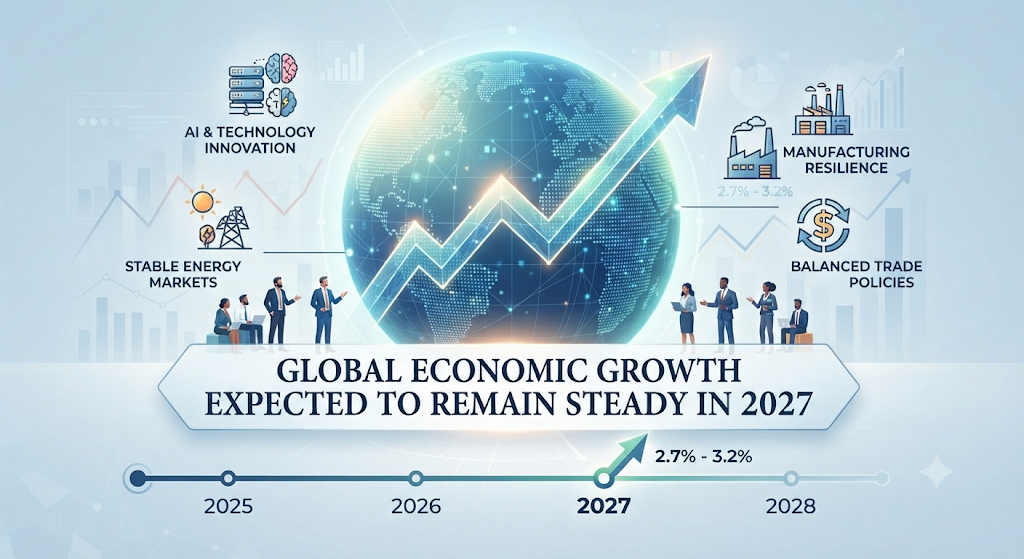
The global economy is expected to maintain a relatively steady growth trajectory in 2027, supported by increasing investments in artificial intelligence (AI), technological innovation, and declining oil prices. As countries continue to navigate an uncertain international economic environment, these factors could provide fresh momentum to global economic activity. However, geopolitical tensions, financial market volatility, inflationary pressures, and trade-related uncertainties remain significant challenges that could influence the pace and direction of economic growth.
The global economic landscape is undergoing a major transformation. Governments, central banks, multinational corporations, and investors are increasingly focusing on building economic resilience while adapting to rapid technological developments. Although the outlook for 2027 offers reasons for optimism, the sustainability of economic growth will depend on how effectively countries manage emerging risks.
Artificial Intelligence Emerging as a Major Growth Driver
One of the most important factors expected to support global economic growth in 2027 is the rapid expansion of artificial intelligence. AI is increasingly becoming an essential component of modern business operations, transforming industries such as manufacturing, healthcare, financial services, logistics, education, and information technology.
Companies across the world are increasing their investments in AI-powered technologies, automation, cloud computing, data infrastructure, and advanced semiconductor manufacturing. These investments are expected to improve operational efficiency, reduce production costs, enhance decision-making, and create new business opportunities.
The growing adoption of AI could also improve labour productivity and strengthen the competitiveness of businesses. Countries that successfully integrate AI into their industrial and service sectors may benefit from higher productivity and stronger economic performance.
However, the benefits of AI are unlikely to be distributed equally. Developed economies with advanced technological infrastructure and greater investment capacity may gain an early advantage, while developing countries could face challenges related to digital infrastructure, skilled labour, and access to technology.
Therefore, investment in education, digital skills, research, and technological infrastructure will be essential to ensure that AI contributes to inclusive and sustainable economic growth.
Declining Oil Prices Could Provide Economic Relief
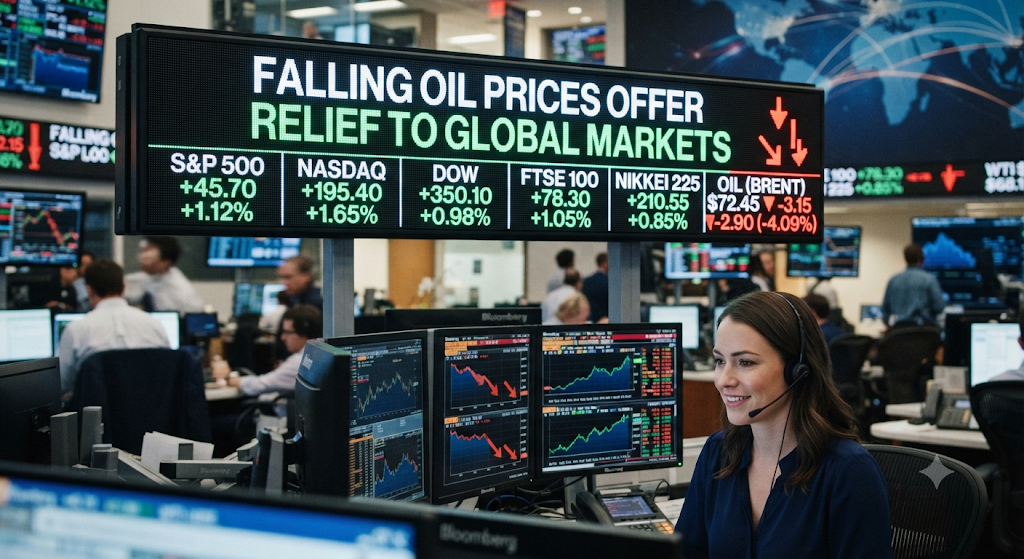
Another important factor supporting the global economic outlook is the possibility of declining oil prices. Energy costs play a crucial role in determining inflation, industrial production, transportation expenses, and household spending.
Lower crude oil prices could provide significant relief to oil-importing countries by reducing their import bills and easing pressure on domestic currencies and government finances. Businesses may also benefit from lower transportation, manufacturing, and energy costs.
For major energy-consuming economies, including India, China, Japan, and several European countries, affordable energy could support industrial activity and improve overall economic stability.
Furthermore, lower oil prices may help moderate inflationary pressures, giving central banks greater flexibility when making monetary policy decisions.
However, the global energy market remains highly sensitive to geopolitical developments, production decisions by major oil-producing nations, and fluctuations in international demand. Any disruption to major supply routes or escalation of regional conflicts could quickly reverse the downward trend in oil prices.
Geopolitical Uncertainty Remains a Major Concern
Despite encouraging growth prospects, geopolitical uncertainty continues to pose substantial risks to the global economy.
International conflicts, trade restrictions, economic sanctions, and tensions between major economies can disrupt supply chains and weaken investor confidence. Businesses operating across international markets may face higher operating costs, delays in production, and uncertainty regarding future trade policies.
The global economy has become increasingly interconnected, making it vulnerable to disruptions in one region that can quickly affect markets worldwide.
Trade relations between major economic powers will remain particularly important in determining the outlook for 2027. Stable international trade policies and constructive diplomatic relationships could strengthen investment and economic cooperation.
On the other hand, increasing protectionism and trade barriers could limit market access, raise production costs, and reduce the efficiency of global supply chains.
Financial Market Volatility and Inflationary Pressures
Financial market volatility is another challenge that policymakers and investors will need to monitor closely.
Changes in interest rates, currency movements, government borrowing, and investor sentiment can significantly influence capital flows and investment decisions. Uncertainty surrounding monetary policies in major economies could create fluctuations in global equity, bond, and currency markets.
Inflation also remains an important consideration. Although declining energy prices may help moderate inflation, the cost of services, food, housing, and wages could continue to put pressure on consumers.
Central banks will therefore face the difficult task of balancing economic growth with price stability. Decisions regarding interest rates will need to consider domestic economic conditions as well as developments in international financial markets.
For emerging economies, maintaining currency stability, attracting foreign investment, and managing external debt will be particularly important.
Emerging Economies Could Play a Greater Role
Emerging markets are expected to remain important contributors to global economic activity. Countries such as India, Indonesia, Vietnam, and other developing economies are attracting investment due to expanding consumer markets, infrastructure development, manufacturing opportunities, and growing digital economies.
India, in particular, has the potential to benefit from increased technology investment, infrastructure expansion, domestic consumption, and the continued development of its manufacturing and services sectors.
However, emerging economies must also address structural challenges, including unemployment, income inequality, infrastructure gaps, and dependence on international capital flows.
Strengthening domestic industries, improving the business environment, and investing in human capital will be essential to maintaining long-term economic competitiveness.
The Worldonomics Times View
The Worldonomics Times believes that 2027 could represent a year of measured opportunities for the global economy. The combination of expanding AI investment, technological innovation, and potentially lower energy costs offers a positive foundation for economic activity. These developments could improve productivity, encourage business expansion, and create new avenues for international investment.
Nevertheless, economic growth should not be measured solely through headline GDP figures or financial market performance. Sustainable progress requires stable employment, affordable living costs, responsible public finances, technological accessibility, and balanced development across economies.
Governments must prioritise economic reforms, strengthen international trade relationships, encourage innovation, and create an environment that supports long-term investment. Central banks must remain cautious in managing inflation and financial stability, while businesses should focus on productivity, resilience, and responsible technological adoption.
The coming year will test the ability of global policymakers to balance opportunities with uncertainty. Artificial intelligence may become a powerful engine of productivity, and lower oil prices could provide short-term economic relief. However, geopolitical tensions and financial instability cannot be ignored.
Ultimately, the global economy’s performance in 2027 will depend not only on technological progress and favourable market conditions but also on the ability of nations to cooperate, adapt, and build resilient economic systems.