United Nations projects global economic growth of 2.6% in 2026 and 2.9% in 2027 as geopolitical tensions, rising energy costs and renewed inflation risks challenge the international economic outlook.
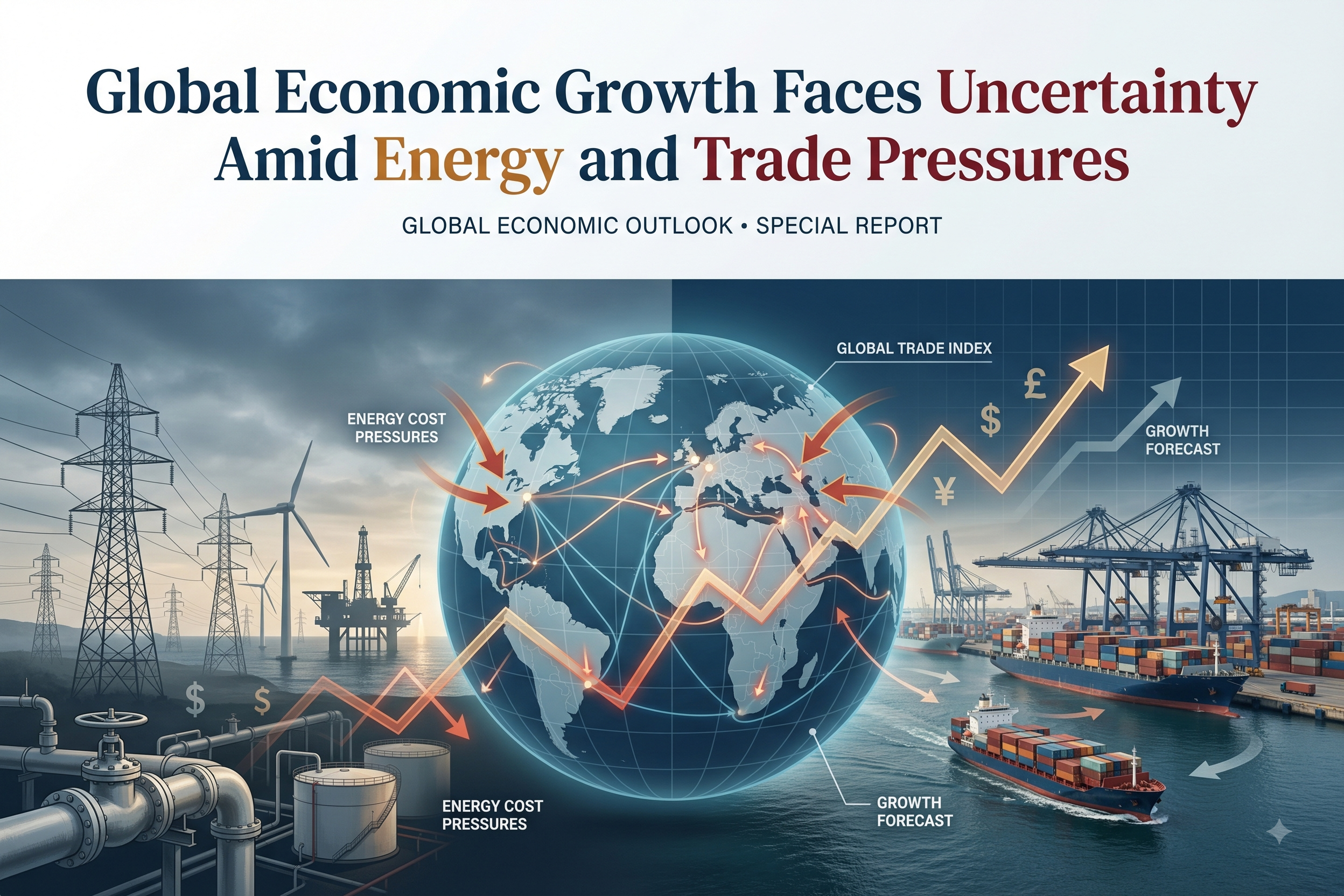
The global economy continues to face an uncertain growth environment as geopolitical tensions, international trade pressures and rising energy costs create challenges for businesses and governments worldwide. According to projections highlighted by the United Nations, global economic growth is expected to reach 2.6% in 2026 before improving moderately to 2.9% in 2027.
Although the projected improvement indicates some resilience in international economic activity, the outlook remains vulnerable to external shocks. Renewed inflationary pressures, supply-chain disruptions and uncertainty surrounding international trade policies could affect economic performance across both developed and emerging economies.
The latest projections highlight the importance of maintaining economic stability while addressing the structural challenges influencing global growth.
Global Economic Growth Remains Moderate
The projected global growth figures suggest that the world economy is continuing to expand, although the pace remains relatively modest.
Economic growth depends on several interconnected factors, including consumer spending, business investment, industrial production, international trade and government expenditure.
Persistent uncertainty can discourage businesses from making long-term investment decisions, while higher operating expenses can affect profitability and employment opportunities.
For households, rising living costs may reduce disposable income and limit consumer spending, which is an important contributor to economic activity in many countries.
The expected improvement in global growth during 2027 could reflect stronger economic activity in selected markets. However, achieving a sustainable recovery will depend on stable financial conditions, stronger international cooperation and improved investor confidence.
Energy Prices Create Additional Economic Pressure
Energy costs remain one of the major factors influencing the global economic outlook.
Oil, natural gas and electricity are essential inputs for transportation, manufacturing, agriculture and industrial production. When energy prices increase, businesses often face higher operating expenses, which can eventually translate into higher prices for consumers.
Geopolitical tensions in important energy-producing regions can create uncertainty around supply availability and international transportation routes.
Countries that depend heavily on imported energy are particularly vulnerable because higher import costs can increase inflation and place additional pressure on national currencies.
For developing economies, expensive energy imports can also increase government expenditure and affect industrial competitiveness.
Investment in renewable energy, energy efficiency and diversified supply sources could help countries reduce their exposure to international energy market volatility over the long term.
Trade Pressures Challenge International Commerce
International trade remains a critical driver of global economic growth. However, changing trade policies, tariffs and geopolitical disagreements are creating additional uncertainty for businesses operating across borders.
Manufacturers depend on international supply chains for raw materials, electronic components and industrial equipment. Any disruption to these networks can increase production costs and delay deliveries.
Trade restrictions can also affect exporters by limiting market access and reducing competitiveness.
For major trading economies, including the United States, China and European countries, changes in international trade conditions can influence industrial production, corporate earnings and investment decisions.
Emerging economies may experience both opportunities and challenges. Companies seeking to diversify their supply chains could explore alternative manufacturing destinations, potentially attracting investment to developing markets.
Nevertheless, prolonged trade tensions could weaken international demand and slow the expansion of global commerce.
Inflation Risks Continue to Concern Policymakers
Renewed inflationary pressures represent another major challenge for the international economy.
Rising energy prices, higher transportation expenses and supply-chain disruptions can increase the cost of goods and services.
When inflation remains elevated, central banks may maintain restrictive monetary policies to control price increases. Higher interest rates can reduce borrowing and consumer spending, but they can also make business investment more expensive.
This creates a difficult policy environment in which governments and central banks must balance inflation control with economic growth.
For households, persistent inflation can weaken purchasing power and increase financial pressure, particularly when wage growth fails to match increases in essential expenses.
Businesses may also struggle to maintain profit margins as raw material, labour and financing costs rise.
The direction of inflation will therefore remain an important factor influencing interest rate decisions and global investment activity.
Emerging Economies Face Opportunities and Risks
Developing economies are particularly sensitive to changes in international trade, commodity prices and global financing conditions.
Higher energy import costs, currency fluctuations and expensive international borrowing can create additional pressure on government budgets and domestic businesses.
However, emerging markets also have opportunities to strengthen their economic positions.
Investments in infrastructure, manufacturing, digital technology, renewable energy and domestic production could support long-term growth.
Countries such as India and other developing Asian economies may benefit from changing global supply chains as international businesses seek greater diversification.
However, attracting investment will require stable economic policies, reliable infrastructure, skilled workers and predictable trade regulations.
Strengthening domestic economic capabilities will be essential for developing countries seeking sustainable growth in an uncertain global environment.
What Lies Ahead for the Global Economy?
The global economic outlook for 2026 and 2027 will depend on how effectively countries manage geopolitical, financial and structural challenges.
Several factors will remain particularly important:
- Energy market stability: Changes in oil and natural gas prices could influence production costs and inflation.
- International trade relations: Trade negotiations and tariff policies will affect global commerce and manufacturing.
- Inflation trends: Consumer price movements will influence central bank decisions and household spending.
- Interest rate policies: Borrowing costs will play an important role in investment and economic activity.
- Geopolitical developments: International conflicts and political uncertainty could affect investor confidence and supply chains.
While the projected improvement in global growth offers some optimism, governments and businesses must remain prepared for potential economic disruptions.
The Worldonomics Times View
The United Nations’ global growth projections of 2.6% for 2026 and 2.9% for 2027 highlight an international economy that remains resilient but faces significant uncertainty.
In our view, the biggest challenge is not simply achieving higher growth figures but ensuring that economic expansion is sustainable, inclusive and supported by stable international conditions.
Energy security, predictable trade policies and responsible economic management will be essential for maintaining long-term confidence.
Governments should prioritise infrastructure investment, domestic manufacturing, renewable energy and stronger international cooperation. Businesses, meanwhile, must improve supply-chain resilience and prepare for changing costs and market conditions.
For investors, the coming period requires careful attention to inflation, interest rates, commodity prices and geopolitical developments.
Ultimately, global economic progress will depend on the ability of countries to manage uncertainty while creating opportunities for businesses, workers and consumers.
The road towards stronger growth in 2027 remains possible, but achieving it will require coordinated policies, economic resilience and a renewed commitment to international cooperation.