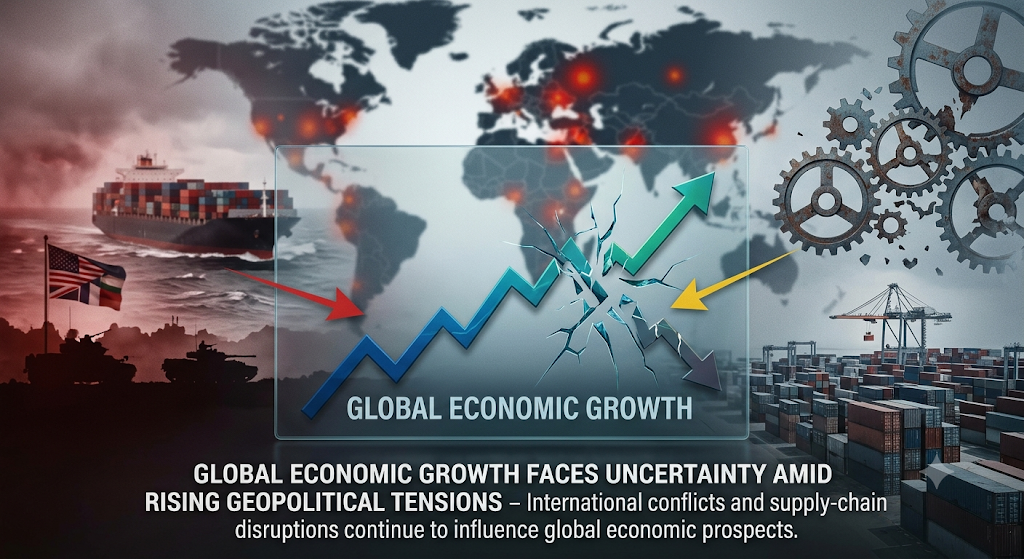
International Conflicts and Supply-Chain Disruptions Continue to Influence Global Economic Prospects
The global economy is moving through a time of growing uncertainty. Rising geopolitical tensions international conflicts and trade restrictions are causing shifts in economic outlook. Supply-chain problems keep getting worse. This is making it harder for countries to plan for steady growth. Even though some economies have held up well despite these challenges the overall picture is getting more worrying. Concerns are rising about growth, inflation rates, investment levels and the stability of financial systems.
As nations become more linked through trade, energy deals, financial flows and production chains events in one part of the world can quickly affect others. A conflict in one region might cause energy prices to go up slow down shipping or change how countries trade with each other. These changes are no longer local issues. They are becoming factors that shape economic decisions everywhere. Governments and businesses must now consider how international tensions could affect their plans. The world is more connected, than ever. That means risks are more interconnected too.
Geopolitical Tensions: A Growing Challenge for the Global Economy
Geopolitical uncertainty has become a hurdle for the global economy. Conflicts in the Middle East the ongoing Russia‑Ukraine war, rivalry between big economies and rising trade disputes are shaping international markets and shaking investor confidence.
The economic fallout from these events reaches beyond the countries that are directly involved. Political unrest and military fights can block the flow of goods increase uncertainty, in financial markets and make businesses hesitant to commit to long‑term investments.
Supply-Chain Disruptions and Rising Business Costs
Geopolitical instability creates an visible challenge for global supply chains. Modern manufacturing relies on a web of suppliers, transport routes, raw materials and international markets. When war or conflict blocks crucial shipping lanes or cuts off resources many businesses face delays and higher costs that affect global supply chains.
Energy transport routes those that cross key maritime areas stay at risk from geopolitical changes. Disruptions near the Strait of Hormuz for example have alarmed people about oil and gas supplies. When energy prices rise the costs of electricity, transport, manufacturing and farming go up adding pressure on both businesses and consumers.
Companies are now rethinking how they source goods and are cutting reliance on one supplier or on factories in one place. Ideas, like supply‑chain diversification, nearshoring, local manufacturing and keeping stock are becoming more important.
These changes can make supply chains stronger. They also raise short‑term production costs and require big investment.
Inflation and Financial Market Uncertainty
Geopolitical instability also brings problems when it comes to managing inflation. When oil prices go up raw materials become more expensive freight costs rise and supply chains for food and fertilizer get disrupted all of these factors can push inflation up.
Central banks face a situation. Raising interest rates can help bring inflation under control.. That also means borrowing becomes more expensive. Businesses may hold off on investing and economic growth can slow down. At the time lowering interest rates too fast could let inflation keep rising. It’s a balance.
Financial markets react strongly to uncertainty. During times of tension or conflict investors often move their money into safer assets. This shifts the flow of capital. Creates swings in currency values bond prices and stock markets.
Emerging economies are hit hard. These countries often rely on borrowing to fund their budgets and development. When global conditions turn shaky capital can flow out quickly. That leads to local currencies, higher import prices and more pressure, on debt payments. These pressures can hurt their growth and stability.
Developing Economies Face Uneven Challenges
The effects of tensions are not the same for all countries. Developing economies, those that rely a lot on energy, food and industrial products from other countries are more at risk from outside problems.
When fuel prices go up it can make trade deficits bigger cost the government money and make it harder for families to buy things. Countries that already have a lot of debt and not much money left may struggle to help the industries and people who’re in trouble.
Still emerging markets also have chances to make their economies stronger. Spending on factories, clean energy, internet systems, transport networks and trade deals with nearby countries can help them depend less on outside sources and open up new ways for long-term growth.
India and other growing Asian countries for example can gain from the shift, in how the world makes things as long as they keep making their roads, factories, workers and business environment better.
Businesses Must Prioritise Resilience and Adaptability
In this environment businesses must move beyond traditional cost‑efficiency strategies and put a stronger focus on risk management and operational resilience.
I believe organisations should diversify suppliers identify transportation routes strengthen inventory management and monitor geopolitical developments that could affect their operations. Greater adoption of technologies, artificial intelligence, predictive analytics and real‑time supply‑chain monitoring can also improve operational efficiency and support faster decision‑making.
Governments have an important responsibility to maintain stable economic policies strengthen trade relationships invest in infrastructure and ensure the uninterrupted availability of essential resources.
The Worldonomics Times Views
The global economy is at a crossroads. I see international markets and businesses showing that they can adapt to change. Yet ongoing geopolitical tensions and supply‑chain disruptions still threaten stability.
In the coming years the resilience of governments, industries, investors and international institutions will be put to the test. I think that countries that prioritise diversification, technological advancement, strategic cooperation and sustainable development will be better positioned to navigate uncertainty.
I believe that global economic growth cannot rely on national strategies. In a world lasting prosperity requires collective responsibility, predictable economic relationships and a shared commitment, to stability.
The ability of nations to cooperate amid differences may well determine the direction of the global economy in the years ahead.