By The Worldonomics Times | Global Economy
Date: 3 November 2026
Middle East Conflict, Declining Oil Inventories and Rising Transportation Costs Put Pressure on Businesses and Consumers Worldwide
Global energy markets are facing one of their most challenging periods in recent years, with rising oil and natural gas prices creating additional pressure on businesses, governments and households. According to the World Bank’s October 2026 Commodity Markets Outlook, global energy prices are projected to increase by 32% during 2026, reversing three consecutive years of declining prices.
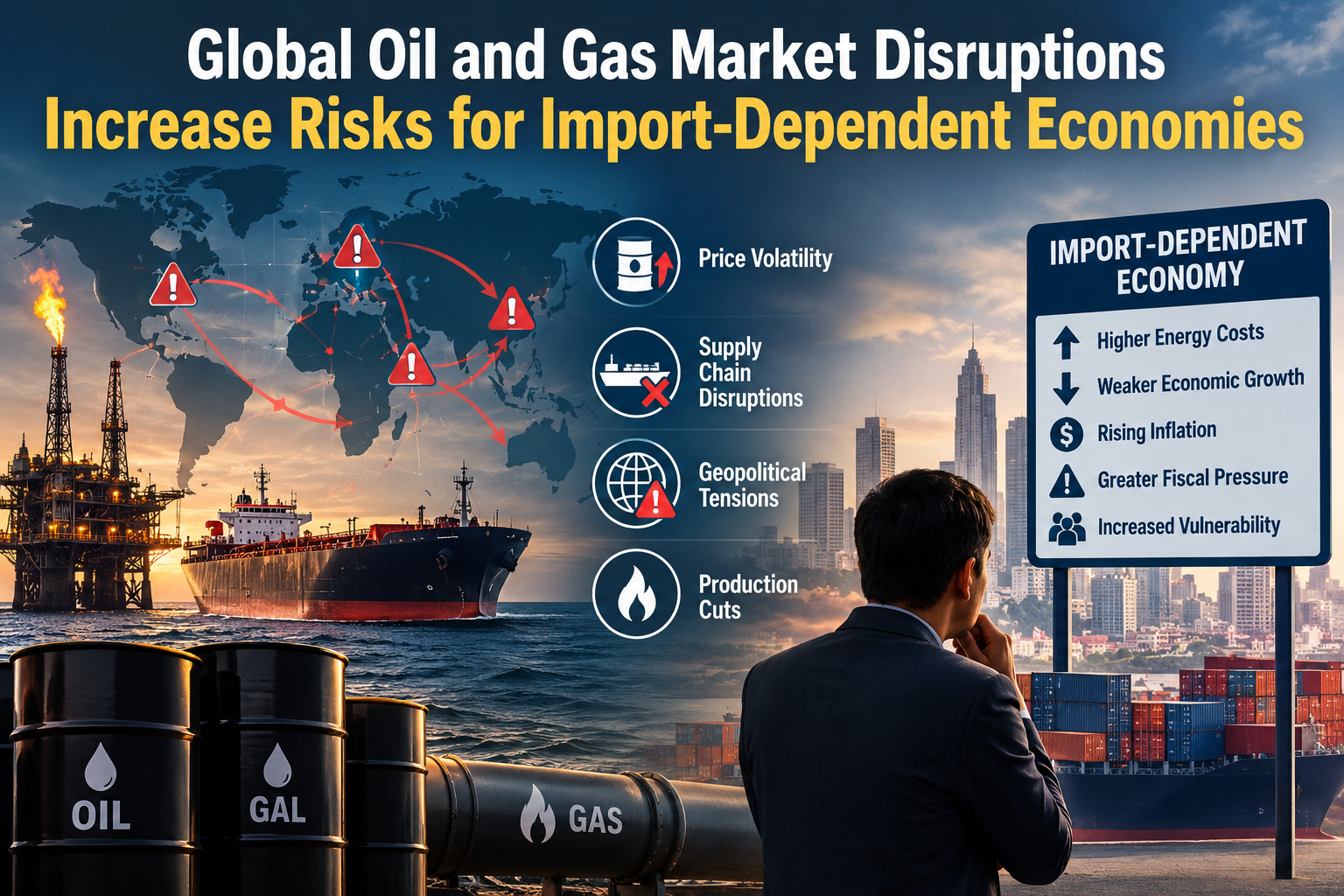
The sharp increase is largely driven by geopolitical tensions in the Middle East, disruptions to international energy transportation and damage to critical oil infrastructure. These developments have reduced the availability of energy supplies and increased uncertainty across international markets.
The World Bank expects Brent crude oil to average approximately $91 per barrel in 2026, compared with $69 in 2025. Although energy prices are projected to moderate in 2027, the institution warns that further geopolitical escalation could create additional supply shortages and push prices higher.
Middle East Conflict Drives Energy Market Uncertainty
The ongoing conflict in the Middle East has become one of the most significant factors influencing international energy prices. The region plays a crucial role in global oil and natural gas production, making its political and security conditions particularly important for energy-importing economies.
One of the biggest concerns is the disruption of shipping through the Strait of Hormuz, a strategic waterway connecting the Persian Gulf with international markets. Before the current crisis, approximately one-fifth of global oil and liquefied natural gas supplies passed through this route.
Disruptions to shipping activity have reduced the movement of energy supplies and increased transportation risks. Tanker operators are facing additional security concerns, while insurance and freight costs have also risen.
Damage to energy infrastructure and uncertainty surrounding regional exports have further complicated the supply situation. Even temporary disruptions can have significant consequences because international energy markets depend on reliable production and transportation networks.
Oil Supply Falls as Global Inventories Decline
The World Bank projects that global oil supply will contract by 5.2% in 2026, marking the largest annual decline in more than four decades outside the 2020 global recession.
The decline reflects reduced exports from the Middle East and disruptions affecting other important producing regions. Damage to Russian oil infrastructure has also contributed to supply uncertainty.
At the same time, global oil consumption is expected to decline by approximately 2.5% during 2026 as higher prices discourage demand and encourage consumers and businesses to reduce energy use.
Despite weaker consumption, oil production is projected to remain below demand, requiring further withdrawals from existing inventories. Lower stock levels leave the market more vulnerable to additional disruptions because fewer reserves are available to compensate for unexpected supply losses.
The World Bank has warned that depleted inventories could make future price movements more severe if geopolitical tensions intensify.
Natural Gas Markets Experience Additional Pressure
Natural gas is another important component of the global energy price increase. The World Bank reports that its natural gas price index reached a four-year high in September 2026.
Disruptions to Middle Eastern energy exports have tightened the availability of liquefied natural gas (LNG), increasing competition among importing countries in Asia and Europe.
Natural gas is widely used for electricity generation, industrial production, heating and fertilizer manufacturing. Consequently, higher gas prices can influence several important sectors simultaneously.
European countries are particularly sensitive to changes in international gas prices because industries and households depend on natural gas for energy requirements. Asian economies also face additional pressure as they compete for available LNG shipments.
Rising gas prices can increase electricity generation costs, reduce industrial profit margins and make essential products more expensive for consumers.
Businesses Face Higher Operating and Production Costs
The increase in global energy prices is creating significant challenges for businesses across different industries.
Manufacturing companies depend on electricity, natural gas and petroleum products to operate factories and transport raw materials. When energy expenses increase, production costs rise, potentially reducing profitability and competitiveness.
Transportation and logistics businesses are also directly affected. Higher diesel and aviation fuel prices increase the cost of moving goods and passengers, while shipping companies face additional expenses related to fuel, insurance and transportation routes.
Industries such as steel, cement, chemicals, fertilizers, automobiles and aviation are particularly exposed to energy price fluctuations.
Small and medium-sized enterprises may experience greater difficulties because they often have limited financial resources to absorb sudden increases in operating expenses. Some businesses may pass higher costs to customers, while others could reduce production or delay investment.
Consumers Face Rising Living Expenses
Households are also experiencing the consequences of higher global energy prices. Increased costs for petrol, diesel, electricity and natural gas can reduce disposable income and make everyday living more expensive.
Transportation expenses influence the prices of food, consumer goods and essential services because most products depend on fuel-powered logistics at some stage of their supply chain.
Higher energy prices can also contribute to inflation by increasing production and distribution costs across the economy. This creates additional challenges for central banks attempting to maintain price stability while supporting economic growth.
Lower-income households are particularly vulnerable because energy and transportation expenses represent an important share of their monthly budgets.
Implications for India and Other Emerging Economies
For India, the increase in international energy prices presents significant economic challenges because the country depends heavily on imported crude oil and natural gas.
Higher oil prices can increase the national import bill, put pressure on the current account balance and influence the value of the Indian rupee. Domestic industries may also experience higher production and transportation expenses.
Sectors such as aviation, automobiles, chemicals, plastics, logistics and agriculture could face additional financial pressure. Higher fertilizer production and transportation costs may also affect agricultural expenses and food prices.
However, the current situation also highlights the importance of India’s investment in renewable energy, domestic manufacturing and alternative fuel technologies.
Expanding solar and wind power, improving energy efficiency and developing stronger domestic energy infrastructure could reduce long-term dependence on international fossil fuel markets.
The Worldonomics Times Views
The projected 32% increase in global energy prices highlights the vulnerability of the international economy to geopolitical instability and supply disruptions. Energy is not simply another commodity; it is a fundamental requirement for industrial production, transportation, agriculture and economic development.
In our view, countries must treat energy security as a central component of their long-term economic strategies. Excessive dependence on a limited number of suppliers or vulnerable transportation routes can expose national economies to sudden price shocks.
We believe governments should accelerate investment in renewable energy, strengthen strategic petroleum reserves, encourage energy-efficient technologies and diversify international supply partnerships.
For businesses, improving energy efficiency and adopting alternative sources of power can help reduce operating costs and protect profit margins. For consumers, targeted assistance and reliable public transportation can help limit the impact of higher fuel expenses.
The Worldonomics Times believes that a resilient energy system is essential for sustainable economic growth, price stability and long-term national security.
Conclusion
The World Bank’s forecast of a 32% increase in global energy prices during 2026 reflects the combined impact of geopolitical tensions, declining oil supply, disrupted transportation routes and rising natural gas costs.
Although energy prices are expected to moderate in 2027, the outlook remains uncertain. Further disruptions could increase inflationary pressure, weaken business confidence and create additional financial challenges for energy-importing economies.
For governments, businesses and consumers, the priority must be to prepare for continued volatility. Diversifying energy sources, strengthening supply chains and accelerating the transition towards cleaner technologies will be essential to building a more secure and sustainable global energy future.