By The Worldonomics Times
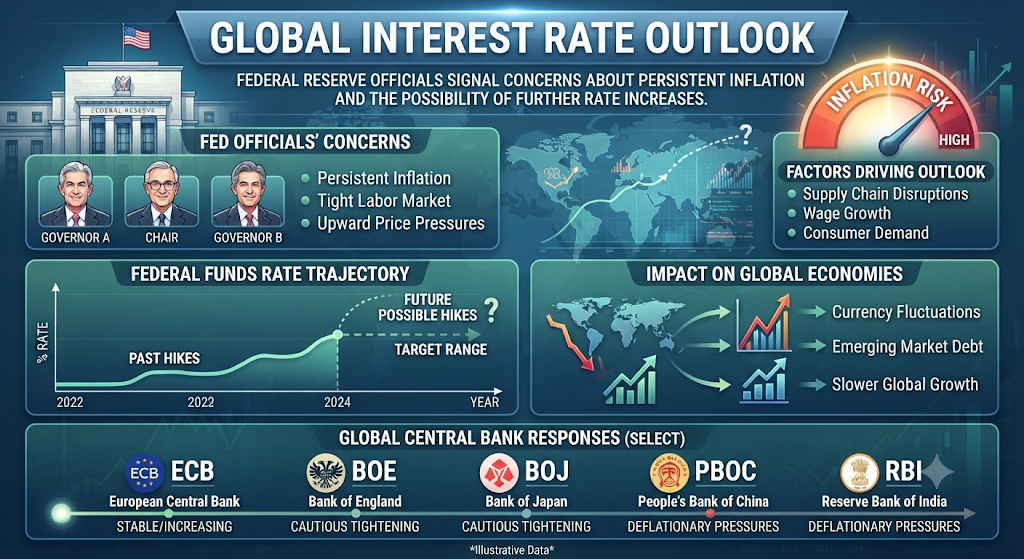
The global interest rate outlook is becoming increasingly uncertain as Federal Reserve officials express concern about persistent inflation and the possibility of further monetary tightening. Although the US central bank has made progress in managing price pressures, inflation remains above its long-term target, prompting policymakers to consider whether additional interest rate increases may be necessary.
The debate is attracting attention from financial markets, businesses and governments worldwide. Changes in US interest rates influence international borrowing costs, currency movements, investment decisions and economic growth. As a result, the Federal Reserve’s next policy decisions could have significant implications for the global economy.
Federal Reserve Officials Warn About Persistent Inflation
Several Federal Reserve officials have indicated that inflation remains a major concern and that monetary policy may need to become more restrictive.
New York Federal Reserve President John Williams said on November 12 that the central bank still had work to do to bring inflation back to its 2% target. He pointed to persistent price pressures and a relatively strong economy, suggesting that further rate increases could be required over time.
Cleveland Federal Reserve President Beth Hammack also reiterated her support for gradual interest rate increases. In comments reported by Reuters on November 16, she said inflation pressures had been broadening and argued that smaller, predictable adjustments could help households and businesses plan their finances.
Other policymakers have expressed stronger concerns. Dallas Federal Reserve President Lorie Logan and St. Louis Federal Reserve President Alberto Musalem have argued that additional monetary tightening is necessary to bring inflation under control. Their comments demonstrate that some officials believe the current policy stance may not be sufficiently restrictive.
However, these are individual policy views rather than a final collective decision. The Federal Open Market Committee will assess incoming economic information before deciding whether another increase is appropriate.
Why Inflation Remains Difficult to Control
Inflation has remained persistent because several factors continue to influence prices across the US economy.
Higher energy costs have increased transportation and production expenses, while tariffs and changing international trade conditions have affected the prices of imported products. Strong investment in artificial intelligence infrastructure has also increased demand for certain technology equipment and specialised components.
Federal Reserve Vice Chair Michelle Bowman highlighted these concerns in a November 10 speech. She observed that inflation had remained more persistent than expected and that pressures previously concentrated in particular categories appeared to be broadening.
Her assessment also identified energy prices, tariffs and AI-related demand as important contributors to inflationary pressure. Although some of these factors may ease over time, policymakers remain concerned about the possibility that higher prices could become embedded in household and business expectations.
Persistent inflation makes it difficult for central banks to reduce borrowing costs without risking another increase in demand and prices.
Interest Rate Decisions and the US Economy
Interest rates influence economic activity by changing the cost of borrowing for households and businesses. When central banks increase rates, loans for homes, vehicles and business investment generally become more expensive.
Higher borrowing costs can reduce consumer spending, discourage certain investments and moderate demand across the economy. These effects can help slow inflation, but they may also weaken economic growth if monetary tightening continues for too long.
The Federal Reserve’s policy position reflects this challenge. At its September 2026 meeting, the FOMC raised the federal funds target range to 3.75%–4%. At its October meeting, it held the range steady while assessing the impact of previous increases and incoming economic information.
The debate over further increases therefore centres on whether inflation requires additional action or whether existing policy restrictions will be sufficient to bring prices under control.
Global Central Banks Face Different Policy Challenges
The Federal Reserve’s decisions influence other central banks, but monetary policy is not identical across countries. Each institution must respond to its domestic inflation rate, employment conditions, currency movements and economic growth.
The European Central Bank has also raised borrowing costs in response to inflation pressures. The Bank of England’s November 2026 Monetary Policy Report highlighted the impact of higher global energy prices and uncertainty surrounding future interest rate movements.
These developments demonstrate that central banks are facing overlapping challenges, particularly energy-related inflation and changing international financial conditions. However, differences in economic structure and domestic demand mean that countries may follow different monetary policy paths.
Some economies may maintain higher rates for longer, while others may have more room to ease monetary conditions if inflation moderates and economic activity weakens.
Financial Markets Respond to Rate Expectations
Expectations of further US interest rate increases have important consequences for financial markets.
Higher US interest rates can make dollar-denominated assets more attractive to international investors. This may strengthen the US dollar and create pressure on emerging-market currencies.
Bond yields can also increase as investors adjust their expectations about future monetary policy. Higher yields generally raise borrowing costs for governments and businesses, potentially affecting investment plans and financial market valuations.
Equity markets may experience volatility because higher interest rates reduce the present value of future corporate earnings and make financing more expensive. Companies that depend heavily on borrowing, including technology firms and property developers, can be particularly sensitive to changes in financing conditions.
Gold and other non-interest-bearing assets may also face pressure when investors expect higher returns from interest-bearing investments.
Implications for Emerging Economies
Emerging economies can be particularly sensitive to changes in US monetary policy because they depend partly on international investment and foreign borrowing.
If US interest rates rise, investors may move capital towards dollar-based assets, reducing the availability of international financing for some developing countries. Currency depreciation can increase the domestic cost of servicing foreign-currency debt and make imported goods more expensive.
Countries with high external borrowing requirements and limited foreign exchange reserves may face additional financial pressure. Governments and central banks must therefore monitor exchange rates, capital flows and external debt obligations.
Maintaining credible monetary policies, adequate foreign exchange reserves and sustainable public finances can help emerging economies manage these risks.
Implications for India
India is also affected by changes in US monetary policy through international capital flows, currency movements and global borrowing conditions.
Higher US interest rates can influence foreign investment flows into Indian financial markets and place pressure on the rupee. A stronger dollar can also increase the domestic cost of imported commodities, particularly crude oil, potentially adding to inflationary pressures.
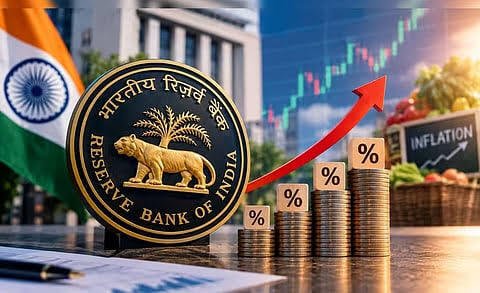
The Reserve Bank of India must consider these external developments alongside domestic inflation, economic growth and liquidity conditions when determining its monetary policy approach.
However, India’s relatively strong domestic demand and established financial framework provide important support. Continued investment in infrastructure, manufacturing and domestic production can help strengthen economic resilience.
For Indian businesses, a period of higher global interest rates may mean more expensive international financing and greater exchange-rate uncertainty. Companies with foreign-currency debt or significant import requirements will need to manage these risks carefully.
The Worldonomics Times View
The latest comments from Federal Reserve officials indicate that the fight against inflation remains an important priority. Although the US economy has demonstrated resilience, persistent price pressures are creating uncertainty about the future direction of interest rates.
Further rate increases could help moderate demand and bring inflation closer to the Federal Reserve’s target. However, policymakers must also consider the effects of higher borrowing costs on employment, investment, housing and consumer spending.
For global markets, the main concern is not simply whether interest rates will rise again, but how quickly monetary conditions may tighten and how long restrictive policies will remain in place.
Governments and businesses should prepare for continued uncertainty by managing debt responsibly, maintaining financial flexibility and monitoring currency and interest rate risks.
For India and other emerging economies, strong domestic fundamentals, adequate foreign exchange reserves and prudent financial management will remain essential.
Ultimately, the global interest rate outlook will depend on the path of inflation and the ability of central banks to balance price stability with sustainable economic growth. Clear communication, careful policy decisions and close monitoring of economic conditions will be crucial in the months ahead.